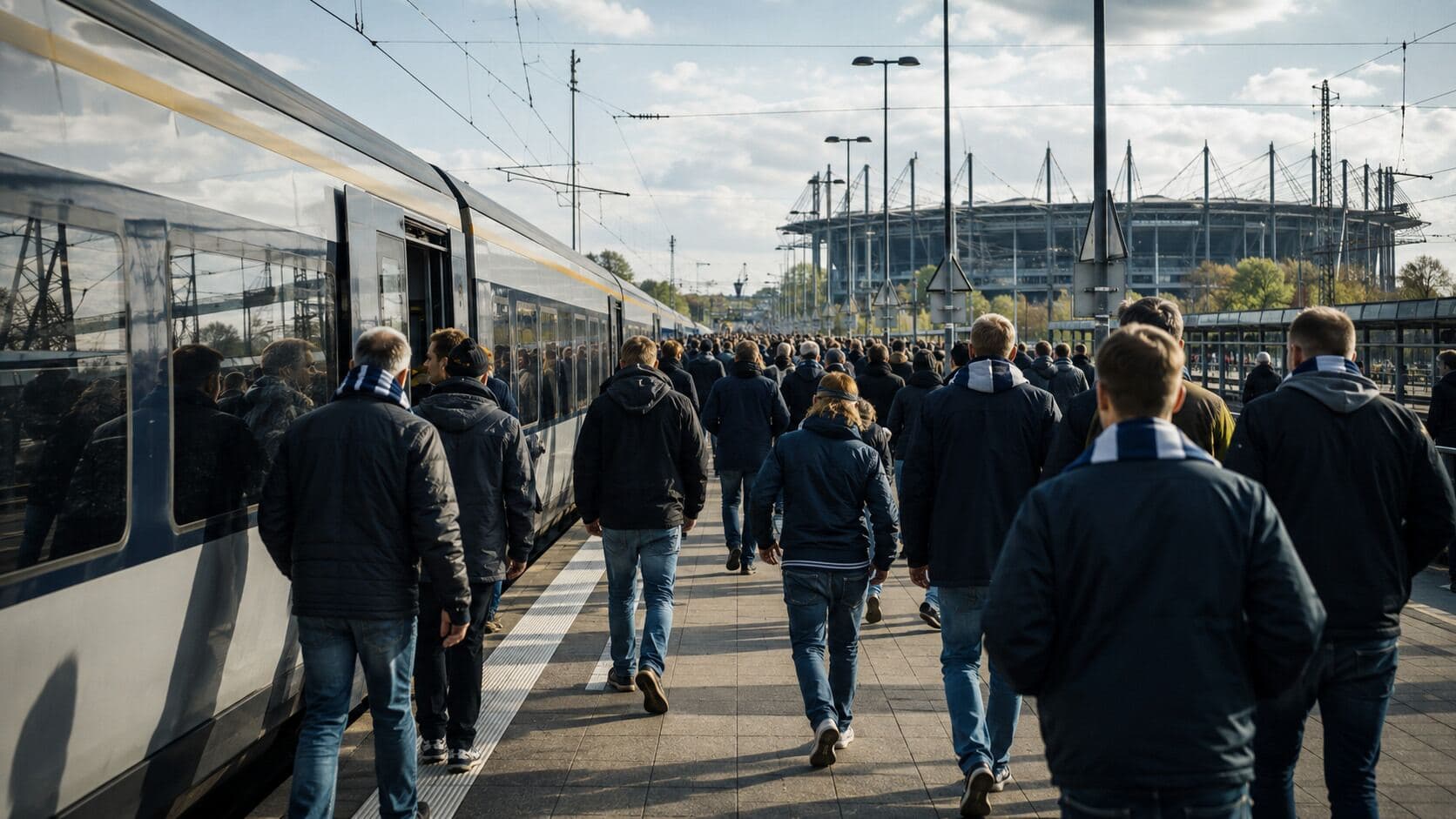
 AI-generated image
General Guide · Travel
Getting There
How to plan trains, local transport and the final approach to a German football stadium without letting the journey dominate the day.
The Essential Guide
German stadiums are often well connected by public transport, but matchday changes the normal rhythm of a city. The easiest journey is one planned in layers: city, stadium district and final walk.
I
Plan backwards from kick-off
Start with the time you want to be near the stadium, not the time the match begins. Add space for delays, finding the entrance and enjoying the build-up. A route that arrives ten minutes before kick-off is not a useful route.
Check long-distance and local transport separately. A fast train may bring you to the main station, while the final connection could be an S-Bahn, U-Bahn, tram, bus or a substantial walk.
Matchday Germany Tip
Save one earlier connection and one alternative route. Matchday crowds can make a theoretically slower option the more comfortable choice.
II
Understand your ticket
Some match tickets include local public transport for a defined area and period; others do not. The rules differ by club, competition and ticket type. Read the transport information on the ticket or official club website instead of assuming travel is included.
If you need a separate fare, buy it before joining the stadium crowd. Keep digital tickets loaded and available offline because mobile reception can become unreliable around major stations and grounds.
Quick Checklist
- ✓Check whether local transport is included
- ✓Confirm the valid zones and time window
- ✓Download all rail and match tickets
- ✓Know the name of the stadium stop and one alternative
III
Use the crowd intelligently
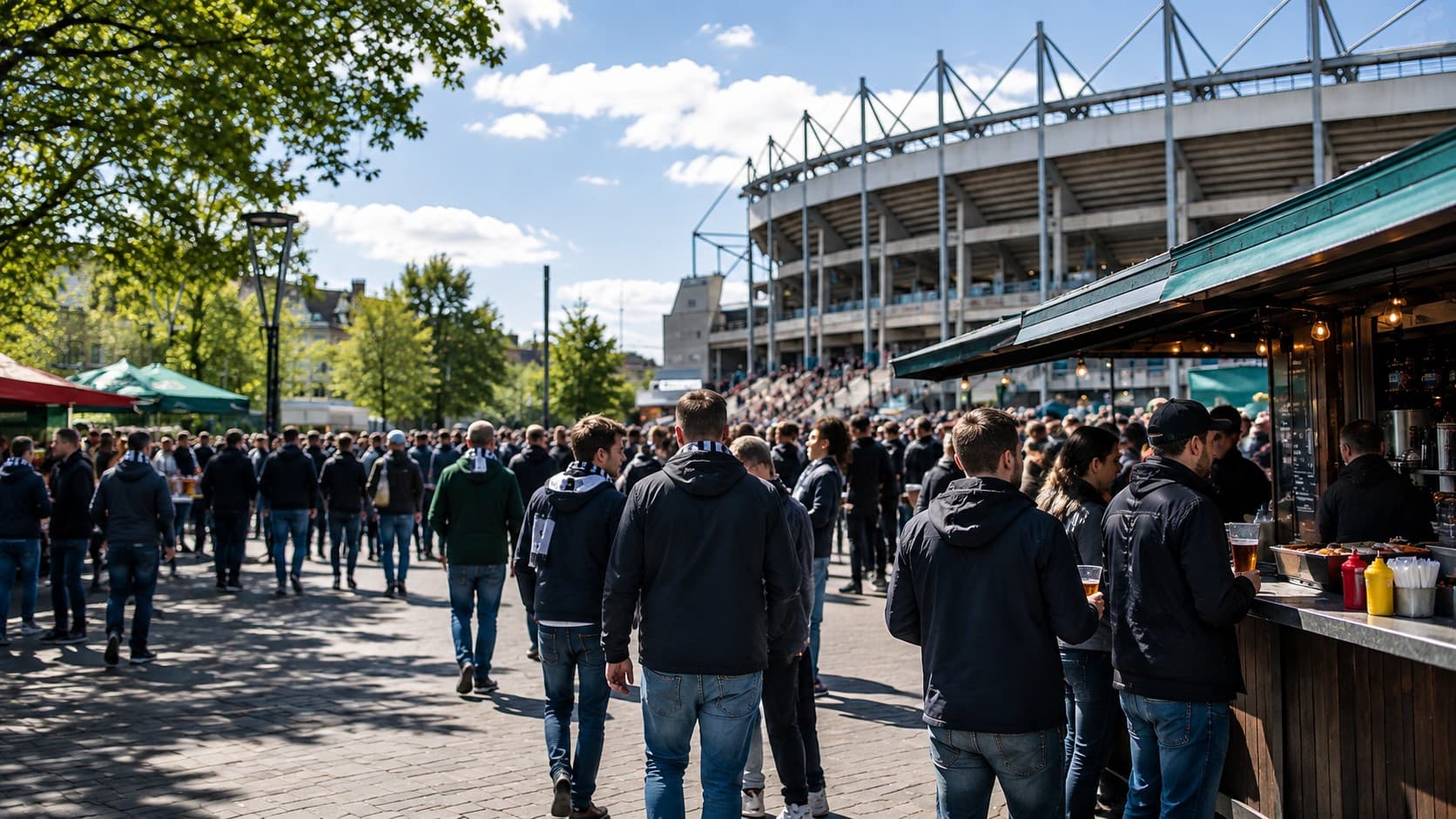
On the final connection, scarves often become better wayfinding than signs. Following the crowd is useful, but confirm that supporters are heading to your entrance side or stadium rather than a meeting point elsewhere.
Police or transport staff may separate routes for home and away supporters. Barriers and temporary diversions can make the matchday route different from the one shown by a navigation app. Follow local instructions.
IV
Prepare for the journey back
The busiest moment often comes after the final whistle. Thousands of people leave at once, platforms fill quickly and some stations temporarily control access. Decide before the match whether you will leave immediately or wait in the area.
Never book a critical long-distance departure with a narrow connection. Added time, stoppage time and crowd management can easily consume the margin. If the last train matters, know the alternatives before entering the stadium.
Quick Checklist
- ✓Screenshot the return options
- ✓Note the final useful departure
- ✓Allow time to reach the station after the whistle
- ✓Keep emergency taxi or night-bus information available
V
Make the route part of the experience
The final walk is often where a matchday begins to feel real. Kiosks become busier, conversations grow louder and the stadium appears between buildings or trees. Do not rush through it if you have time.
A well-planned journey creates room for spontaneity. Once the essential connections are secure, you can follow the atmosphere rather than stare at the clock.
Continue Planning
Complete Your Matchday
General Guide
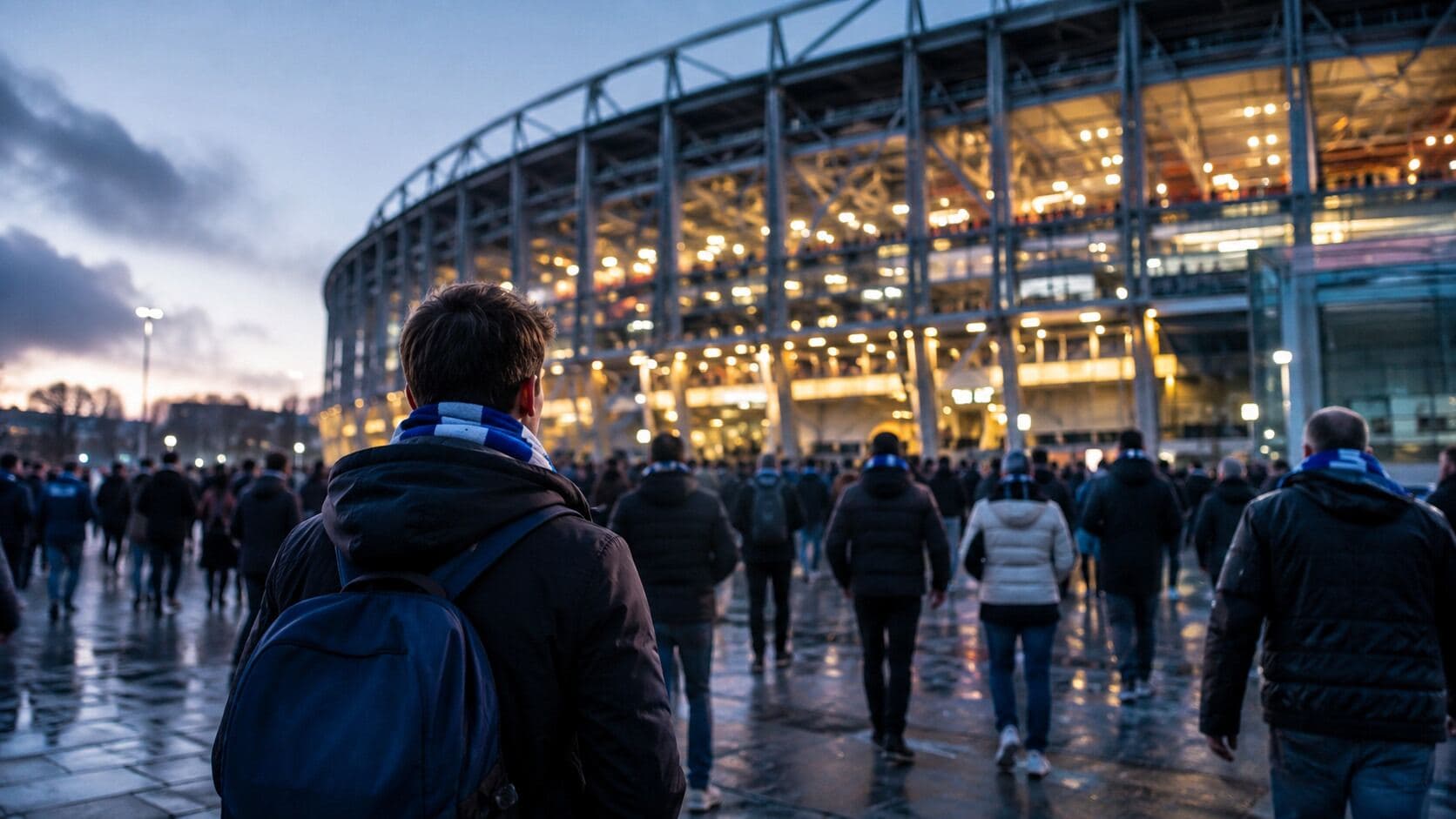
Your First Bundesliga Match
From choosing a fixture to finding your place in the stands: a calm, practical introduction to experiencing German football for the first time.
Read Guide →
General Guide
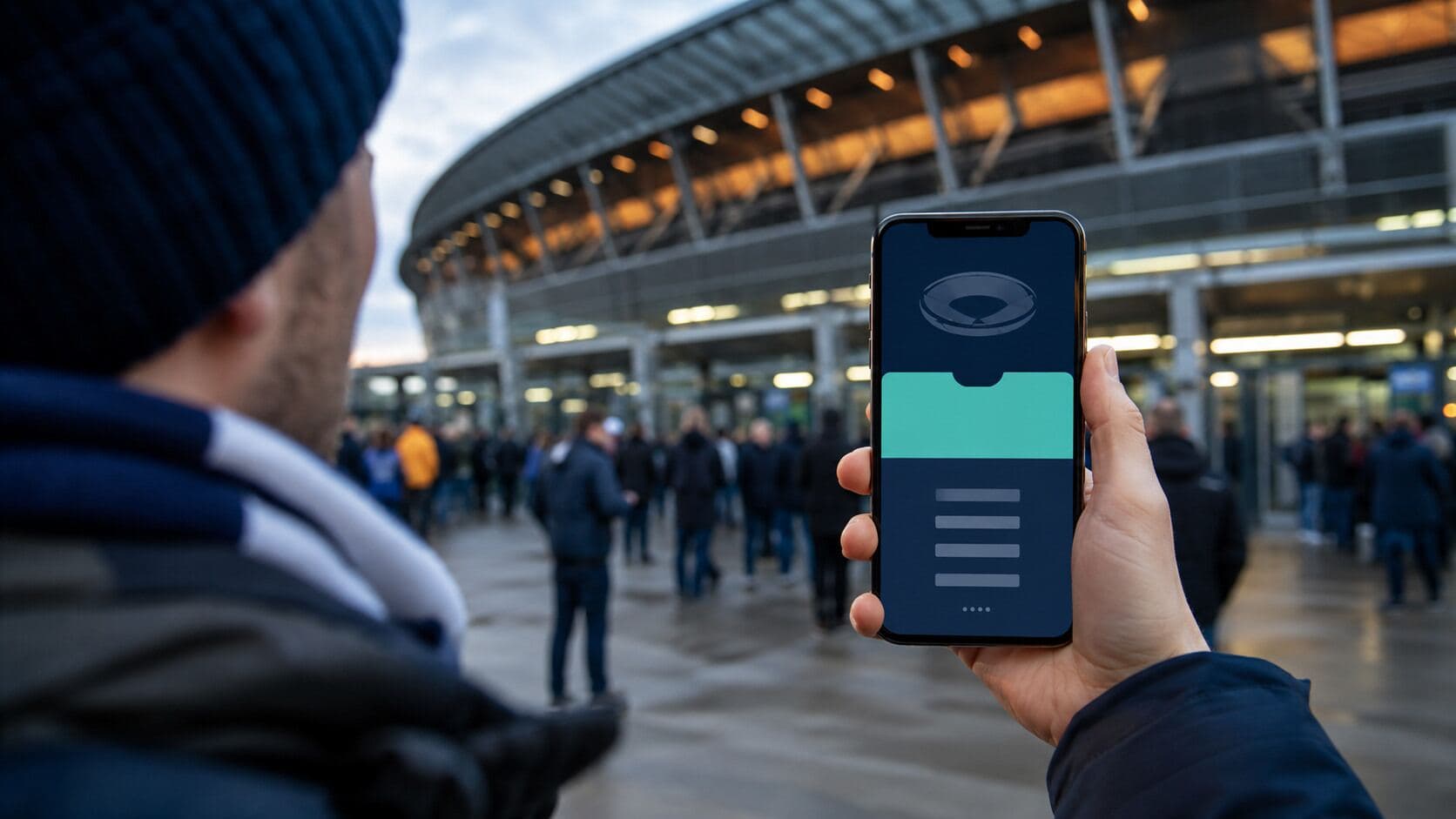
Buying Tickets
How Bundesliga ticket sales work, where to buy safely and what to check before choosing a section or confirming an order.
Read Guide →
General Guide
Before The Match
When to arrive, where to spend the build-up and how to experience the hours that turn a fixture into a matchday.
Read Guide →
General Guide
Inside The Stadium
A practical introduction to entrances, stands, food, atmosphere and the unwritten rules that shape the experience beyond your seat.
Read Guide →