General Football Culture
German Football Derbies
Rivalries, regions and identity — why some matches in Germany mean far more than ninety minutes.
Germany
I
When Football Becomes Local
There are matches you want to win.
And then there are matches you cannot afford to lose.
German football is full of rivalries, but its derbies occupy a world of their own. They are the fixtures supporters search for when the schedule is released. The dates that are circled months in advance. The games people talk about at work, at school, in pubs and around family tables long before anyone walks through a stadium gate.
On derby day, football seems to take over the place itself.
Colours appear in windows and railway stations. Scarves emerge on the morning commute. Conversations that would normally be about work or everyday life suddenly turn to football. By afternoon, familiar streets can feel different. Around the stadium, songs carry through neighbourhoods hours before kick-off.
And everybody knows what is at stake.
Not necessarily a championship.
Sometimes not even an important league position.
Something much closer to home.
The people in the opposite end are not distant opponents you encounter twice a year. They may live on the next street. They may sit across from you at work on Monday morning. They may be your neighbours, your friends or members of your own family.
That changes everything.
Germany is particularly suited to this kind of football rivalry. Its football landscape is remarkably dense. Clubs grew out of cities, industrial communities, neighbourhoods and regions that developed their own identities long before the Bundesliga existed.
Nowhere is that more obvious than in the Ruhrgebiet.
Travel through the region and one major football territory seems to merge into the next. Dortmund and Gelsenkirchen are separated by only a few dozen kilometres, yet on Revierderby day the distance between Borussia Dortmund and Schalke 04 can feel enormous.
In Hamburg, the divide exists within one city.
HSV and St. Pauli offer two dramatically different football worlds connected by the same streets and trains. The Volksparkstadion and Millerntor are only a journey across Hamburg from one another, but the cultures surrounding them developed in very different ways.
Berlin adds another layer.
Hertha and Union do not merely represent different parts of the capital. Their histories were shaped for decades by a city divided between East and West.
Move south-west and the geography changes again.
Along the Rhine, Cologne and Mönchengladbach contest a rivalry built across neighbouring cities and generations of competition. In Franconia, Nürnberg and Fürth preserve a football rivalry older than the Bundesliga itself. In Munich, Bayern's global dominance can obscure the fact that the city once contained a very different balance of football power between Bayern and 1860.
These rivalries tell us something important about German football.
A supporter can follow a club across Germany and Europe, but identity still begins with a place: a neighbourhood, a city, a region, a stadium.
That is why derby defeats hurt differently.
Losing an ordinary away match means leaving the stadium disappointed. Losing a derby means the result follows you home.
The other supporters are still there.
The city is still shared.
And the conversation continues until the next meeting.
For a football traveller, this is also why German derbies are so fascinating. They offer something that cannot be understood from the league table alone. Attend one and you are stepping into a story that may have been developing for decades — sometimes for more than a century.
But there is another important distinction.
Not every huge German football match is a derby.
And understanding why tells us a great deal about how German football works.
II
What Makes a German Derby?
Not every important match is a derby.
That distinction matters.
A derby traditionally grows from geography. Two clubs share a city, neighbouring cities or a wider region. Their supporters live alongside one another. They go to the same schools, work in the same places and travel on the same trains.
Then matchday arrives.
For ninety minutes, all that proximity becomes rivalry.
Some German derbies are contained within a single city. Hamburg has HSV and St. Pauli. Berlin has Hertha BSC and Union Berlin. Munich has Bayern and TSV 1860.
Others belong to an entire region.
Borussia Dortmund and Schalke 04 share the Ruhrgebiet. Cologne and Borussia Mönchengladbach compete within the Rhineland. Further north, Hamburg and Bremen have spent generations contesting one of German football's great regional rivalries.
And then there are huge matches that are rivalries rather than derbies.
Bayern Munich against Borussia Dortmund is the most obvious example. It may be known internationally as Der Klassiker, but Munich and Dortmund are hundreds of kilometres apart. Its modern importance grew primarily from sporting competition rather than shared geography.
III
The Revierderby
Few matches explain German football better than Borussia Dortmund against Schalke 04.
Dortmund and Gelsenkirchen sit inside the Ruhrgebiet, the vast urban landscape shaped by coal, steel, migration and heavy industry. Football grew alongside it.
The clubs developed enormous supporter cultures in communities where football became part of local identity. Generations grew up surrounded by supporters of both sides.
That proximity is crucial.
This is not simply Dortmund against Schalke. It is neighbour against neighbour, workmate against workmate and sometimes family against family.
The clubs first met in 1925. Over the following century, the fixture developed into one of Germany's defining football rivalries.
There have been extraordinary chapters along the way: title races, crushing defeats, unlikely victories and one of the Bundesliga's most famous comebacks, when Schalke recovered from 4–0 down in Dortmund to draw 4–4 in 2017.
The Revierderby is the Ruhrgebiet divided for ninety minutes.
IV
Hamburg: One City. Two Football Worlds.
Few city derbies offer a greater contrast in football identity.
HSV and St. Pauli share Hamburg, but they represent very different football worlds.
For much of the twentieth century there was barely a sporting rivalry at all. HSV were one of Germany's major football powers while St. Pauli spent long periods outside the top division.
Over time, that changed.
St. Pauli developed an internationally recognised supporter culture centred around the neighbourhood surrounding the Millerntor. HSV remained the city's historically dominant club, drawing support from across Hamburg and far beyond it.
When the teams meet, geography compresses those differences into a single city.
V
Berlin: A Derby Shaped by History
Berlin's modern derby is unusual because for decades it could barely exist.
Hertha played in West Berlin.
Union played in East Berlin.
A wall stood between their football worlds.
Following German reunification, the clubs still spent years moving through different divisions before regular competitive meetings became possible.
Their stadiums provide dramatically different settings: Hertha's vast Olympiastadion in the west and Union's intimate Stadion An der Alten Försterei in Köpenick.
But the deeper story is Berlin itself.
A city once physically divided now contests its football identity across the same capital.
VI
The Rhineland
The Rhineland does not belong to one football club.
And that is precisely the problem.
Cologne and Mönchengladbach are close enough for supporters of both clubs to encounter one another constantly, creating one of Germany's strongest regional rivalries.
Its modern roots reach deep into the early Bundesliga era. Cologne entered the new national league as an established force and became its first champions. Gladbach soon emerged as one of Germany's most exciting clubs.
Success changed the regional balance and intensified the rivalry.
Today the Rheinderby is about far more than league position. It is a contest over football identity in one of Germany's most densely populated football regions.
And it is only part of a much larger network of rivalries along the Rhine.
VII
The Nordderby
Some derbies belong to a city.
This one belongs to the north.
Hamburg and Bremen are separated by considerably more distance than Dortmund and Gelsenkirchen, but generations of competition turned HSV against Werder Bremen into the defining rivalry of northern German football.
Both clubs spent decades among the Bundesliga's institutions. Both became German champions. Both competed in Europe.
And both wanted to be the football power of the north.
The rivalry reached extraordinary intensity in 2009 when Hamburg and Bremen met four times in just 18 days across the Bundesliga, DFB Cup and UEFA Cup.
VIII
The Frankenderby
To understand German football culture, sometimes you have to leave the Bundesliga behind.
Nürnberg and Fürth have been playing one another for more than a century.
Their cities are neighbours. Their football histories stretch back to an era when Franconia stood at the centre of the German game.
Long before the Bundesliga existed, Nürnberg were one of the country's dominant clubs while Fürth were themselves national champions.
Modern league tables can obscure that history.
The derby does not forget it.
IX
Munich's Other Football Story
Today, Bayern Munich are one of the world's biggest football clubs.
That can make Munich's older football geography easy to miss.
TSV 1860 were not always the city's second club. When the Bundesliga began in 1963, it was 1860 — not Bayern — who represented Munich in the new national competition.
In 1966, the Lions became German champions.
The balance of power subsequently changed beyond recognition. Bayern grew into Germany's dominant football institution while 1860 eventually disappeared from the Bundesliga.
Yet the Münchner Stadtderby remains part of the city's football memory.
Cities change. Clubs rise and fall. Rivalries remember.
X
Rivalries in Eastern Germany
German reunification created another distinctive layer of football culture.
Clubs that had competed within the East German football system entered a unified league structure. Their histories did not disappear with it.
Dynamo Dresden, 1. FC Magdeburg, Hansa Rostock, Carl Zeiss Jena, Hallescher FC, Erzgebirge Aue and others carry identities shaped by decades of football in the GDR.
Matches between them can therefore connect modern football with an entirely different sporting landscape.
These rivalries deserve to be understood on their own terms — not simply as eastern versions of rivalries elsewhere.
They belong to another chapter of German football history.
XI
And What About Der Klassiker?
Bayern Munich against Borussia Dortmund is Germany's most internationally recognisable club fixture.
But it is not really a derby.
Bayern and Dortmund are separated by hundreds of kilometres and belong to completely different regions.
The rivalry grew primarily from competition. Particularly since the 1990s, the clubs have repeatedly competed for championships, cups, players and status at the top of German football.
That makes Bayern against Dortmund enormously important.
It simply makes it a different kind of rivalry.
XII
Why Derby Day Feels Different
For a visitor, the difference can begin hours before kick-off.
Scarves appear at railway stations. Songs start earlier. The streets around the stadium become territorial. Inside, choreographies, flags and noise turn familiar stands into declarations of identity.
But the most important part may come afterwards.
Everyone goes home.
Back into the same cities and regions.
The Dortmund supporter returns to a workplace containing Schalke supporters. HSV and St. Pauli fans share the same trains. Cologne and Gladbach supporters return to neighbouring towns across the Rhineland.
XIII
Experiencing a German Derby
For football travellers, attending a derby can be one of the most memorable experiences German football offers.
It can also be one of the hardest tickets to obtain.
Demand is exceptionally high, member allocations are important and away sections are tightly controlled. Some fixtures also involve additional security measures.
Never assume that because a stadium is large, derby tickets will be easy to find.
Plan early. Understand the clubs. Respect the home and away sections. And do not treat the rivalry as a costume.
A derby may be an experience for a visitor.
For the people around you, it can represent generations of football identity.
XIV
Explore Germany Through Its Derbies
German football does not have one derby culture.
It has dozens.
Some divide neighbourhoods. Some divide cities. Some divide regions. Some preserve histories that stretch back more than a century.
Together they create another way to explore German football.
Not through league tables.
Through places.
From the Revierderby to Hamburg, Berlin, the Rhineland and beyond, follow the rivalries that explain Germany through football.
Continue Your Journey
Keep Exploring German Football.
Follow this story into its club, its football world and another chapter of German football culture.
Club World
VfB Stuttgart World
Measured by Our Own Standards
Explore Club →
City World
Stuttgart World
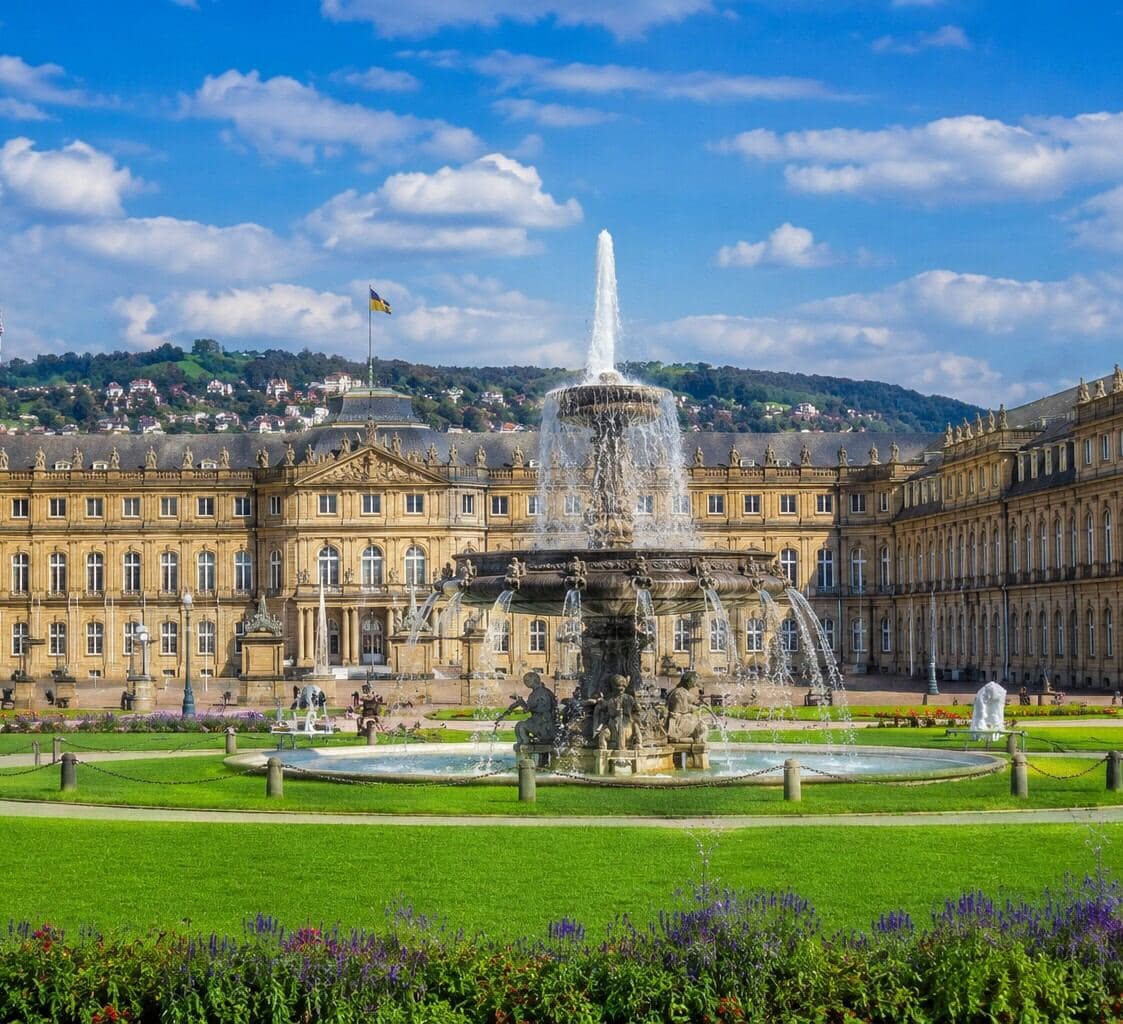
Explore football culture in the heart of Swabia, from matchday traditions to the city's distinctive identity.
Explore World →
Another Club World
FC Bayern World
A Winning Mentality Is Expected
Explore Club →
Related Culture
Diva vom Neckar
Champions, relegation candidates and unexpected contenders — VfB Stuttgart has rarely followed a predictable path.
Read Story →