
Football History
From Bruchweg to MEWA ARENA
Two football homes tell the story of how Mainz 05 grew from a close-knit local club into an established Bundesliga presence.
Mainz · Mainz 05
I
Two Mainz Football Homes
To understand the development of Mainz 05, it helps to visit two very different places.
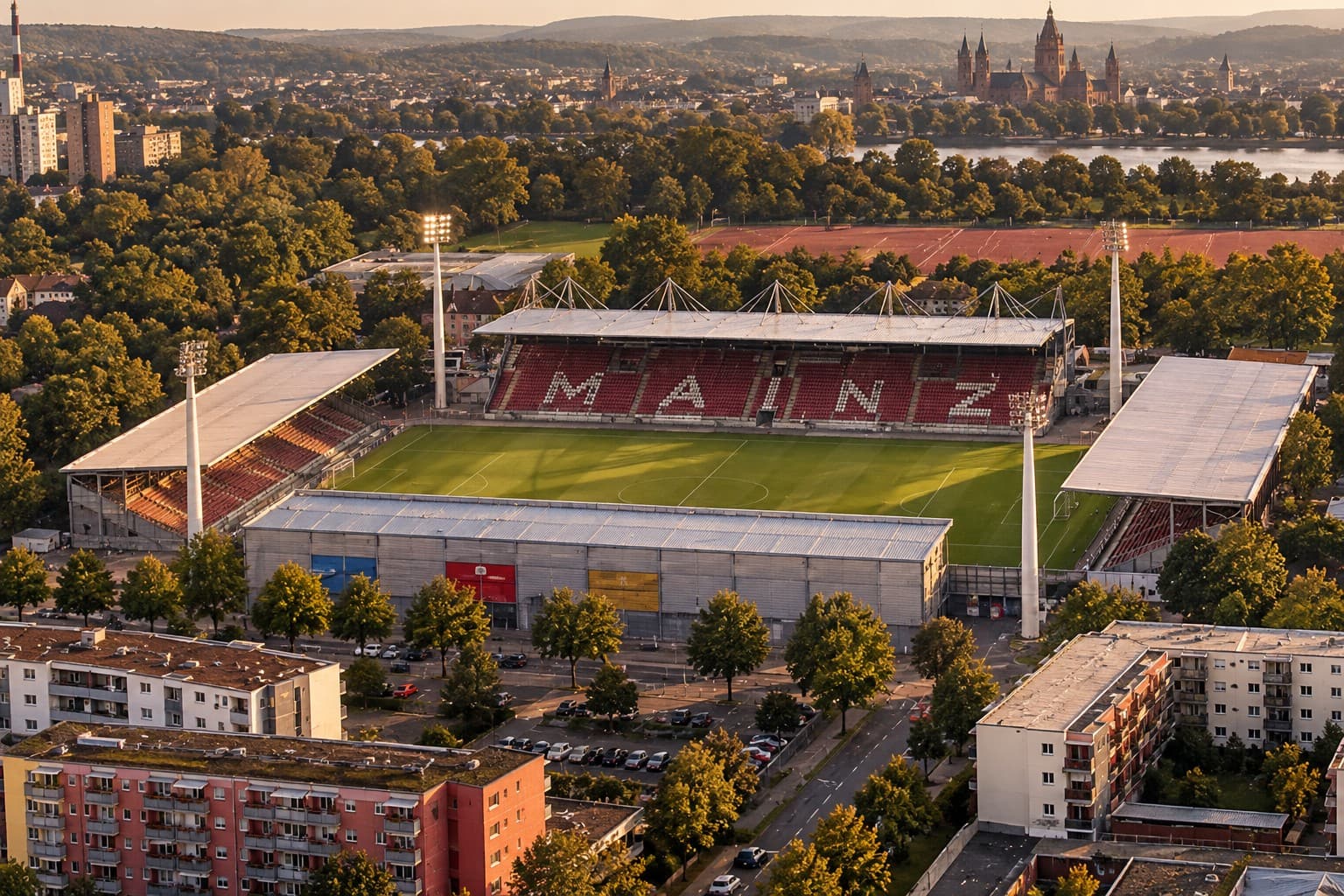
Close to the city centre stands the Bruchwegstadion, the ground where generations of supporters experienced promotion battles, setbacks and eventually the club's arrival in the Bundesliga.
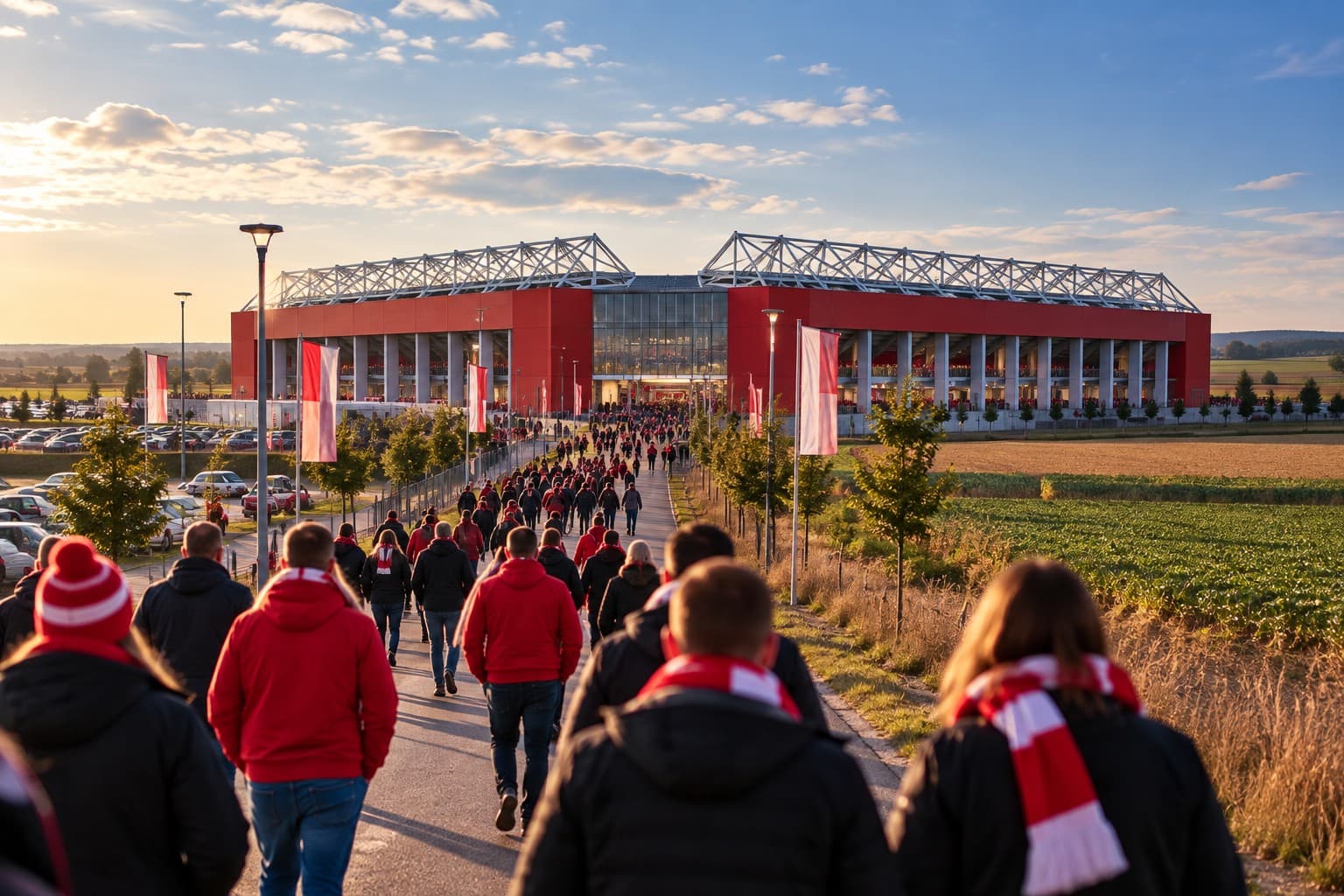
Further west stands the MEWA ARENA, a purpose-built stadium with more than 33,000 places and the infrastructure of modern Bundesliga football.
The move between them in 2011 was more than a change of address.
It marked the moment when Mainz 05 needed a football home that matched the scale the club had reached.
II
The Bruchweg
For decades, the Bruchwegstadion was the centre of Mainz football.
It was never one of Germany's largest or most polished grounds. Instead, it developed gradually as Mainz 05 developed.
Tribunes were rebuilt and expanded as crowds increased and the club moved closer to the Bundesliga.
Space around the ground was limited, forcing Mainz 05 to find increasingly creative ways of adding capacity.
The result was an organically grown stadium whose imperfections became part of its character.
Supporters were close to the pitch, the stands felt compact and the Bruchweg became inseparable from the emerging identity of Mainz 05.
III
The Road To The Bundesliga
The most important period in the modern history of Mainz 05 unfolded at the Bruchweg.
In 2002 and 2003, the club came painfully close to reaching the Bundesliga.
Both attempts ended in disappointment.
Then came 23 May 2004.
Mainz defeated Eintracht Trier 3–0 at the Bruchweg and, after two dramatic near misses, finally secured promotion to the Bundesliga.
The celebrations spread beyond the stadium and through the city. Mainz was now a Bundesliga city.
IV
When The Bruchweg Became Too Small
Promotion transformed the demands placed on the old stadium.
Temporary stands and further adaptations helped Mainz 05 continue playing Bundesliga football at the Bruchweg, but the limitations of the site became increasingly clear.
The club needed more capacity, improved infrastructure and a stadium capable of supporting its development as an established professional football organisation.
In 2007, the decision was made to build a new stadium.
Construction began in May 2009 on a site at the western edge of Mainz.
For supporters, the logic of the move was obvious. That did not make leaving the Bruchweg emotionally simple.
V
The Last Bundesliga Match
On 14 May 2011, Mainz 05 played its final Bundesliga match at the Bruchwegstadion.
FC St. Pauli were the visitors on the final day of the 2010/11 Bundesliga season.
The occasion marked the end of an era stretching across generations of Mainz football.
Supporters marched from the city centre to the stadium before the match, while a choreography across the stands provided a farewell to the old Bundesliga home.
Mainz 05 had entered the Bruchweg years earlier as a very different football club.
It left as an established Bundesliga side preparing for a new scale of football.
VI
A New Arena
The new stadium opened on 3 July 2011 under its original name, the Coface Arena.
Its architecture was deliberately football-focused: four steep single-tier stands, open corners and a large proportion of standing places.
The objective was not simply to create more capacity.
Mainz 05 wanted to transfer some of the closeness and atmosphere of the Bruchweg into a stadium designed for modern Bundesliga football.
On 7 August 2011, Mainz 05 played its first Bundesliga home match in the new arena and defeated Bayer Leverkusen 2–0.
A new football home had begun.
VII
The Bruchweg Lives On
The move did not remove the Bruchweg from Mainz 05.
Instead, the old stadium took on a different role.
The professional team continued to use the wider Bruchweg site for training, while the club developed its academy and sporting infrastructure there.
Youth and reserve teams continued to play matches at the old ground.
Mainz 05 has continued investing in the site, turning the Bruchweg into a working football campus rather than preserving it only as a monument to the past.
That makes the relationship between the two stadiums unusual.
The Bundesliga moved to a new home. The old home remained part of everyday club life.
VIII
Two Stadiums, One Mainz Story
For a football traveller, the two grounds provide different ways of understanding Mainz 05.
The MEWA ARENA represents the club as it exists today: larger, established and equipped for Bundesliga football.
The Bruchweg tells a more intimate story.
It is the place associated with the near misses, the first Bundesliga promotion and the period in which much of modern Mainz 05 culture developed.
Neither ground replaces the other in the story of the club.
One explains where Mainz 05 came from. The other represents the space the club needed once it had grown beyond its old home.
Continue Your Journey
Keep Exploring German Football.
Follow this story into its club, its football world and another chapter of German football culture.
Club World
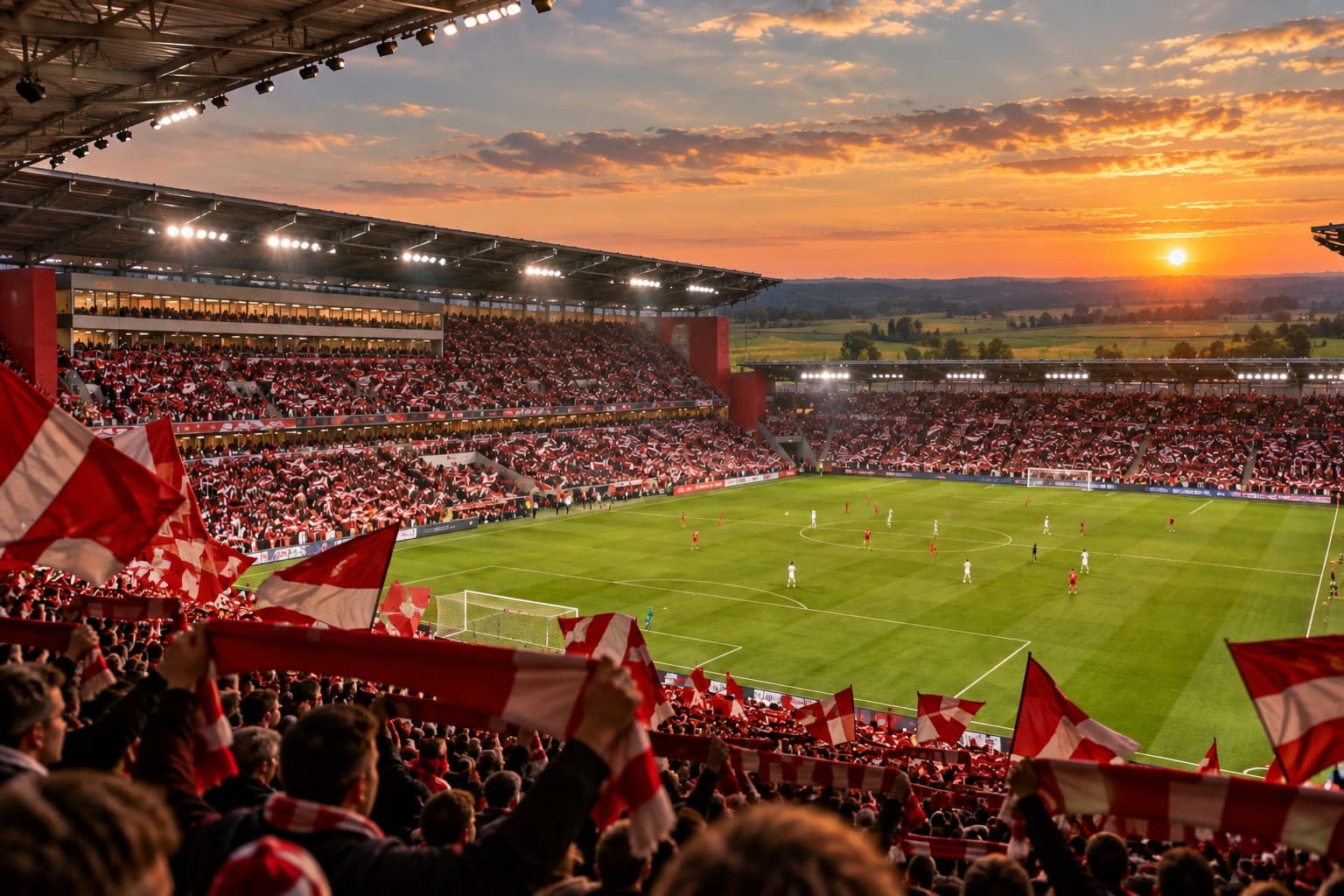
Mainz 05 World
Football with Local Roots
Explore Club →
City World
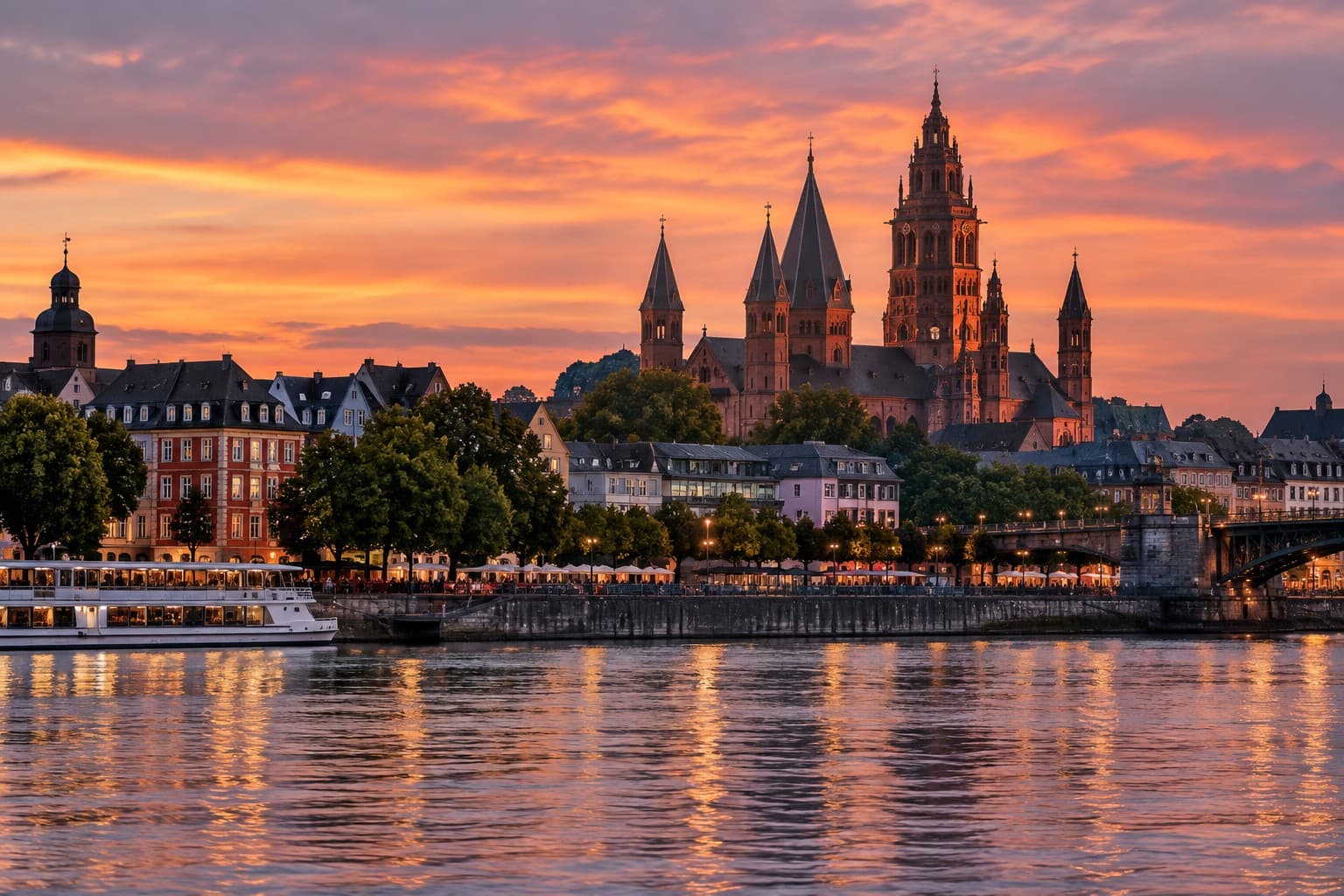
Mainz World
Discover a historic football city on the Rhine shaped by Mainz 05, Fastnacht traditions and a strong local identity.
Explore World →
Another Club World
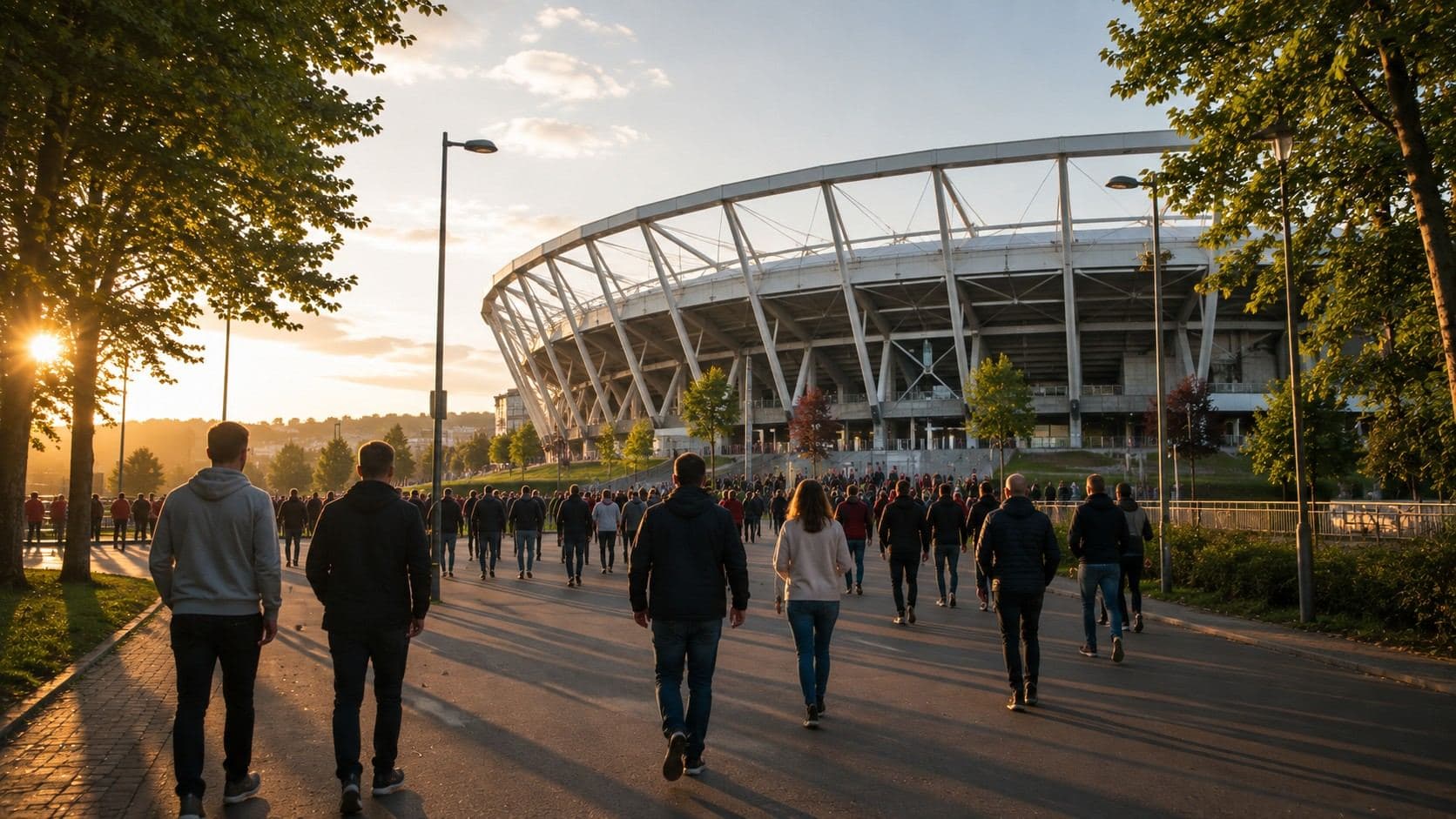
VfB Stuttgart World
Measured by Our Own Standards
Explore Club →
Related Culture
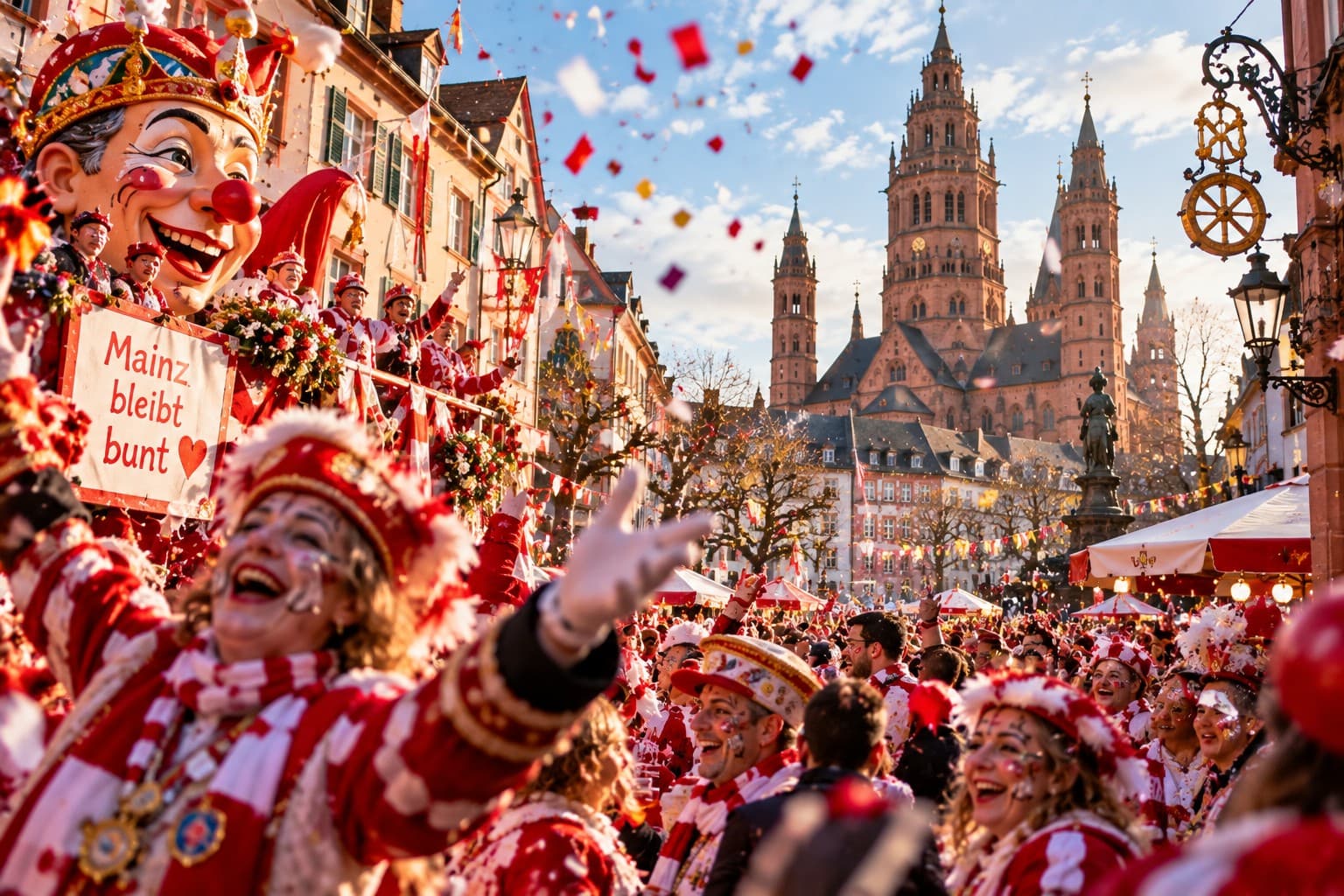
Football, Fastnacht and Local Roots
How Mainz 05 turned local culture, self-irony and Fastnacht into one of German football's most distinctive club identities.
Read Story →