Usually Available
- • Midweek fixtures
- • Lower-profile opponents
- • Selected early-season matches
Matchday Guide
Experience royal-blue passion, Ruhrgebiet identity and one of Germany's loudest modern football arenas.
Overview
FC Schalke 04 is one of Germany's most historically significant football clubs. Founded in 1904 in the working-class mining district of Gelsenkirchen, the club built its identity on community, loyalty and solidarity.
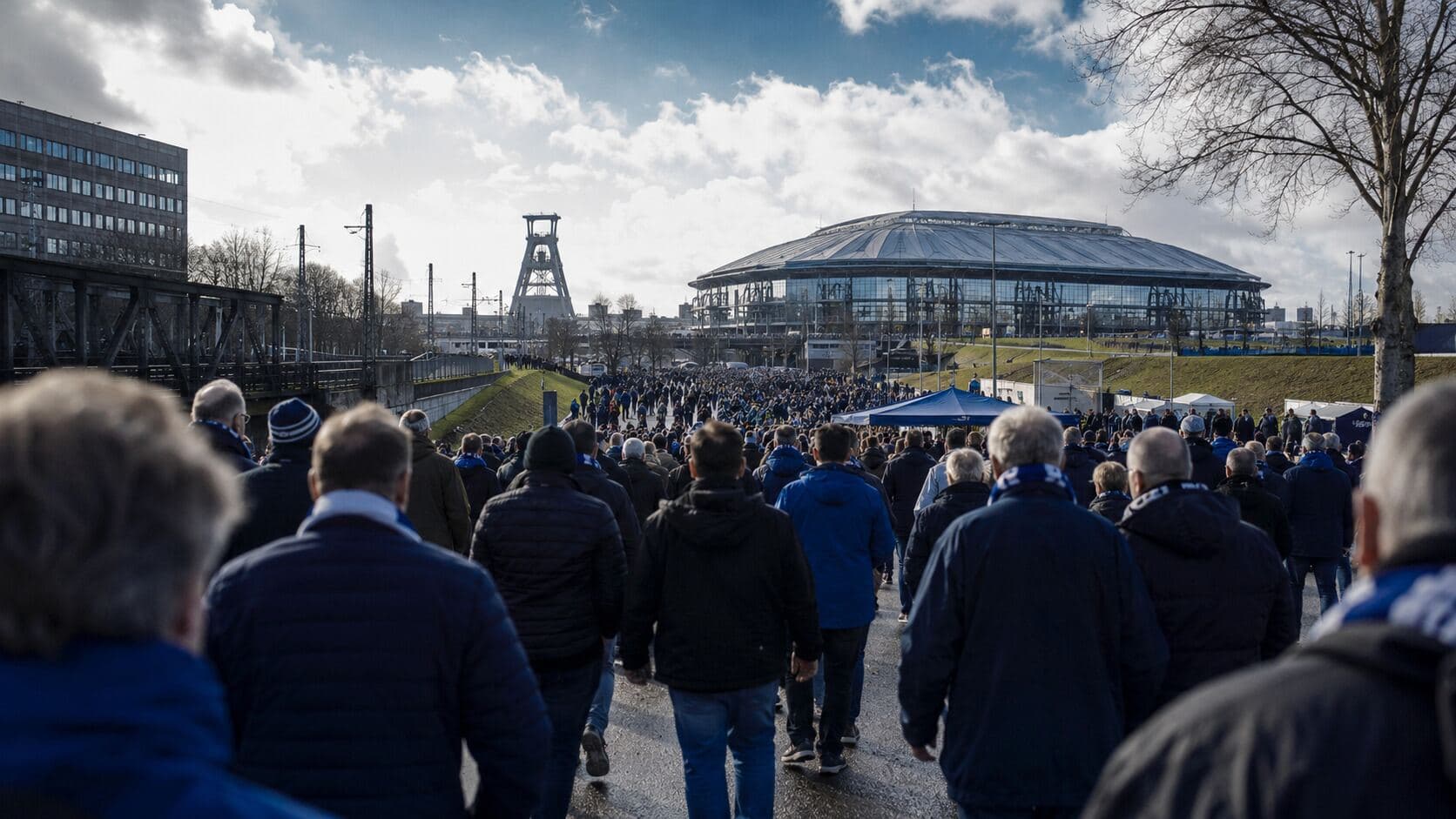
Home matches take place at the Veltins-Arena, also known as the Arena AufSchalke. A matchday here is a direct immersion into the raw and emotional football culture of the Ruhrgebiet.
Tickets
Schalke's large and loyal fanbase means that ticket demand remains strong regardless of the division. High-profile fixtures and local rivalries can sell out rapidly.
Always use official channels. The Revierderby is one of the most sought-after tickets in European football and should be planned as far in advance as possible.
Stadium
The Veltins-Arena opened in 2001 and was one of the most technically advanced stadiums in the world at the time of its construction.
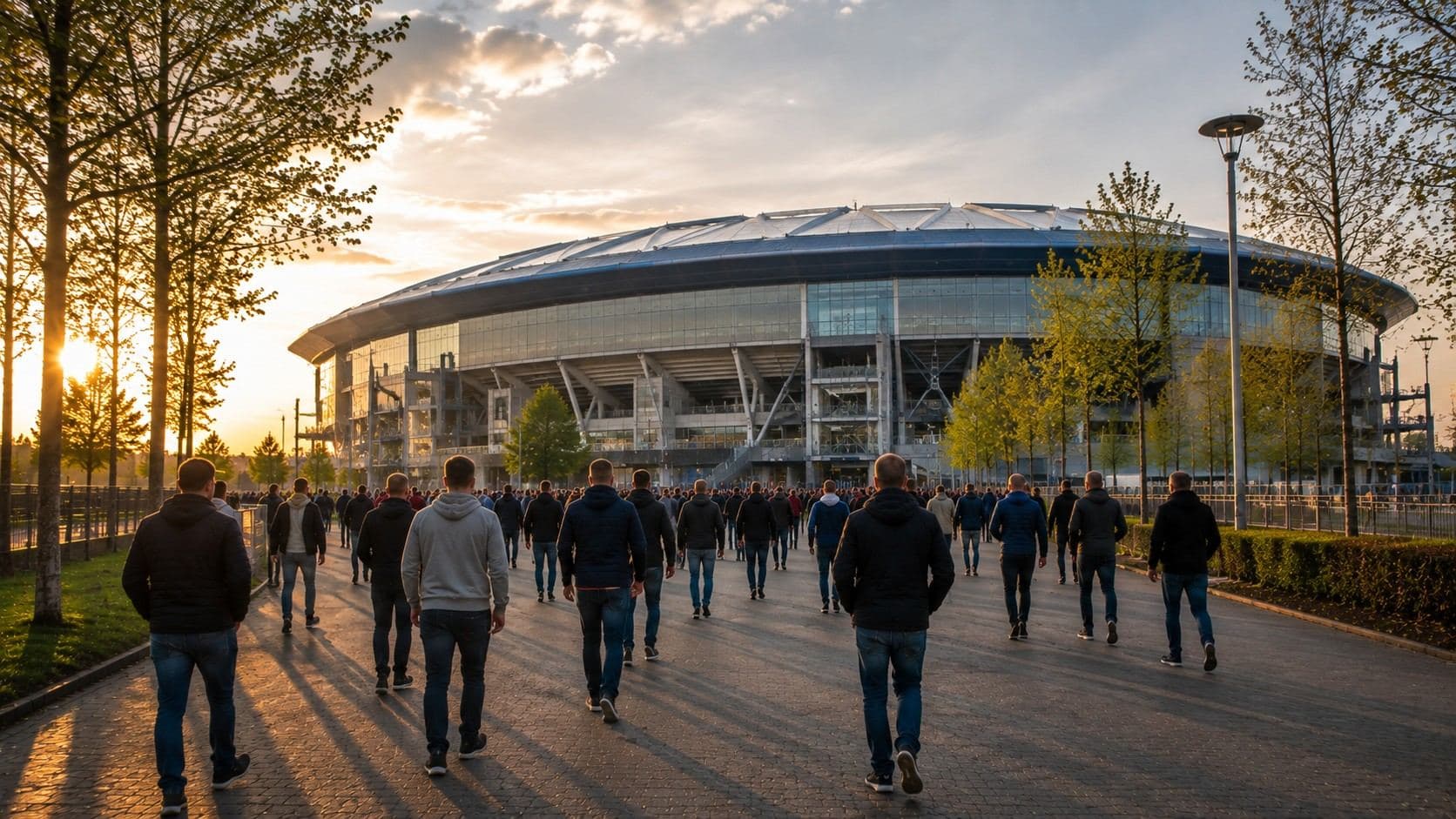
Its retractable roof, movable pitch and fully enclosed design make it one of Europe's most recognisable modern football arenas. The stadium also hosted matches during the 2006 FIFA World Cup.
The home of Schalke's most vocal and active supporters. This is the place for visitors who want to experience the full intensity of the arena.
A seated area with excellent views, greater comfort and modern facilities. Recommended for families and first-time visitors.
The fully enclosed design traps and amplifies the sound, creating one of the loudest atmospheres in German football.
Attendance & Atmosphere
The Veltins-Arena's enclosed design contains and amplifies the sound generated by more than 60,000 supporters. When the Nordkurve gets going, the noise fills every corner of the stadium.
Schalke's supporters often refer to themselves as the miners, reflecting the club's deep connection to the industrial and working-class history of Gelsenkirchen.
Pre-Match Tradition
Before kick-off, the club anthem “Blau und Weiß” is sung throughout the arena. Tens of thousands of voices inside the enclosed stadium create one of the most powerful entrances in German football.
Gelsenkirchen was shaped by mining and heavy industry. That history remains visible in the club's language, traditions and understanding of community.
Getting There
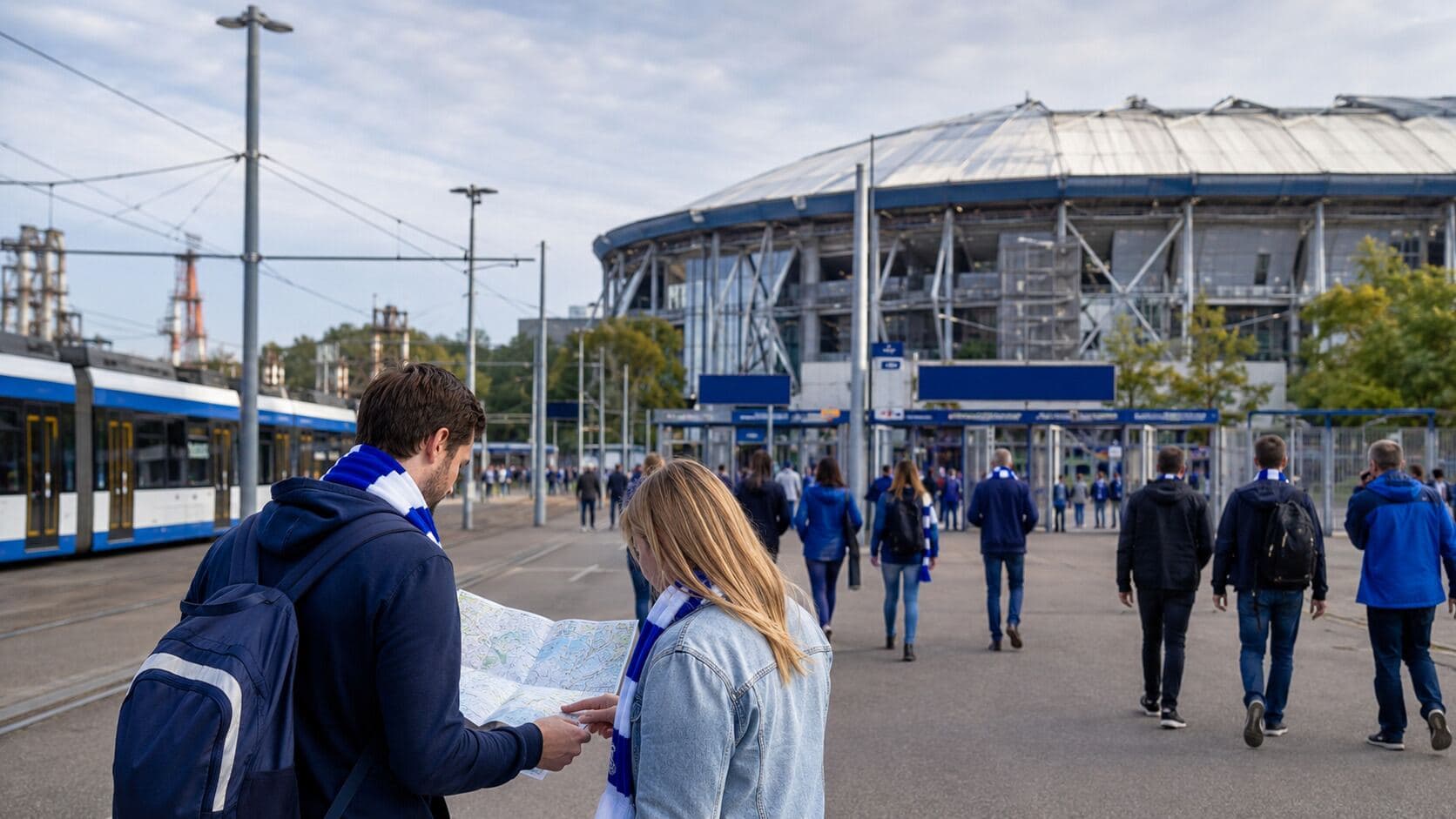
From Gelsenkirchen Hauptbahnhof, take Tram 302 and alight at VELTINS-Arena. The stadium is approximately five minutes away on foot.
Total travel time from Gelsenkirchen Hauptbahnhof is usually around 15–20 minutes.
From Dortmund, take the S-Bahn S2 to Gelsenkirchen Hauptbahnhof and continue by Tram 302. Allow approximately 40–50 minutes.
From Düsseldorf, take an ICE or IC service to Gelsenkirchen Hauptbahnhof and continue by tram. Allow approximately 45–55 minutes.
Parking is available around the Veltins-Arena, but spaces fill quickly on high-demand matchdays. Public transport is normally the easier option.
Before The Match
Early arrival gives you enough time to explore the stadium, visit the Schalke Museum, browse the fan shop and experience the build-up around the arena.
The museum inside the arena documents the club's history from 1904, its championship eras, legendary players and the cultural importance of Schalke to the Ruhrgebiet.
Know The Context
Understanding Gelsenkirchen's mining history makes the matchday experience richer. Royal blue and white represent far more than club colours here: they represent local pride, solidarity and belonging.
Inside The Stadium
The atmosphere is contained and amplified from the opening whistle. The Nordkurve leads the support, while the anthem and the enclosed roof turn the arena into a powerful acoustic chamber.
Catering prices from the club's own announcement, January 2024 — the oldest figures on this site. Expect them to be low.
Cheapest way in: standing in the Nordkurve €18.50, or €17.50 for members. Travel on the VRR network is included in the ticket.
A seat: up to €68. Against Bayern and Dortmund, add €20 in category 0 and €10 in categories 1 to 4.
Food and drink: beer €5.50, bratwurst €3.80 — among the cheapest in the league. Around €12 for a drink and something to eat.
Prices, capacities and transport details on this page were last checked on . Confirm anything that matters with the club before you travel.
After The Match
Tram 302 becomes extremely busy after the final whistle. Waiting 20–30 minutes before leaving can make the return journey considerably more comfortable.
Bars and restaurants near Gelsenkirchen Hauptbahnhof remain active on matchdays, particularly around the central pedestrian area.
Recommended Hotels
Essen is around 15 minutes from Gelsenkirchen by S-Bahn and offers a broader range of accommodation near the central station.
A practical option for visitors combining Schalke with a Borussia Dortmund match during the same trip.
Book as early as possible for the Revierderby. Hotels across the entire Ruhrgebiet fill quickly and prices rise significantly.
Continue Exploring The Ruhr
The Ruhrgebiet is one of Europe's most underrated cultural destinations, where football, industrial history and regional identity are closely connected.
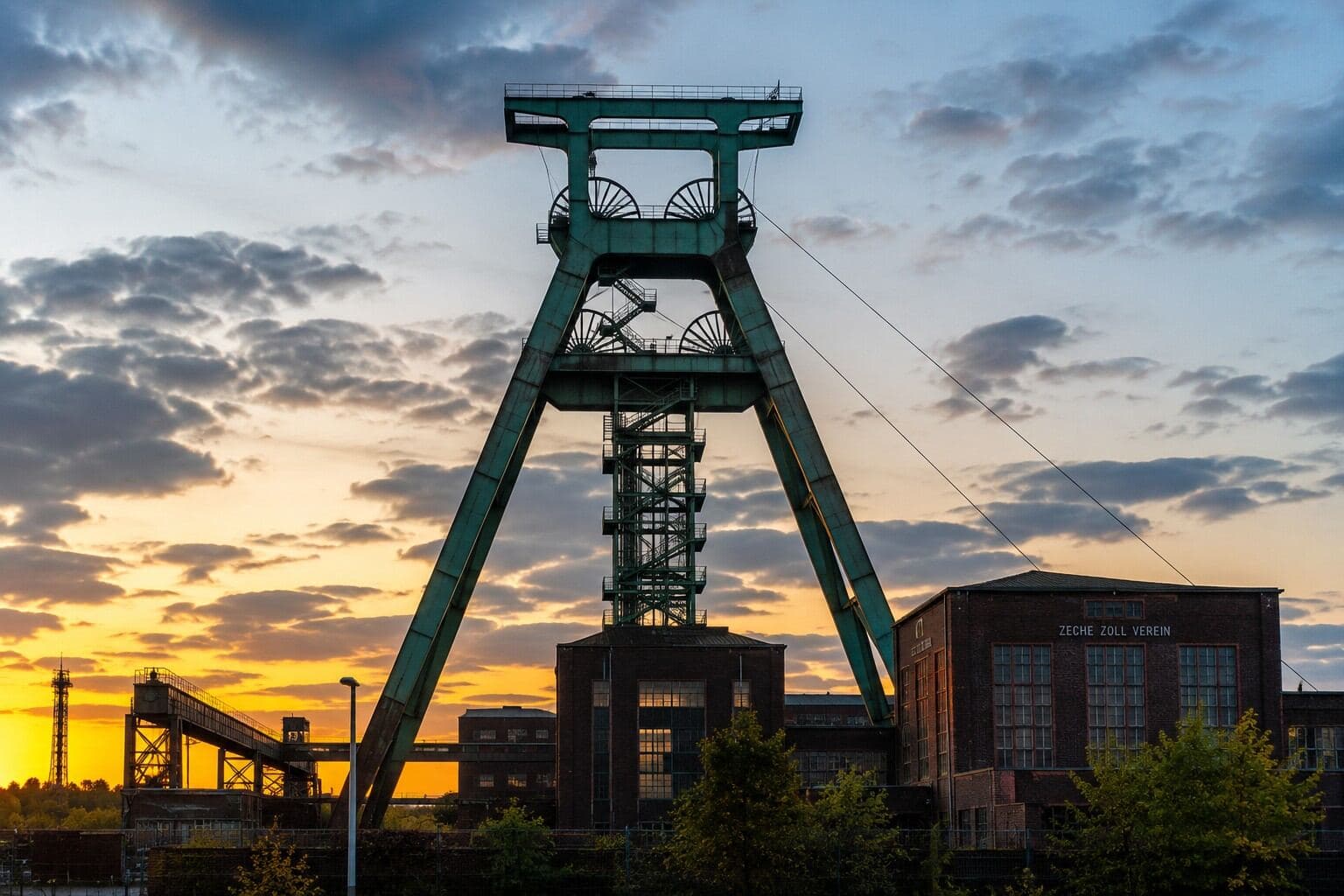
A UNESCO World Heritage coal mine complex in Essen and one of the defining landmarks of the Ruhrgebiet.
A dramatic cultural venue inside a former industrial gas holder.
Germany's national football museum in Dortmund.
A former steelworks transformed into an atmospheric public park.
Continue Your Journey
Destination
Explore Germany's greatest concentration of football culture.
Explore →
Club World
Explore Gelsenkirchen, the Veltins-Arena and unconditional royal-blue loyalty.
Explore →
Club World
Experience Schalke's greatest rival and the Yellow Wall.
Explore →
Club Culture
Discover the industrial roots and identity behind Schalke's royal-blue support.
Read Story →