Club Identity
Always Blue
Success changes. Divisions change. In Gelsenkirchen, the relationship with Schalke remains königsblau.
Gelsenkirchen · Schalke 04
I
Königsblau
Some football colours describe a shirt. Königsblau describes an identity.
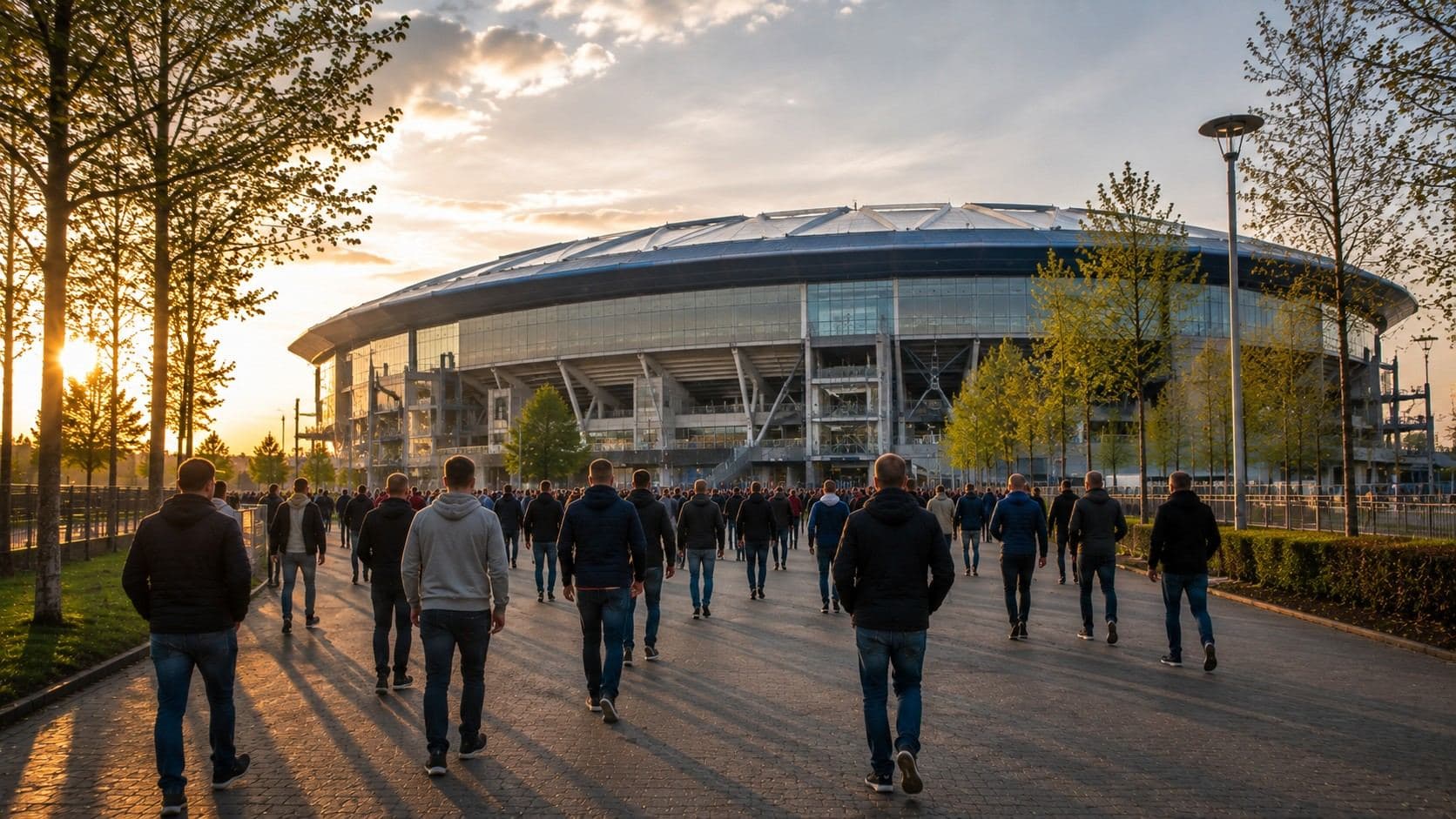
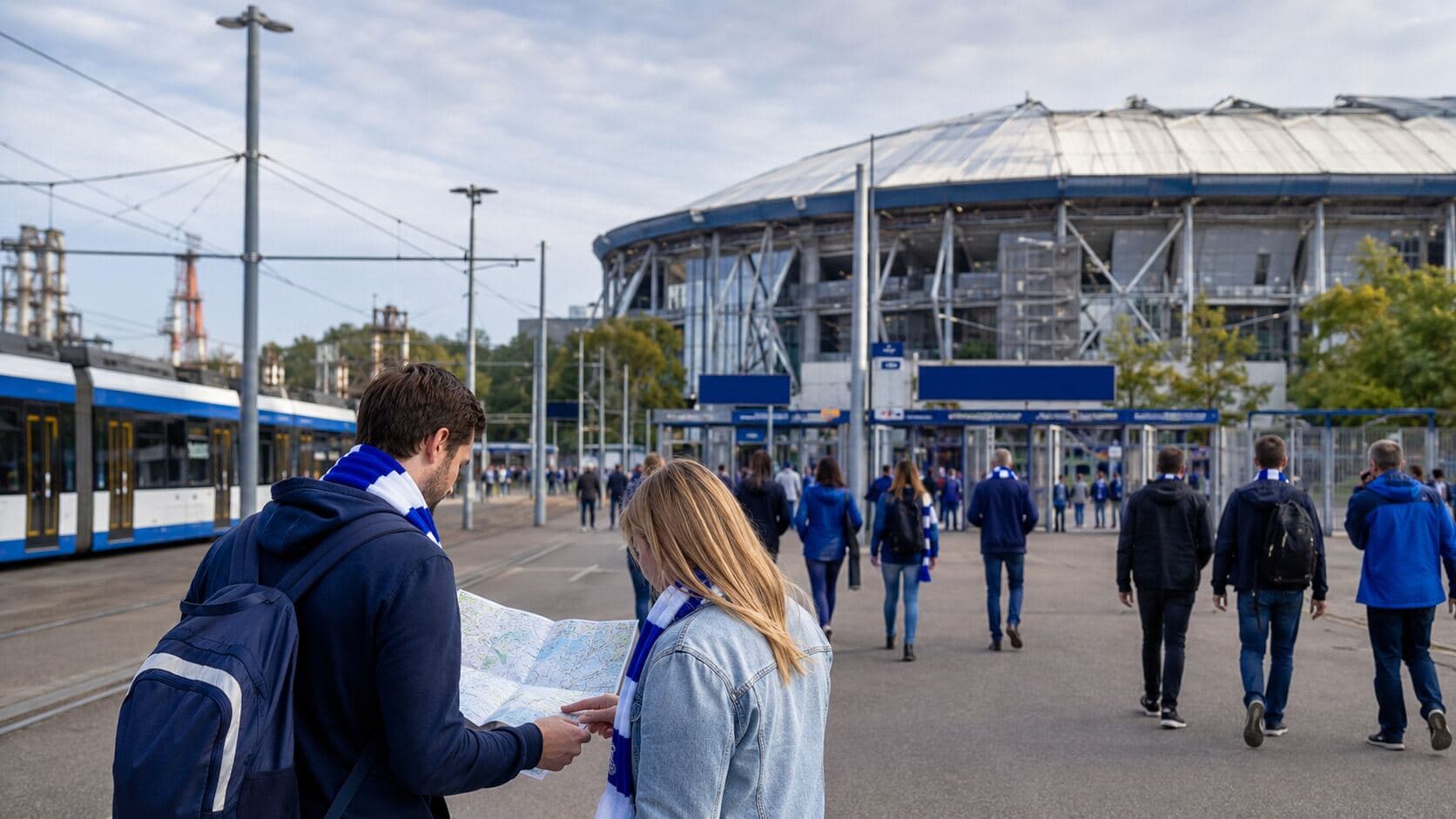
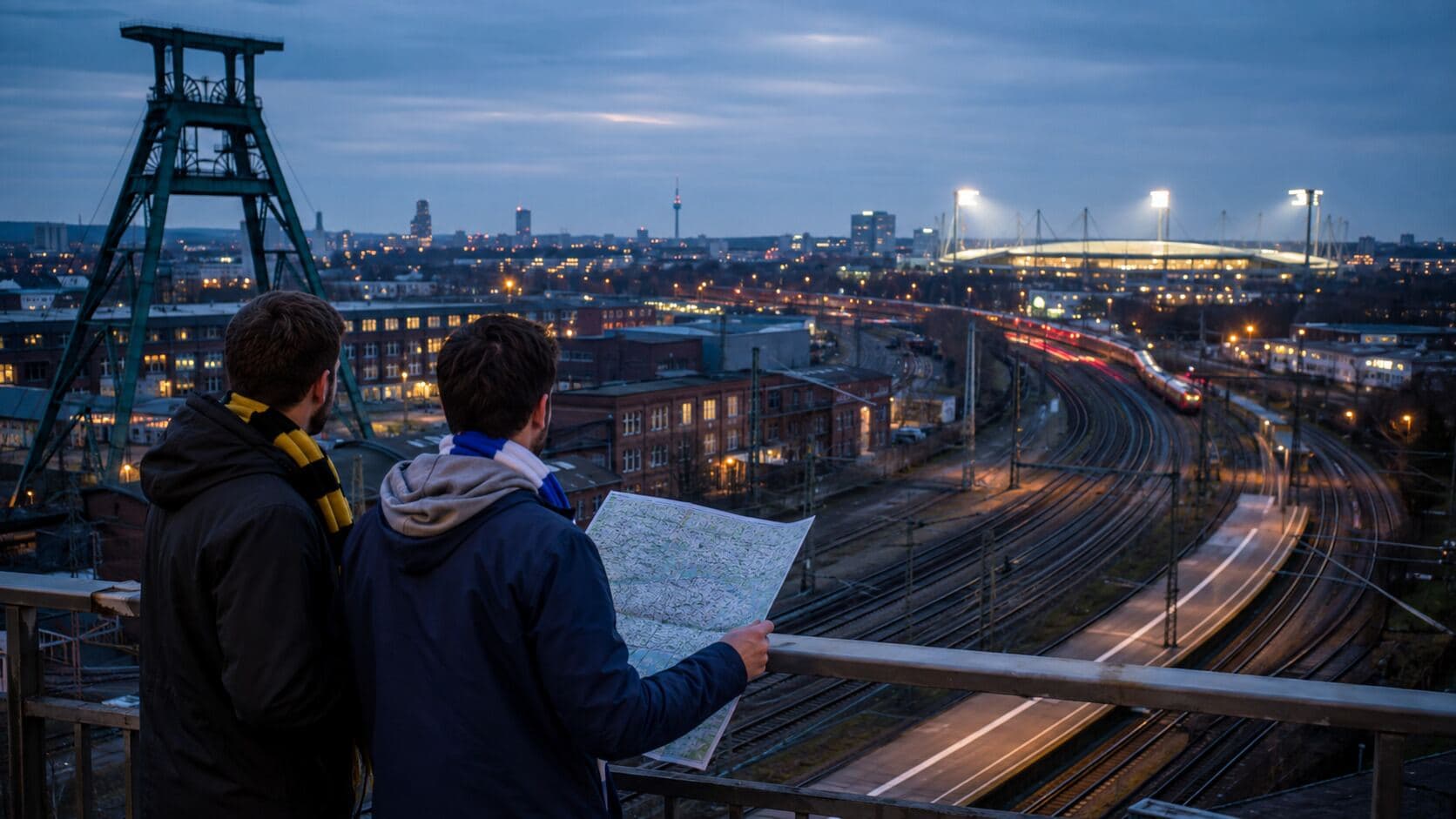
Royal blue appears across Gelsenkirchen on matchday. It moves through stations, across streets and towards the arena. It appears on scarves worn for decades and shirts belonging to players who stayed for only a season.
The people wearing it do not all remember the same Schalke. Some grew up with European nights and trophies. Others know relegation, financial uncertainty and the struggle to return.
The colour connects every version.
II
Born in the Shadow of the Mine
Schalke's story began in 1904 when young workers and students formed Westfalia Schalke near the Consolidation colliery.
The club's original colours were red and yellow. Royal blue and white arrived in 1912 and eventually became inseparable from the name Schalke.
The mining connection ran deeper than imagery. Players, supporters and families belonged to communities shaped by work beneath the Ruhrgebiet.
Schalke became known as die Knappen — an old term for miners. The values associated with that history remain part of the club's self-image: hard work, solidarity and loyalty to the people beside you.
The mines eventually closed. Their language remained inside the club.
III
A Club of Champions
Schalke's identity is not built only on hardship.
During the 1930s and early 1940s, the club became the dominant force in German football. Its short passing style, known as the Schalker Kreisel, brought championships and established names such as Ernst Kuzorra and Fritz Szepan as club legends.
Schalke eventually won seven German championships. Later generations added cup victories and the UEFA Cup triumph of 1997, when the Eurofighters defeated Inter Milan.
Success created an expectation that Schalke should belong near the top of German football.
It also made the difficult years harder to accept.
IV
Four Minutes
Few moments explain Schalke's emotional history better than the final afternoon of the 2000/01 Bundesliga season.
Schalke had completed its match believing the German championship was finally theirs. Supporters entered the pitch and celebrations began.
Then Bayern München scored a late equaliser in Hamburg and took the title away.
For four minutes, Schalke had felt like German champions. The team became known as the Meister der Herzen — champions of hearts.
The phrase is affectionate and painful at the same time. It celebrates the bond created by that team while preserving the memory of how close the club came.
At Schalke, hope and heartbreak are rarely far apart.
V
When Success Disappeared
The distance between Schalke's expectations and reality became increasingly difficult during the years that followed.
Sporting decisions failed. Financial pressure grew. In 2021, Schalke was relegated from the Bundesliga after one of the worst seasons in its history.
The club returned immediately, only to be relegated again. A team once associated with Champions League football was now fighting for stability in the second division.
The arena continued to fill.
Frustration did not disappear. Schalke supporters are not loyal by pretending failure does not matter. They protest, criticise and demand that the team understands what it represents.
Yet when the next home match arrives, royal blue moves towards the stadium again.
VI
Always Blue
The phrase “Always Blue” does not promise that Schalke will always win.
History has made that impossible to believe. Titles were followed by long waits. Celebrations became heartbreak. Bundesliga seasons became second-division campaigns.
The promise belongs somewhere else.
It is carried by families returning together, supporters travelling across Germany and a city continuing to recognise itself in its football club.
Players leave. Executives change. League tables reset every summer.
Royal blue remains.
Continue Your Journey
Keep Exploring German Football.
Follow this story into its club, its football world and another chapter of German football culture.
Club World
Schalke World
Always Blue
Explore Club →
Region World
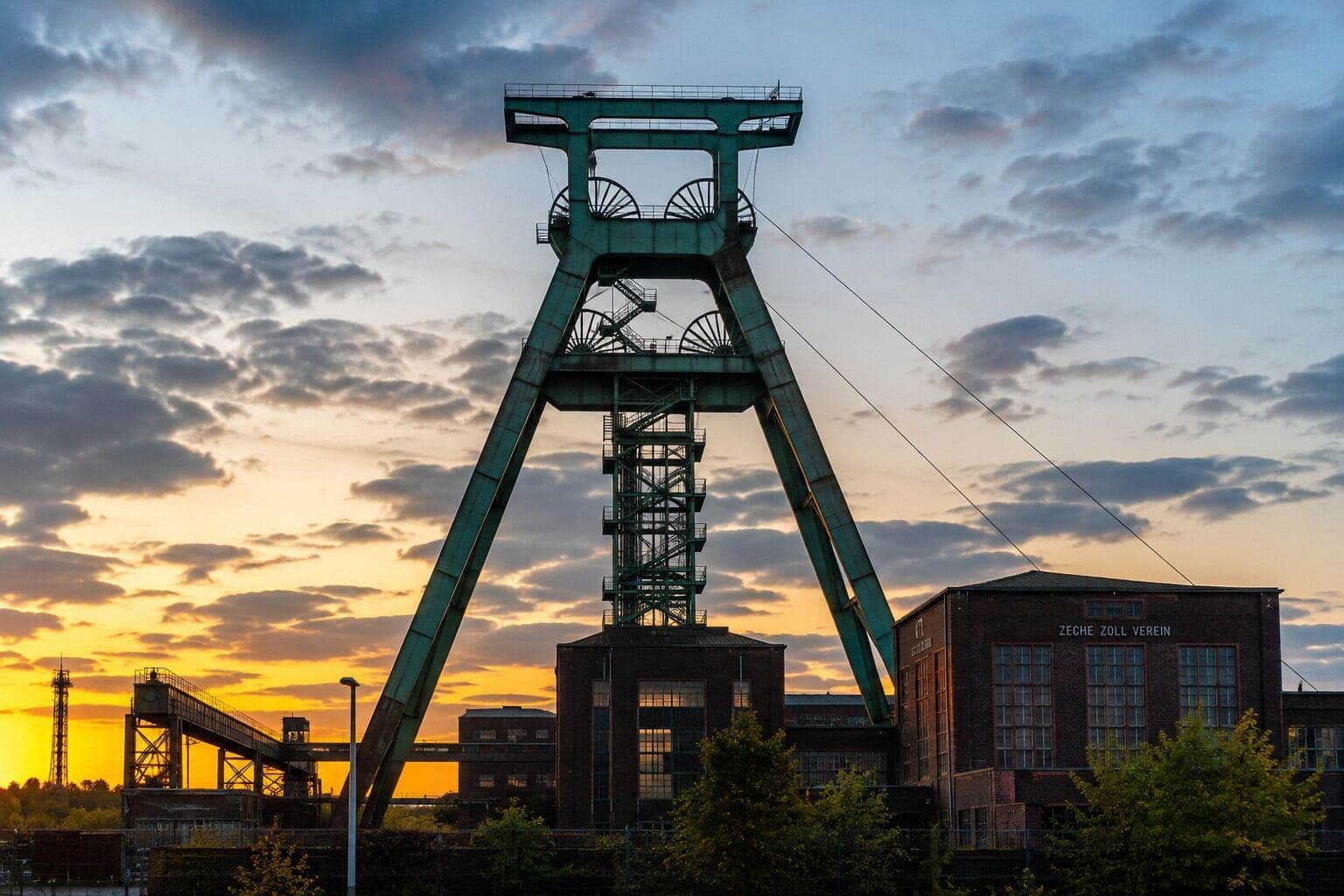
Ruhrgebiet World
The highest density of football culture in Germany.
Explore World →
Another Club World
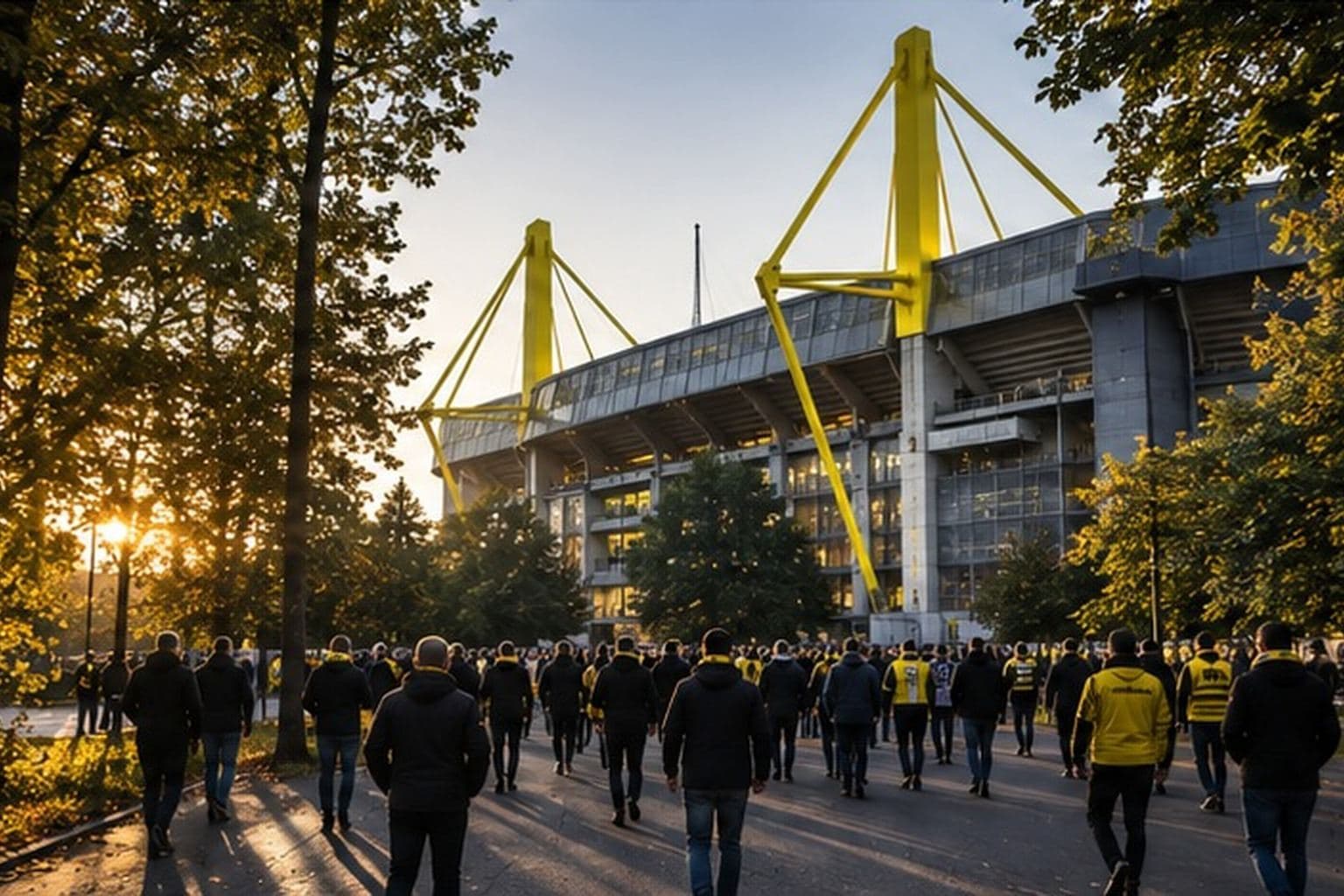
Borussia Dortmund World
Powered by Dedication
Explore Club →
Related Culture
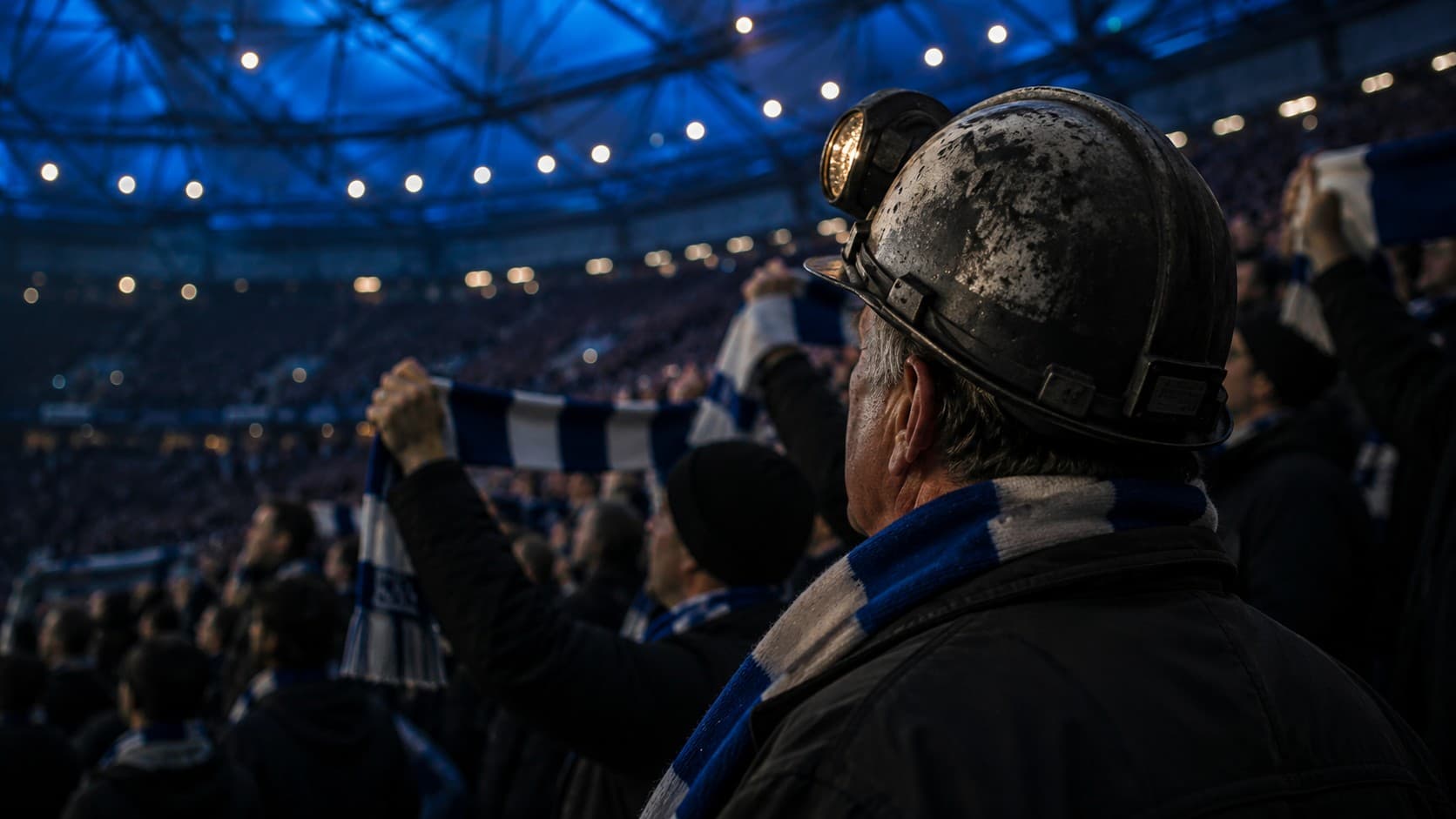
The Steigerlied
A centuries-old miners' song still connects Schalke matchday with the working world that created the club.
Read Story →