Fan Culture
The Steigerlied
A centuries-old miners' song still connects Schalke matchday with the working world that created the club.
Gelsenkirchen · Schalke 04
I
Before Kick-Off
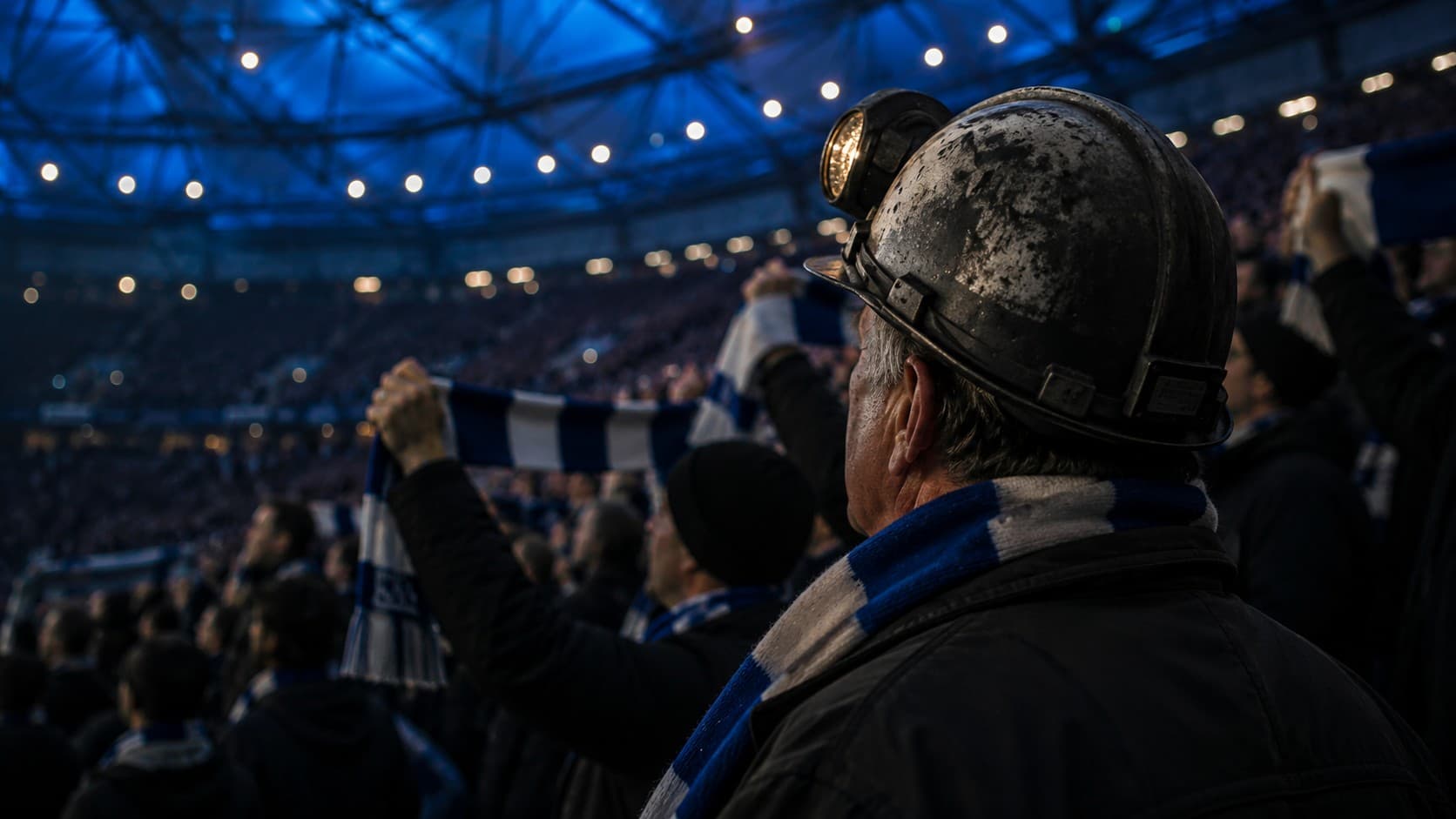
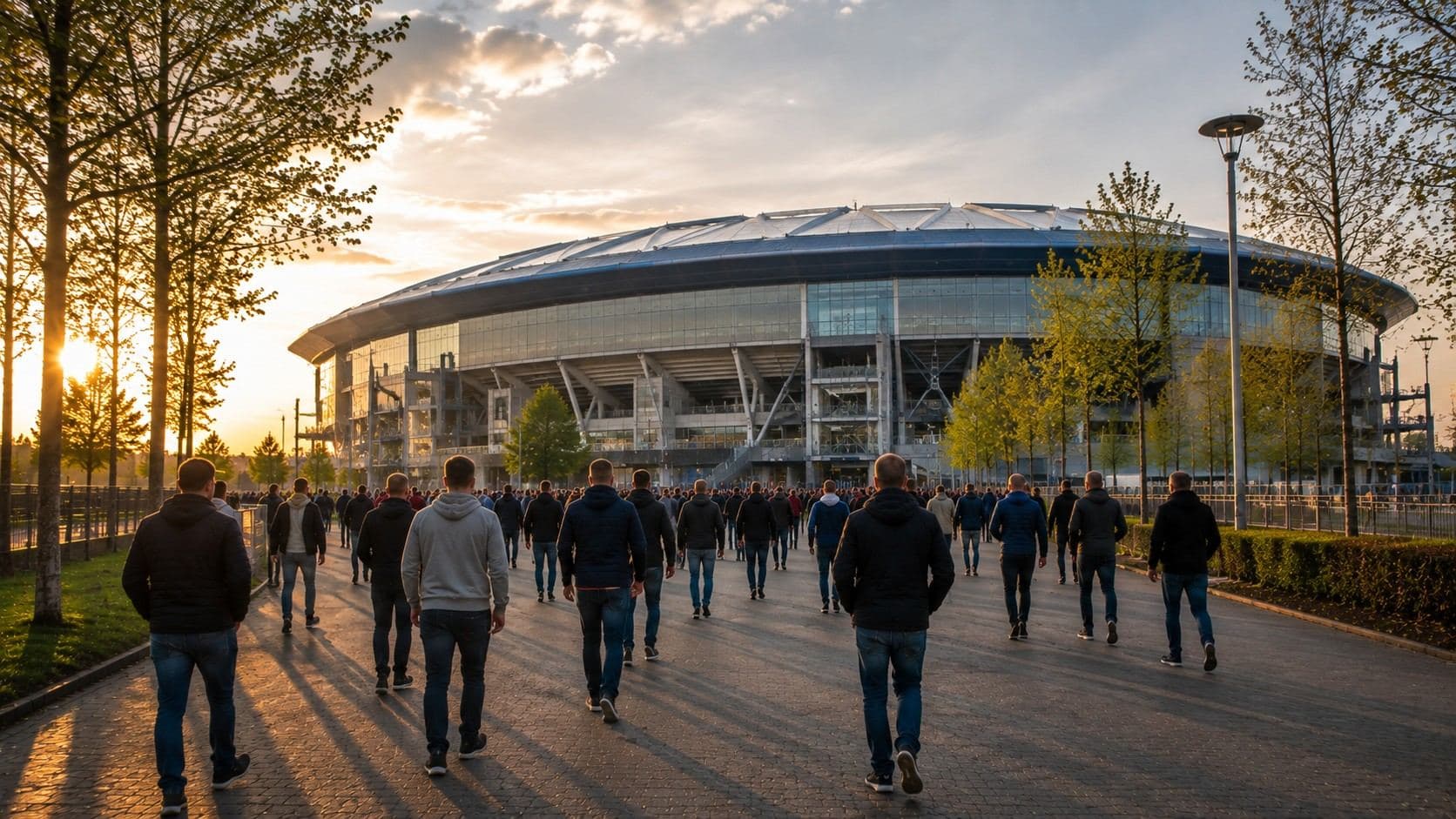
A few minutes before a Schalke home match begins, the arena returns to a world that has almost disappeared from Gelsenkirchen.
The first notes of the Steigerlied fill the stadium. Conversations stop. Scarves remain raised and thousands of voices join a song that existed centuries before professional football.
It does not describe goals, trophies or famous Schalke players. It belongs to the history of mining.
At Schalke, that makes it a football song.
II
Glück Auf
The roots of the Steigerlied reach back to the first half of the sixteenth century. Over generations, different mining regions created their own verses and versions.
Its opening greeting, “Glück auf”, expressed a miner's hope that the rock would open, valuable material would be found and everyone working underground would return safely to the surface.
That final hope mattered most. Mining meant entering darkness, accepting danger and depending on the people working beside you.
The song gave those experiences a shared language.
It travelled through the mining regions of Germany, including the Ruhrgebiet, where coal shaped work, communities and football clubs.
III
The Knappen
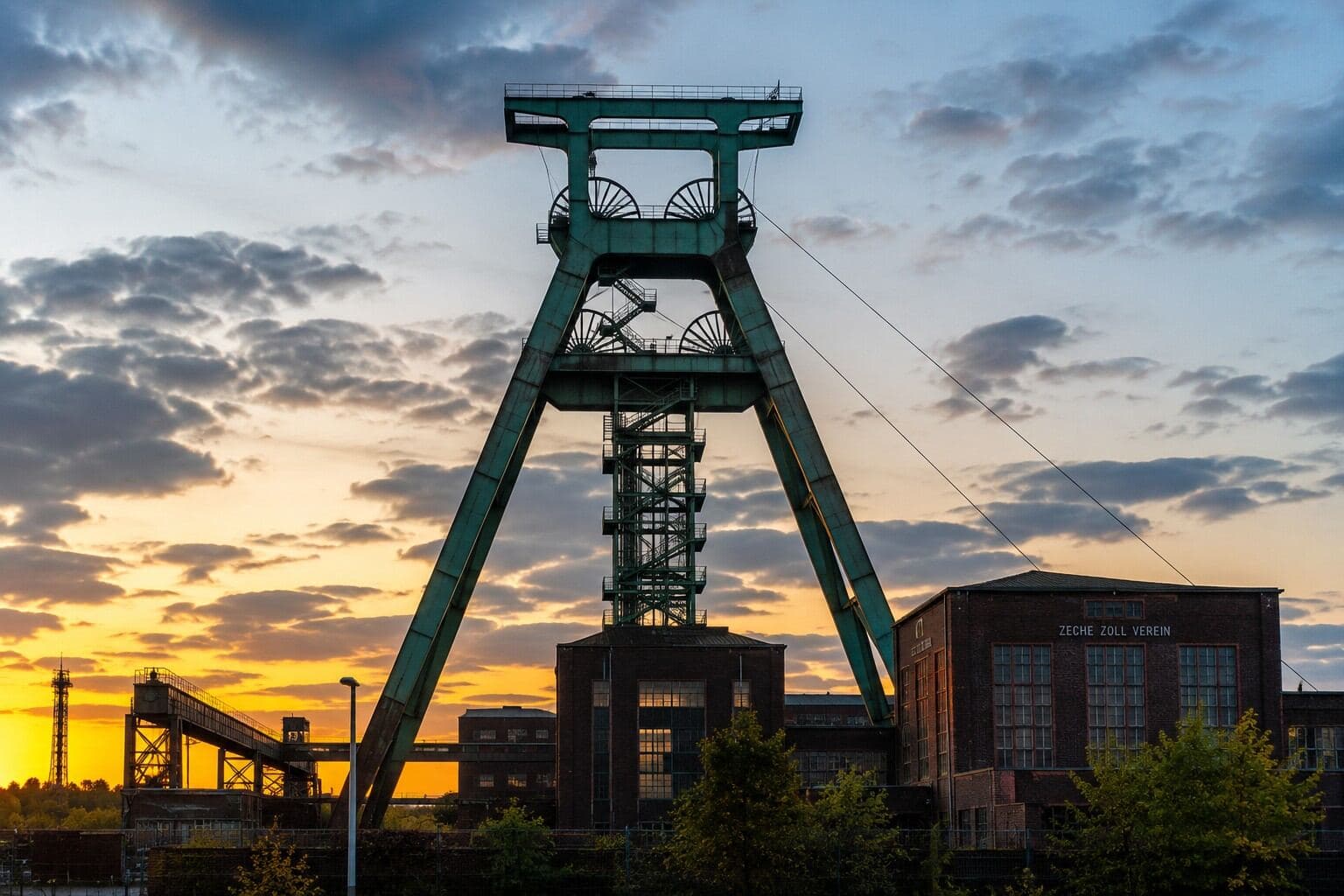
Schalke was founded in the shadow of the Consolidation colliery. Players and supporters came from families whose lives were connected to mines, factories and the industrial growth of Gelsenkirchen.
The club became known as die Knappen, a traditional word for miners. Schlägel und Eisen — hammer and pick — continued to appear in the visual language surrounding Schalke.
The Steigerlied therefore entered matchday as more than a reference to regional folklore.
It connected the people in the stadium with the conditions from which their club emerged: physical work, danger, solidarity and pride in a community rarely celebrated by outsiders.
IV
After the Last Shift
The Ruhrgebiet's final hard-coal mine closed in 2018. By then, most Schalke supporters had never worked underground.
This could have turned the Steigerlied into a museum piece — a song preserved because it once mattered.
Instead, it continues to be sung.
Children learn its opening before they fully understand the working life behind it. Visitors hear an arena using an old miners' hymn as part of a modern football ritual.
The distance between those generations does not weaken the song. It explains why the ritual is necessary.
When an industry disappears, culture becomes one of the ways its communities remember themselves.
V
A Living Tradition
In 2023, the singing of the Steigerlied was added to Germany's nationwide inventory of intangible cultural heritage.
The recognition did not belong to one region or one definitive version. It acknowledged how communities across active and former mining areas continue to pass the song between generations.
A tradition remains alive only when people continue to use it.
At Schalke, the Steigerlied is not performed for a silent audience. The stadium participates. Thousands of individual voices reproduce something inherited from people they may never have known.
Each home match becomes another act of preservation.
VI
The Light Remains
When the song ends, the arena returns to the present.
The players enter beneath a retractable roof. Screens, lights and modern matchday production surround them. Nothing about the stadium resembles a mine.
Yet the old greeting has already passed through the crowd.
The mines are closed. The shifts have ended. The people who created Schalke's earliest community are gone.
Their song remains above ground.
Continue Your Journey
Keep Exploring German Football.
Follow this story into its club, its football world and another chapter of German football culture.
Club World
Schalke World
Always Blue
Explore Club →
Region World
Ruhrgebiet World
The highest density of football culture in Germany.
Explore World →
Another Club World
Borussia Dortmund World
Powered by Dedication
Explore Club →
Related Culture
Always Blue
Tradition, industrial roots and unconditional loyalty in the heart of the Ruhrgebiet.
Read Story →