Matchday Experience
Road to the Yellow Wall
From German football history at the main station to almost 25,000 standing supporters beneath the Südtribüne.
Dortmund · Borussia Dortmund
I
Arrival in Football City
Dortmund announces its relationship with football as soon as you leave the main station.
Directly opposite the south entrance stands the German Football Museum. Inside, national-team triumphs, Bundesliga history and the development of the game are collected beneath one roof.
On matchday, football history is only the beginning.
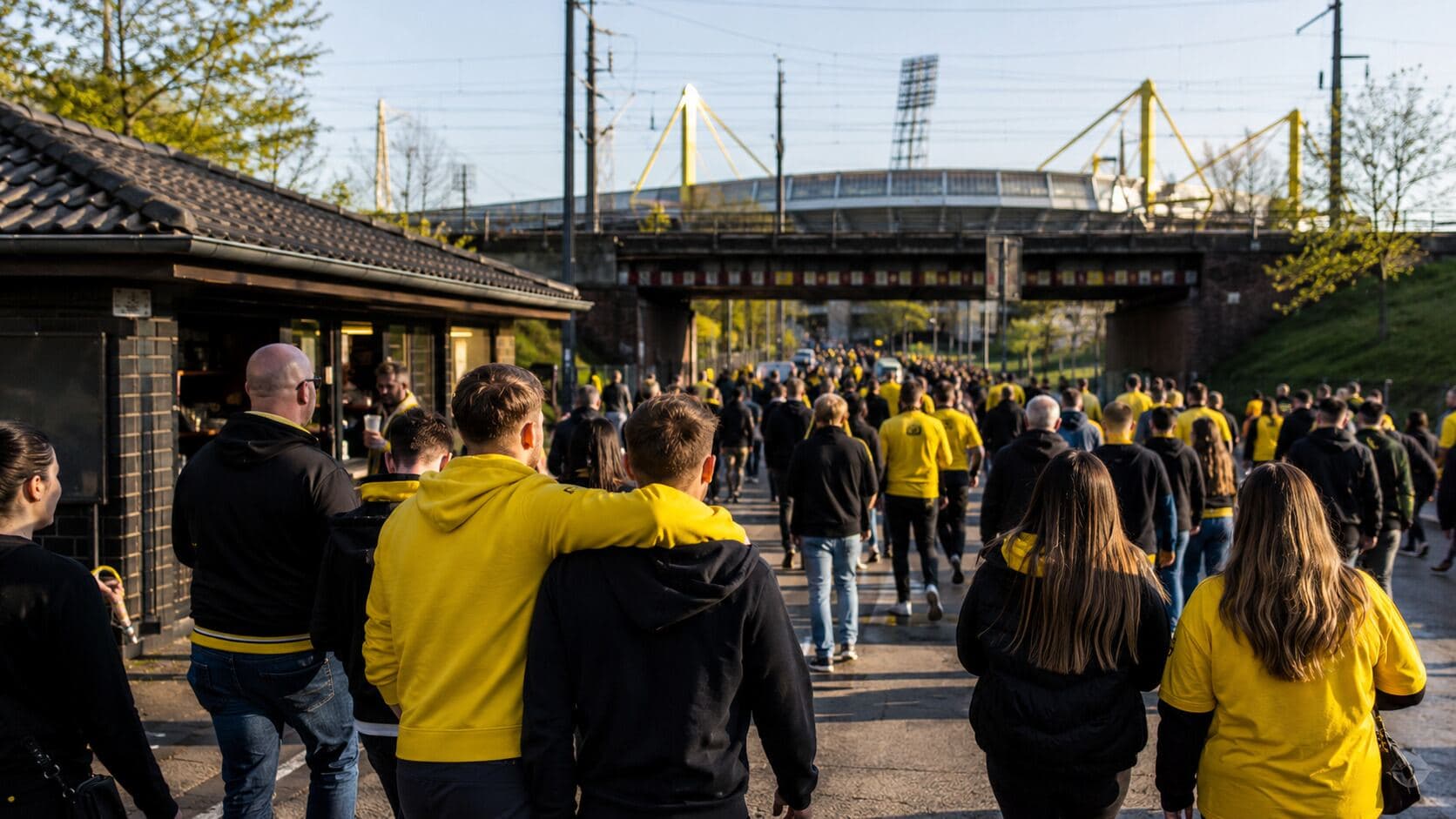
Black and yellow shirts move across the station forecourt. Supporters arrive from across the Ruhrgebiet and from far beyond it. The crowd divides between trains, underground lines and routes through the city, but every direction leads towards the same enormous stadium.
II
Before the Stadium
Taking the fastest connection directly to the stadium is possible. It is not the only way to experience the city.
A slower matchday leaves time for the centre of Dortmund. Black and yellow gathers around familiar meeting places, bars and food stands. Conversations repeat the same questions: Who starts? What happened last week? Can Dortmund win today?
The city centre does not possess the postcard beauty expected from some European football destinations. Its matchday character comes from people rather than monuments.
As kick-off approaches, the colours become more concentrated. The separate groups begin moving south.
III
The Stadium Appears
The stadium does not enter the skyline quietly.
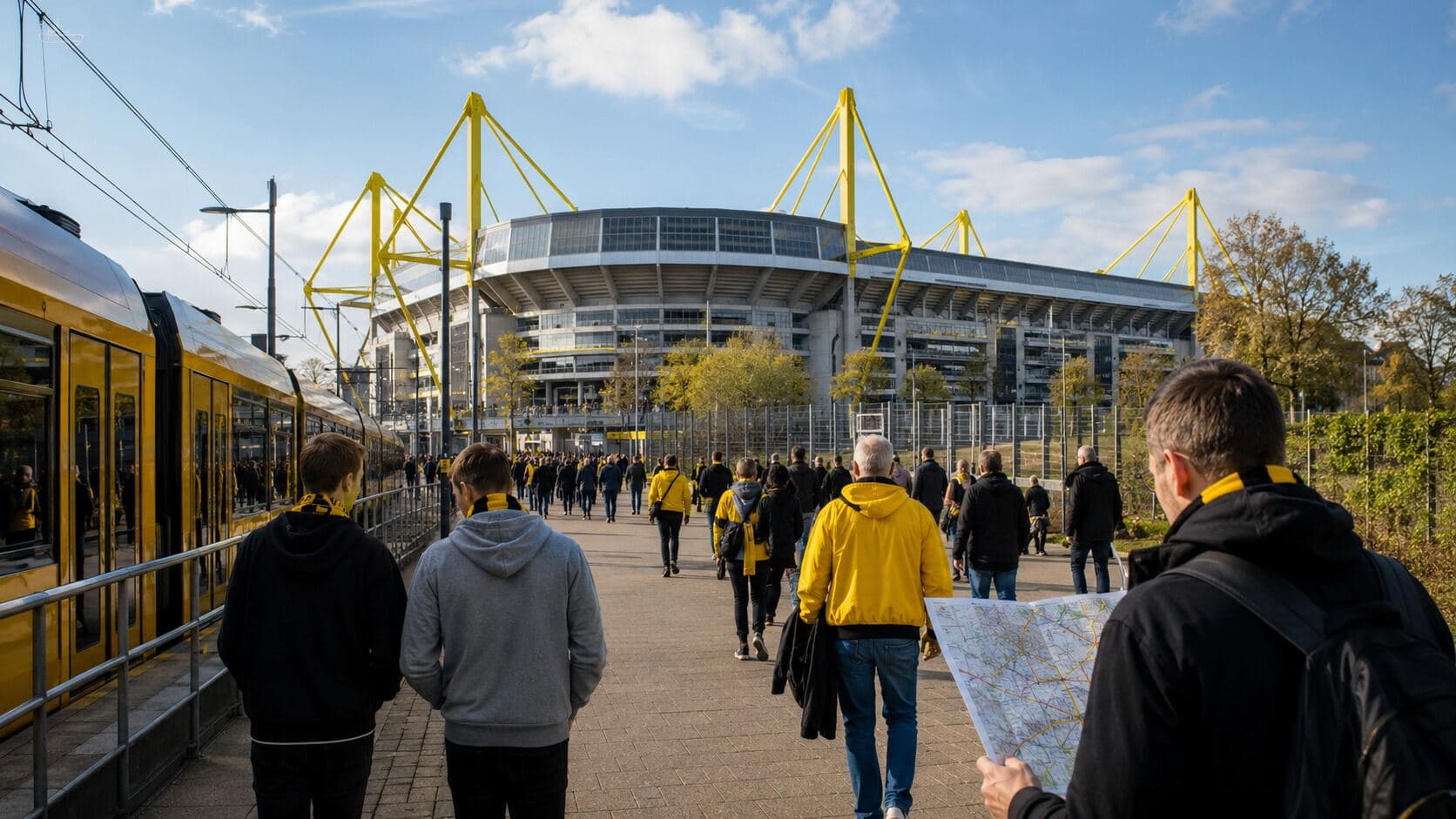
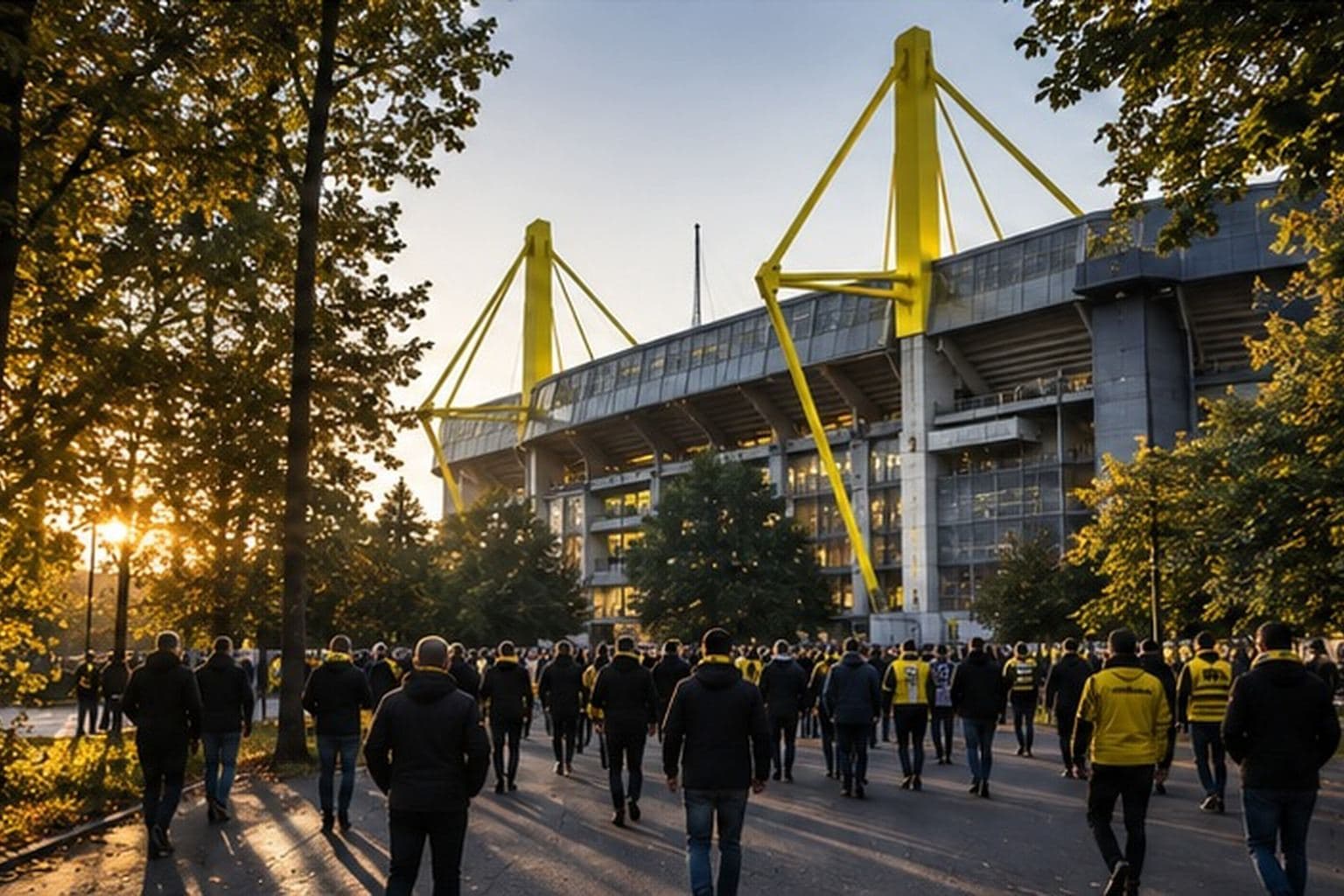
Its yellow pylons rise above the surrounding buildings and trees. They provide the first clear sign of the scale waiting ahead.
Closer to the ground, movement slows. More than 80,000 people are converging on the same area. Food, drink and meeting points fill the stadium surroundings.
Beside the modern arena stands Stadion Rote Erde, a reminder of Borussia's previous home. Dortmund's football history is compressed into the same landscape: the older ground, the expanded stadium and the crowds that outgrew one before filling the other.
Outside, the Südtribüne remains hidden. Its scale only becomes clear after entering.
IV
First Sight of the Süd
Inside the concourse, the sound arrives before the full view.
Songs echo beneath concrete. Steps and passages release supporters into the stadium one section at a time.
Then the southern stand opens in front of you.
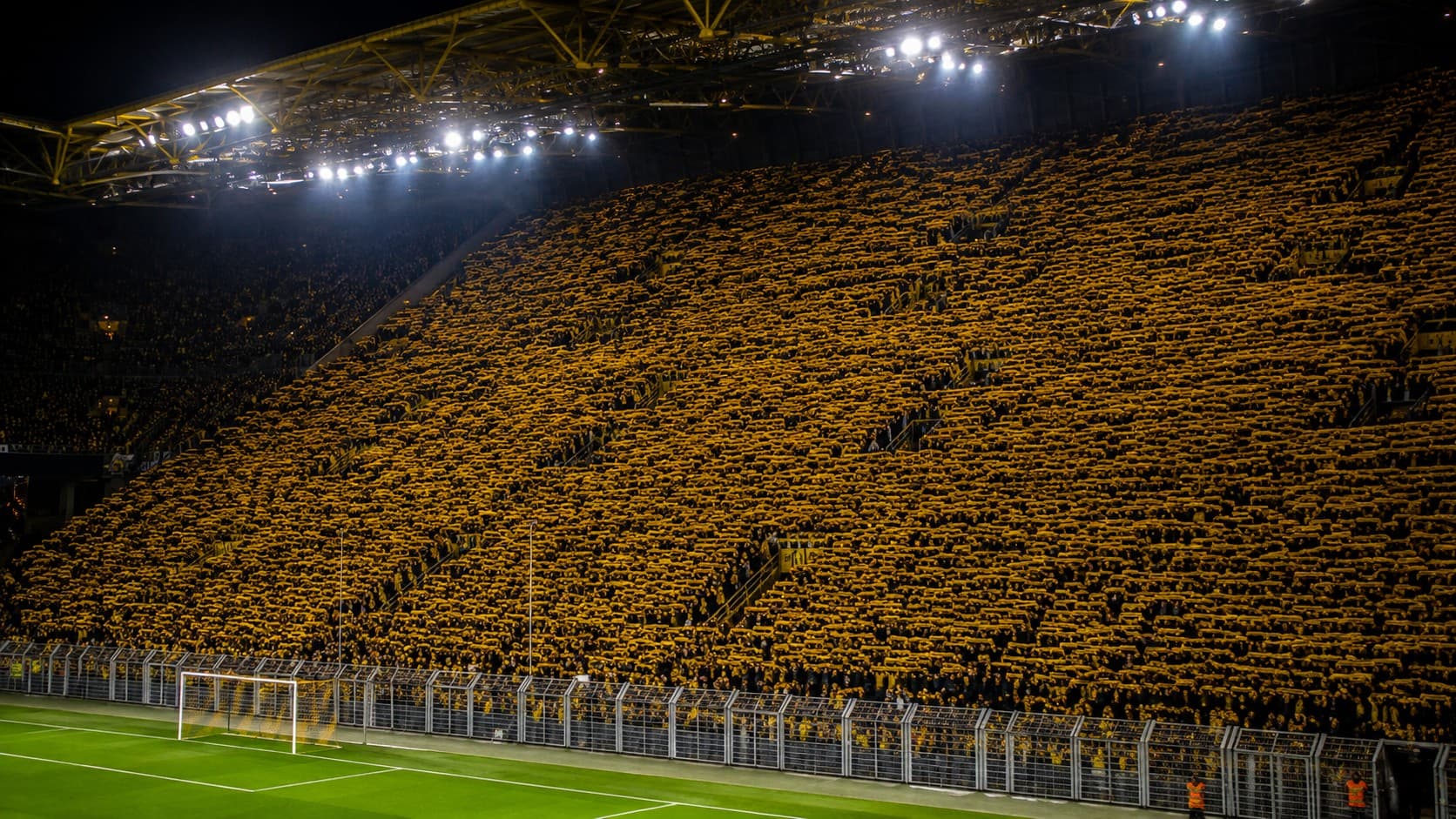
From elsewhere inside the stadium, it appears almost vertical. Thousands of supporters occupy one continuous bank behind the goal. Flags interrupt the black and yellow surface while the crowd continues filling every remaining space.
From within the stand, the experience reverses. You no longer look at the Yellow Wall. You become one small part of it.
V
The Final Minutes Before
The teams have not yet entered, but the matchday has already reached its most recognisable moment.
Scarves rise around the stadium. “You'll Never Walk Alone” begins. The words move from the Südtribüne and around the ground.
The song is familiar in football stadiums across Europe. Dortmund gives it the force of more than 80,000 voices and one enormous standing terrace.
For a first-time visitor, this is the moment when the journey from the station, museum and city becomes one shared experience.
The players appear. The Yellow Wall moves. The road ends and the match begins.
VI
Make a Day of It
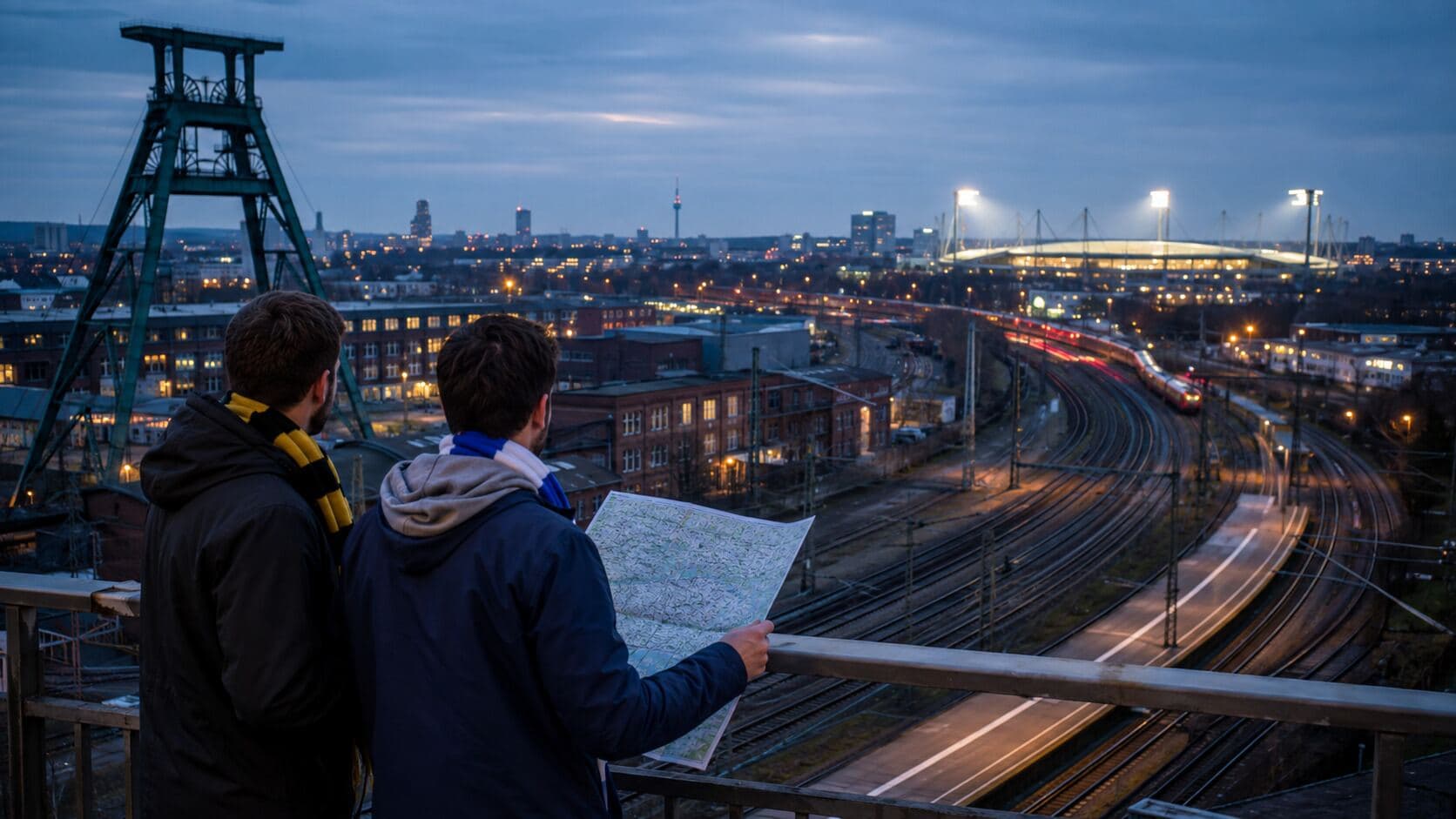
Dortmund should not be reduced to ninety minutes inside the stadium.
Arrive early enough to visit the German Football Museum or spend time among supporters in the city. Allow the black and yellow crowd to build around you instead of travelling directly to your entrance.
Notice the yellow pylons when they first appear. Walk past the Rote Erde. Listen as the sound changes inside the stadium passages.
The Yellow Wall is the destination. The journey explains why it belongs here.
Continue Your Journey
Keep Exploring German Football.
Follow this story into its club, its football world and another chapter of German football culture.
Club World
Borussia Dortmund World
Powered by Dedication
Explore Club →
Region World
Ruhrgebiet World
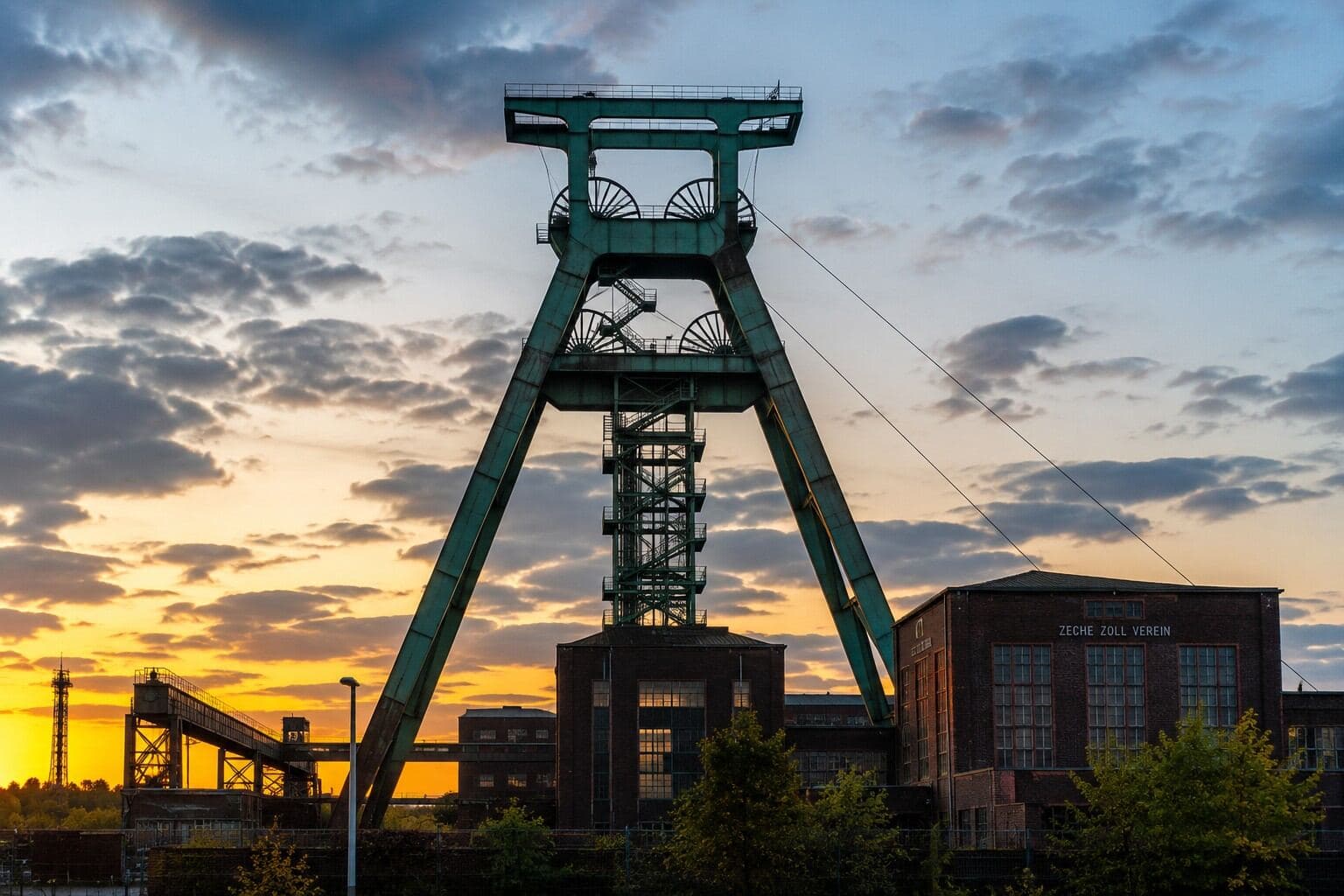
The highest density of football culture in Germany.
Explore World →
Another Club World
Schalke World
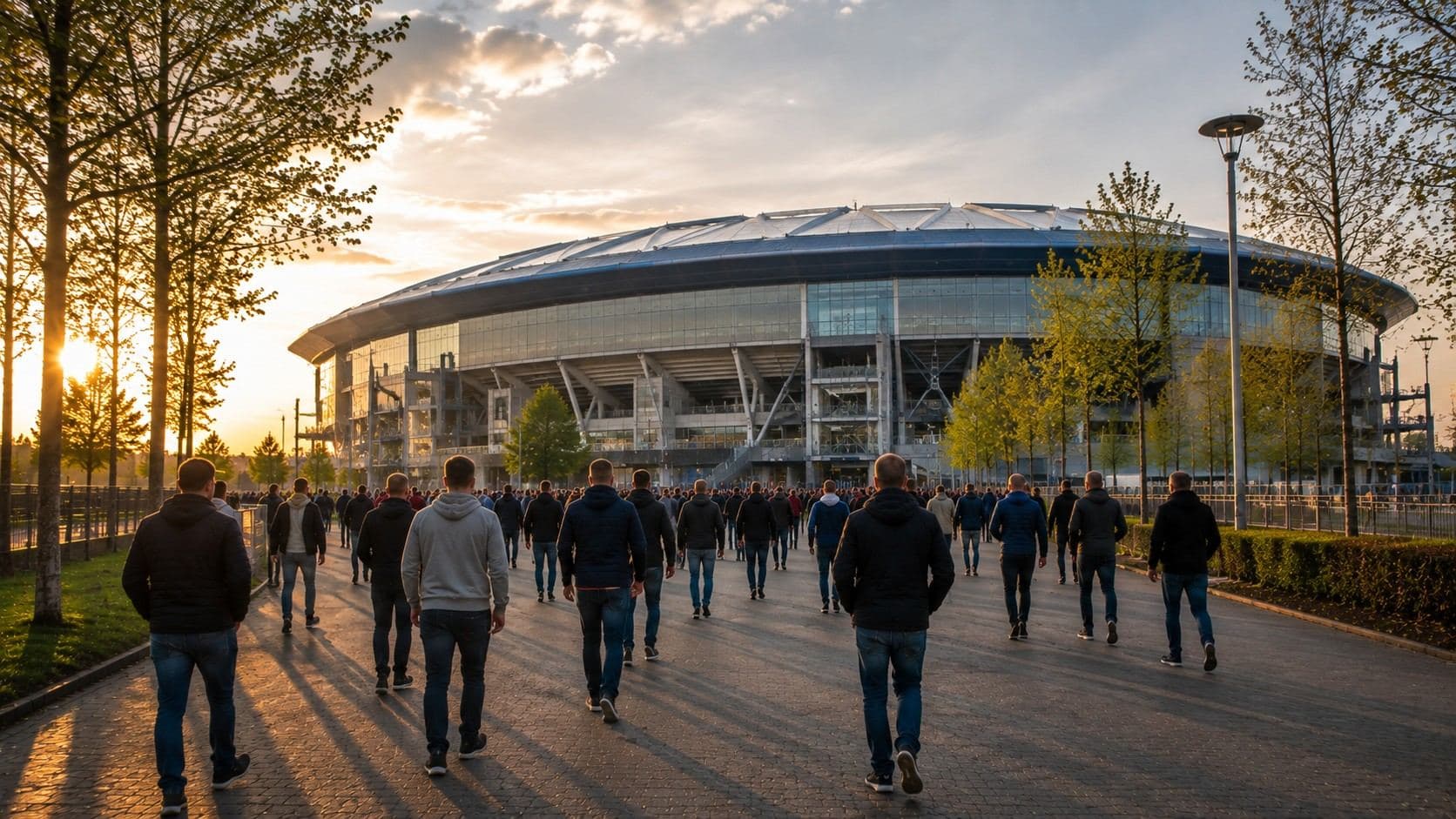
Always Blue
Explore Club →
Related Culture
The Yellow Wall
Thousands of supporters, one enormous terrace and one of the defining images of German football culture.
Read Story →