General Football Culture
Football by Train
Germany’s railway network does more than connect football cities. Every weekend, it becomes part of the matchday.
Germany
I
Platform Football
On a normal weekday, a German Hauptbahnhof is a place of movement without a shared destination.
On matchday, the station changes.
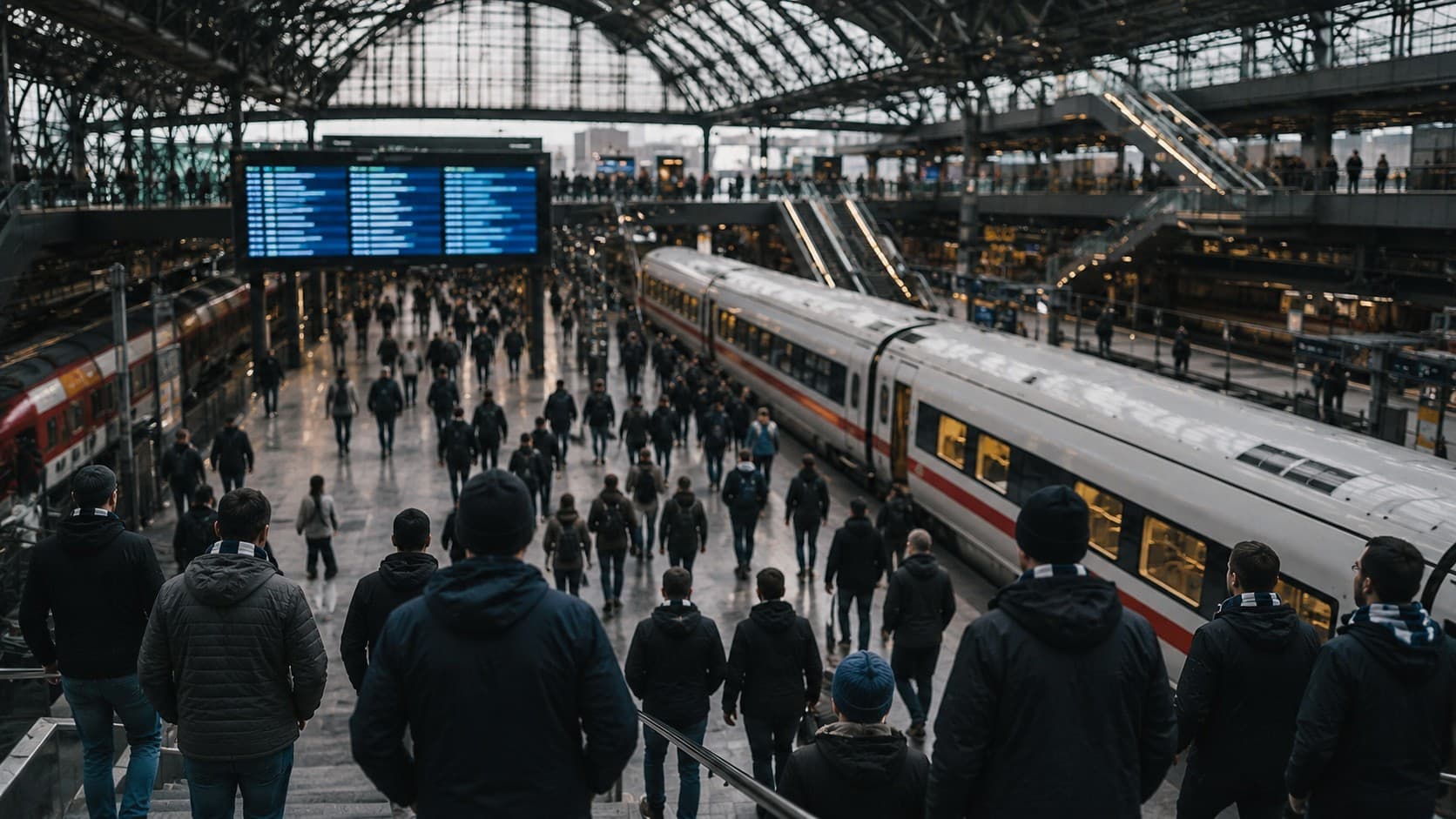
Scarves reveal where people are travelling before the departure board does. Small groups gather around bags of food and bottles. Police wait near particular platforms. Songs echo beneath the station roof.
Supporters of several clubs may pass through the same concourse. One group is travelling north. Another is changing trains on the way south. A third has already arrived and is looking for the local tram towards the stadium.
Before the supporters reach the terraces, Germany's football map becomes visible on its railway platforms.
II
A Country Connected
Germany's geography makes the train a natural part of football travel.
Many major stadiums can be reached through a combination of intercity trains, regional services, S-Bahn, U-Bahn or tram. In the Ruhrgebiet, several large football cities sit within the same transport network.
A supporter can leave Hamburg in the morning and reach Dortmund, Berlin or the Rhineland in time for kick-off. A visitor staying in one city can use the train to experience football somewhere else without changing hotels.
This gives German football a sense of proximity that distances alone do not explain. Clubs with different histories and identities remain connected by the same lines and stations.
The railway does not eliminate the distance between football worlds. It makes crossing that distance part of the experience.
III
The Match Ticket Travels
At many German clubs, match tickets are connected to local public transport.
The exact rules differ by club, competition and transport association. Where a KombiTicket is included, supporters can use specified regional services during a defined period before and after the match.
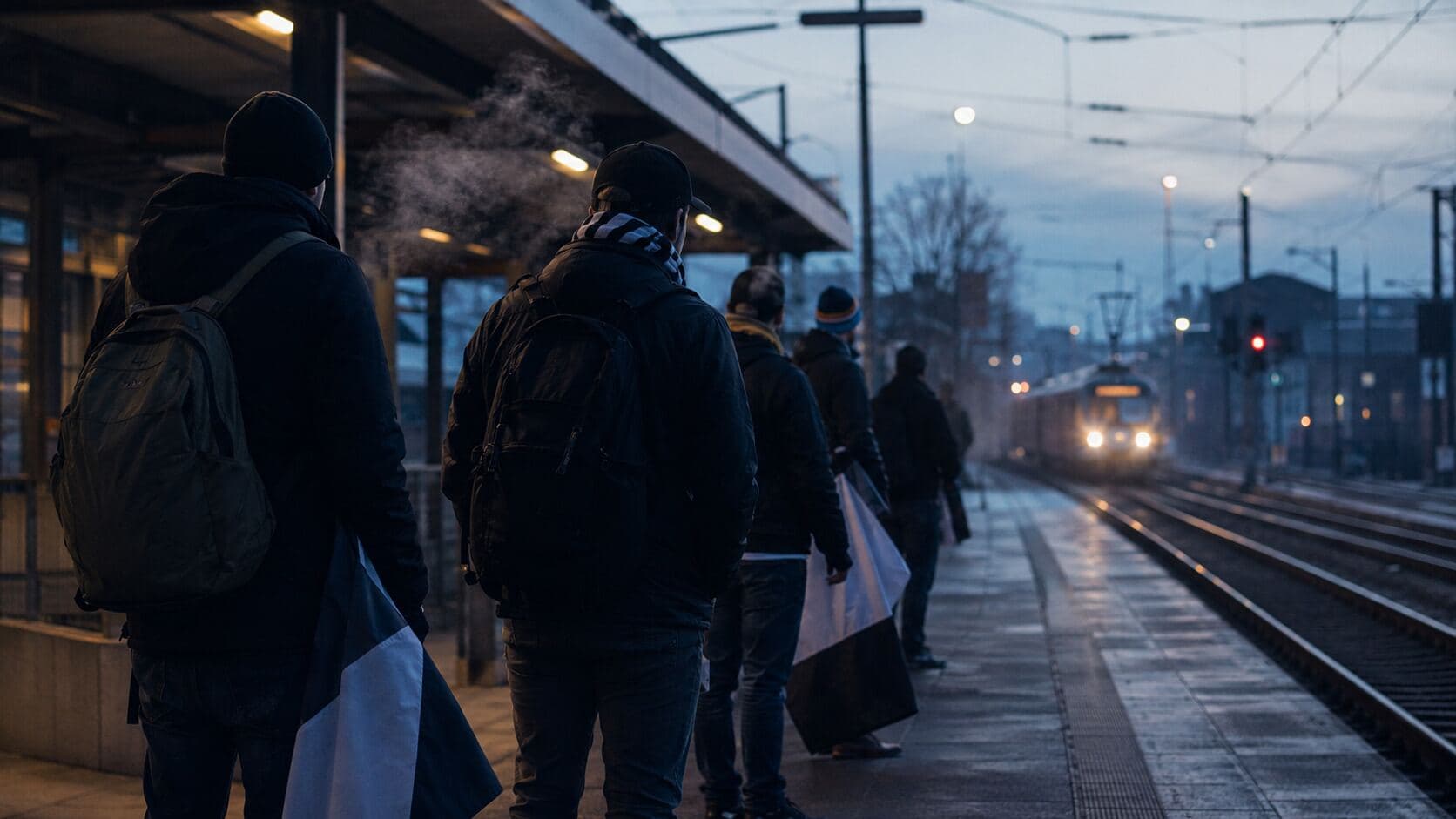
That arrangement changes the matchday experience. Visitors do not need to find parking beside a stadium filled with tens of thousands of people. They follow the colours from the central station towards the ground.
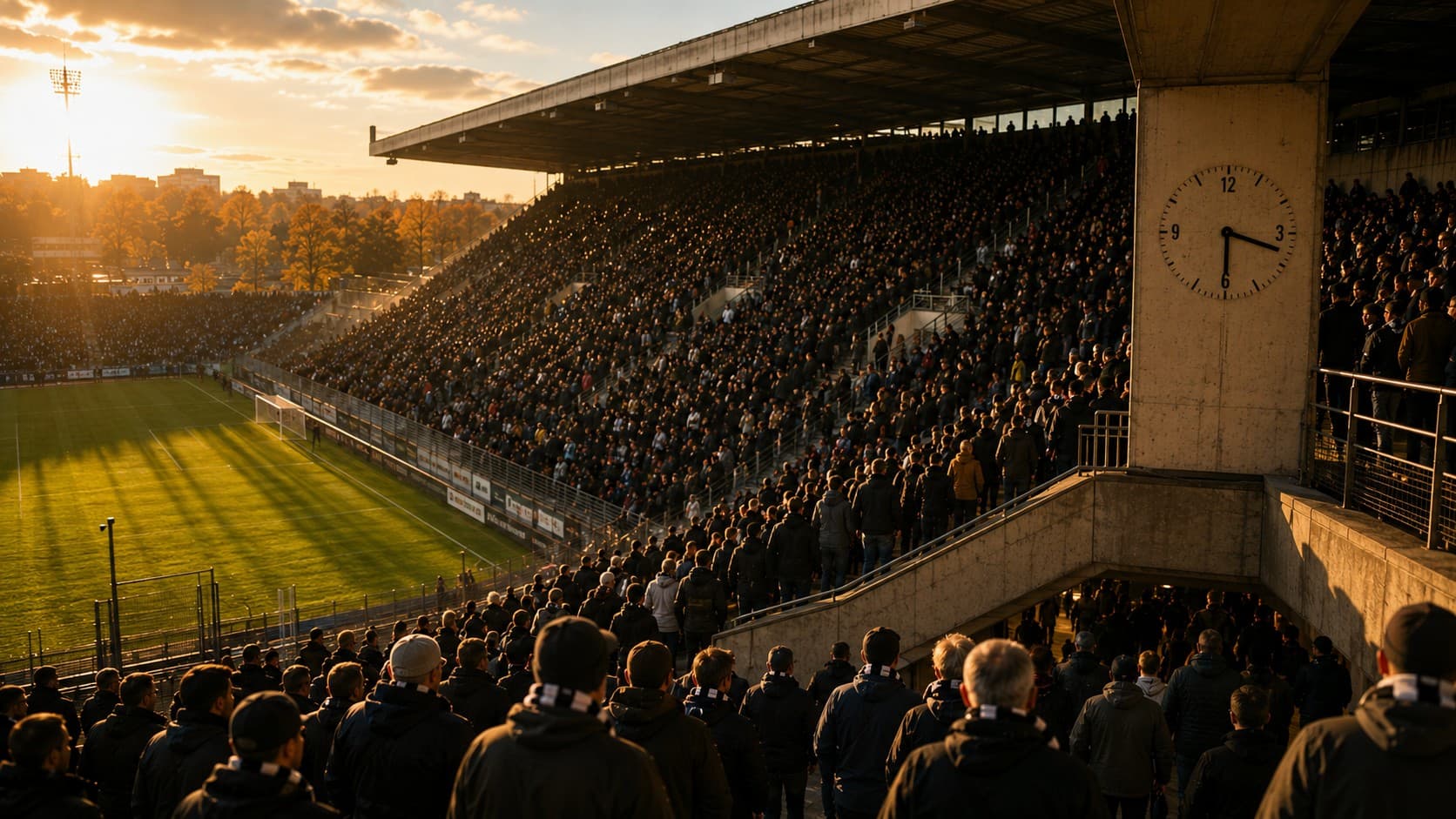
The final section of the journey becomes collective. Trams and local trains fill with home supporters. Familiar songs begin before the stadium is visible.
For an international visitor, the system can be unfamiliar. A ticket may require activation, additional registration or remain valid only within a particular network.
The principle is simple, but the details should always be checked for the specific fixture.
IV
Delays and Detours
No honest story about football by train can pretend that every journey works.
Connections are missed. Platforms change. Trains arrive with fewer carriages than expected. Construction work replaces a direct route with several changes and a bus.
Match schedules make those problems more serious. A delayed train before kick-off can mean missing the opening minutes. A late evening fixture can leave supporters with no realistic connection home.
Experienced travellers build additional time into their plans. They avoid the final possible connection and learn which stations provide alternatives when the original route fails.
Even then, uncertainty remains. The train is one of German football's great connecting forces and one of its most reliable sources of matchday frustration.
V
Shared Carriages
Train travel places supporters in a shared public space.
Fans going to the same match may occupy different carriages or be separated for fixtures considered particularly sensitive. On many journeys, however, different colours simply travel beside each other.
Conversations begin. Predictions are exchanged. Rivalry remains visible without becoming confrontation.
The atmosphere can also become uncomfortable. Crowded trains, alcohol, damaged carriages and aggressive behaviour affect passengers who have no connection to the match.
Those incidents are part of the reality, but they do not describe every football train. Most journeys consist of ordinary supporters trying to reach a stadium and return home.
For several hours, the railway carries a temporary community held together by one fixture.
VI
The Network Behind the Game
A football match appears to take place in one stadium between two teams.
In reality, it depends on an enormous movement of people. Supporters leave homes across a city, region or country and attempt to arrive at the same place before the same moment.
Trains make much of that movement possible. Deutsche Bahn provides routes to stadiums across the first three national divisions and adds services for selected fixtures. Local operators increase capacity on the final journey towards the ground.
The system is imperfect, occasionally exhausting and deeply embedded in the culture surrounding the game.
Without it, German football would become more difficult to reach, especially for the supporters who carry their club across the country every weekend.
Sometimes the train is late. The matchday has already begun.
Continue Your Journey
Keep Exploring German Football.
Follow this story into its club, its football world and another chapter of German football culture.
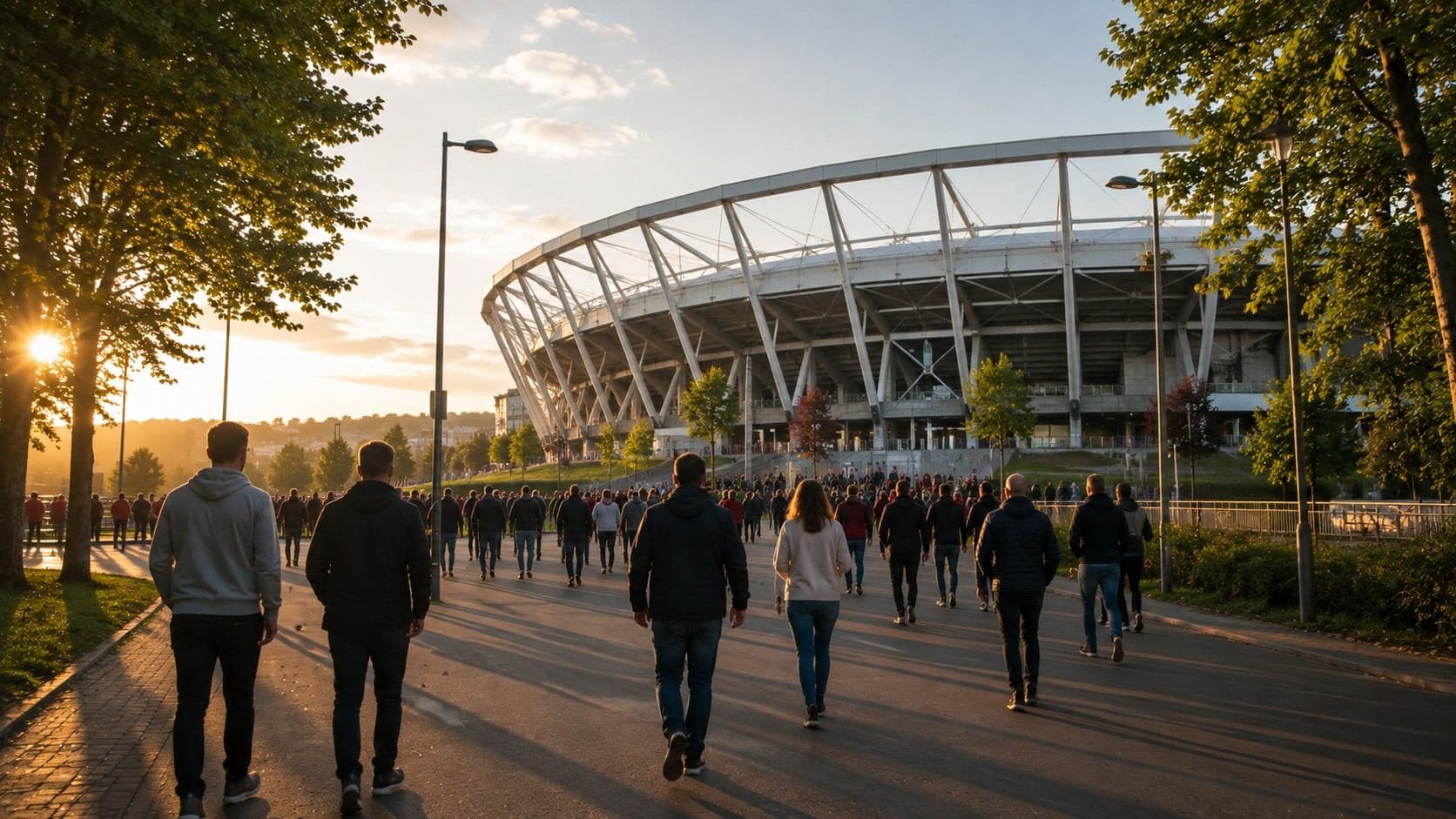
Club World
VfB Stuttgart World
Measured by Our Own Standards
Explore Club →
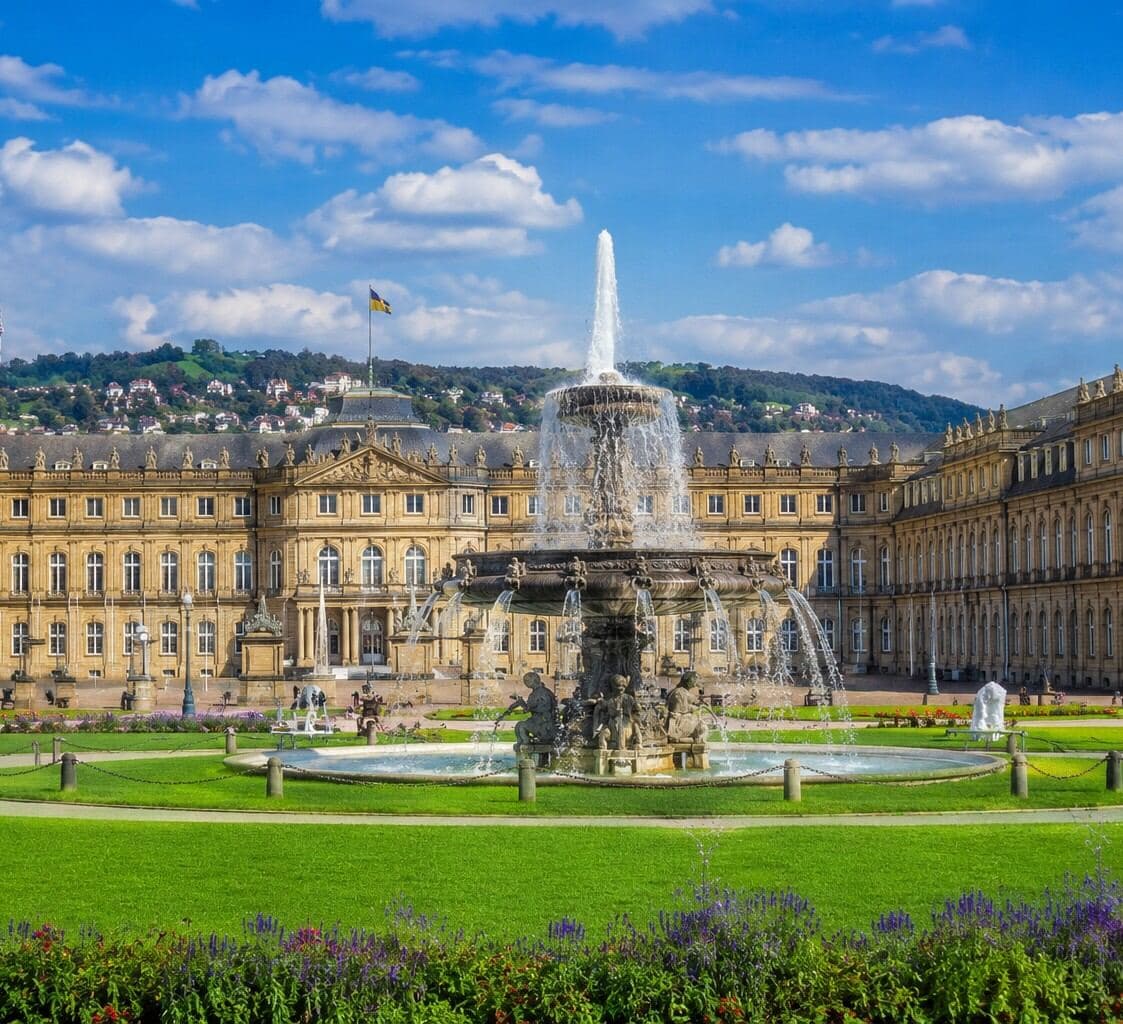
City World
Stuttgart World
Discover football in southern Germany.
Explore World →
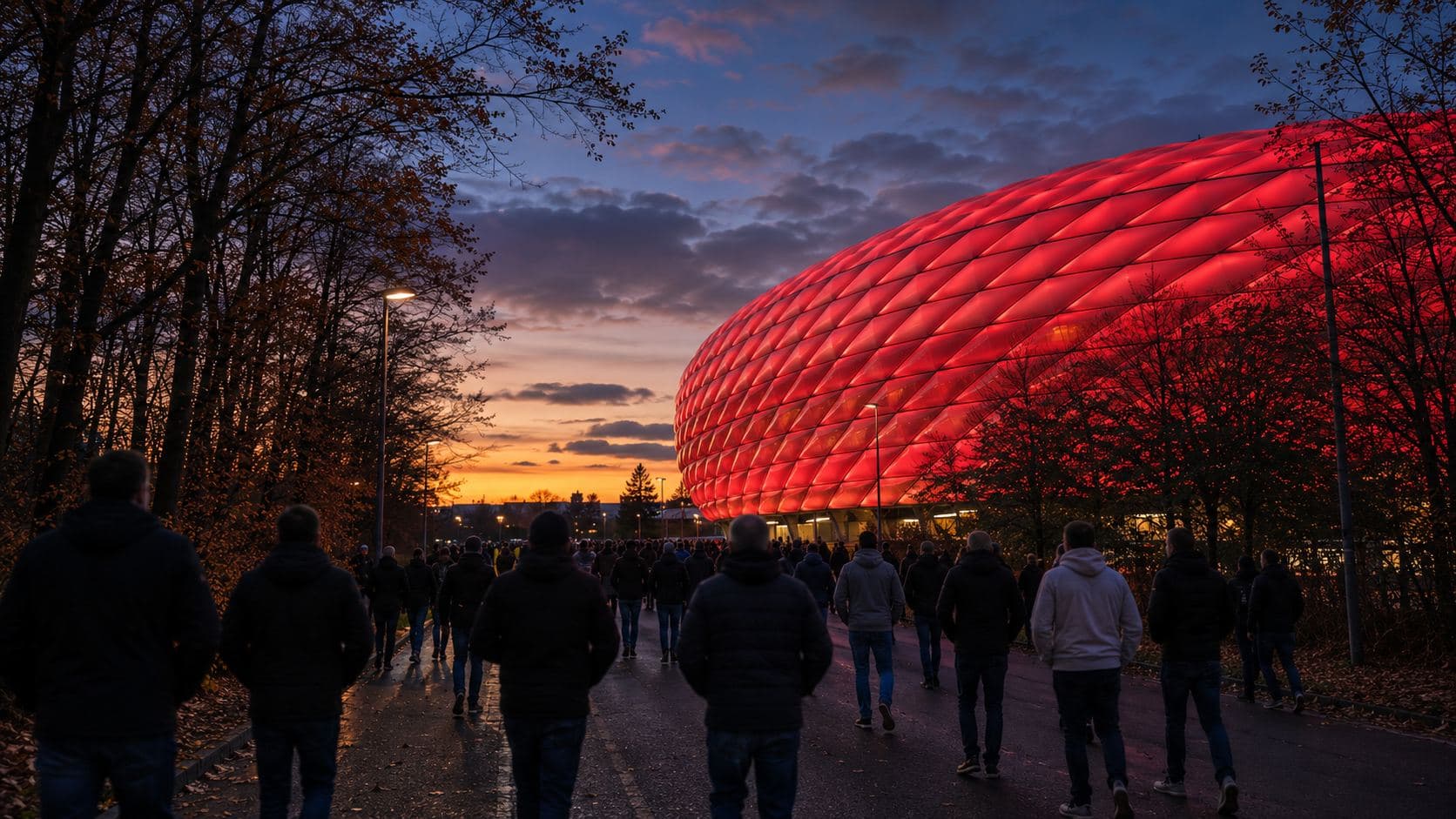
Another Club World
FC Bayern World
A Winning Mentality Is Expected
Explore Club →
Related Culture
Diva vom Neckar
Champions, relegation candidates and unexpected contenders — VfB Stuttgart has rarely followed a predictable path.
Read Story →