City Culture
One City. Two Football Worlds.
Hamburg is home to two clubs whose matchdays reveal two very different sides of the same city.
Hamburg
I
Two Directions
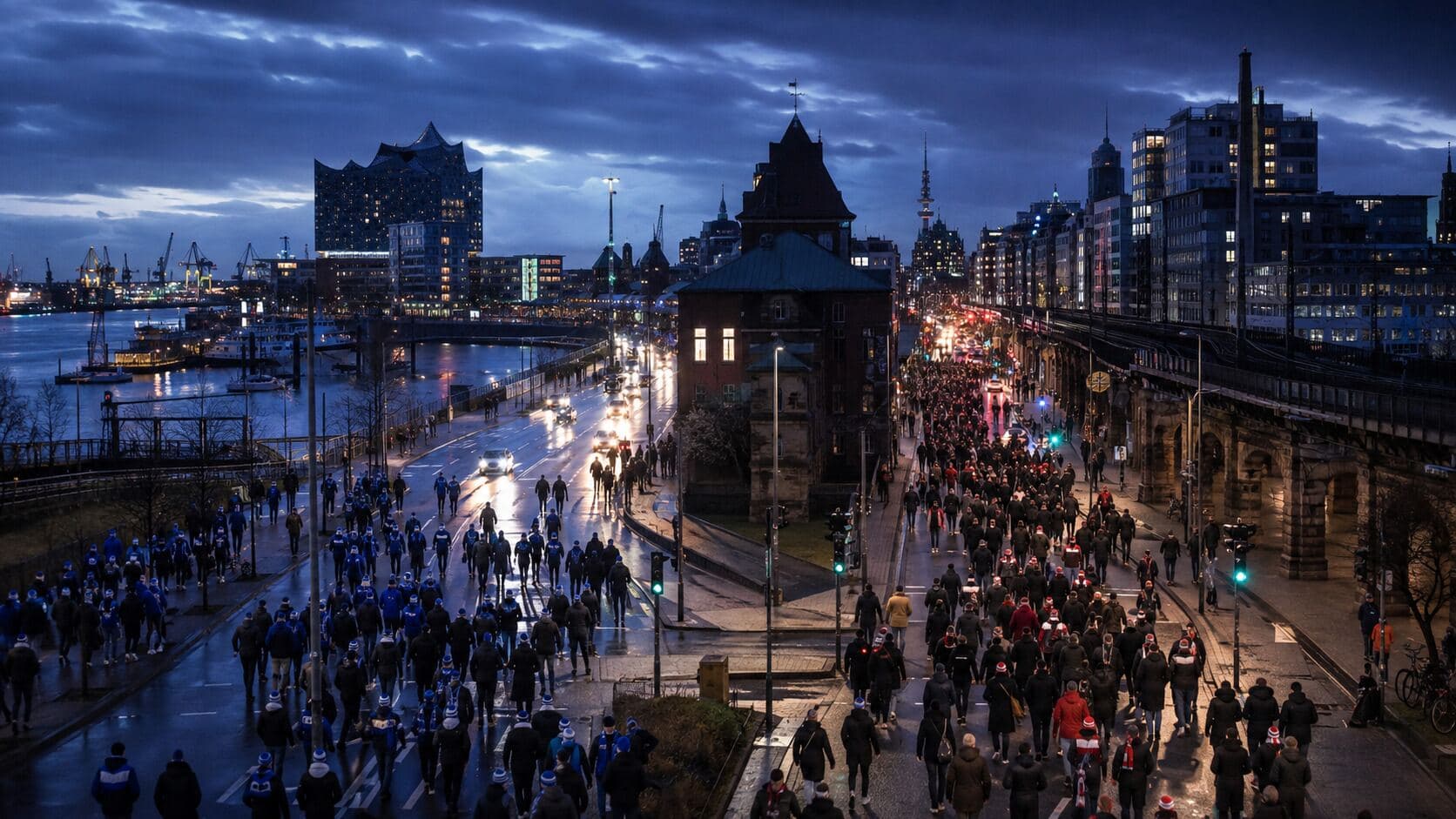
On a football weekend in Hamburg, the colour of the crowd tells you which direction to take.
Blue, white and black scarves move west towards the Volksparkstadion. Brown and white gather closer to the centre, around the Reeperbahn and the Millerntor.
Both journeys begin inside the same city. They lead to two completely different football worlds.
Hamburger SV and FC St. Pauli share Hamburg, but they do not offer interchangeable versions of the same experience. Their stadiums, histories, rituals and public identities have developed differently.
To understand football in Hamburg, you need to understand both.
II
The Road to the Volkspark
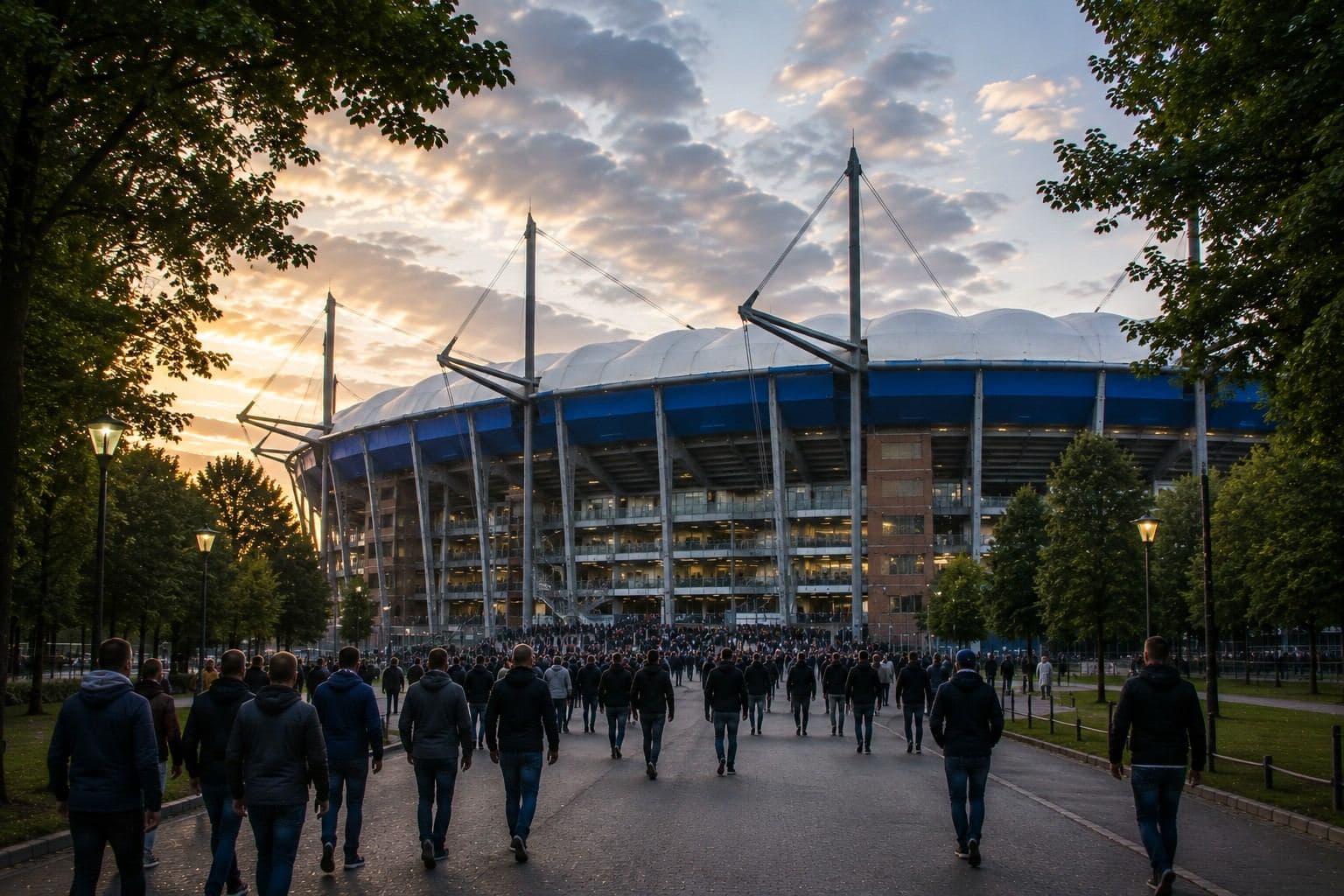
An HSV matchday gradually pulls people away from the centre of Hamburg. Trains fill with supporters heading west. From the stations, long streams of blue, white and black continue towards the Volksparkstadion.
The stadium stands beside the park rather than inside a dense neighbourhood. Its scale becomes clearer as the crowd approaches. More than 50,000 people can fill the ground, creating the feeling of a major civic event.
HSV carries a history that extends far beyond Hamburg. German championships, European nights and generations of famous players established the club as one of the traditional names of German football.
That history also created expectations. The supporters remember what HSV has been, what it lost and what they believe it should become again.
Before kick-off, scarves rise across the Volkspark. “Mein Hamburg lieb ich sehr” fills the stadium. The ritual connects triumph, relegation, seven years in the second division and the return to the Bundesliga.
III
Football in the Neighbourhood
The journey to FC St. Pauli feels different almost immediately.
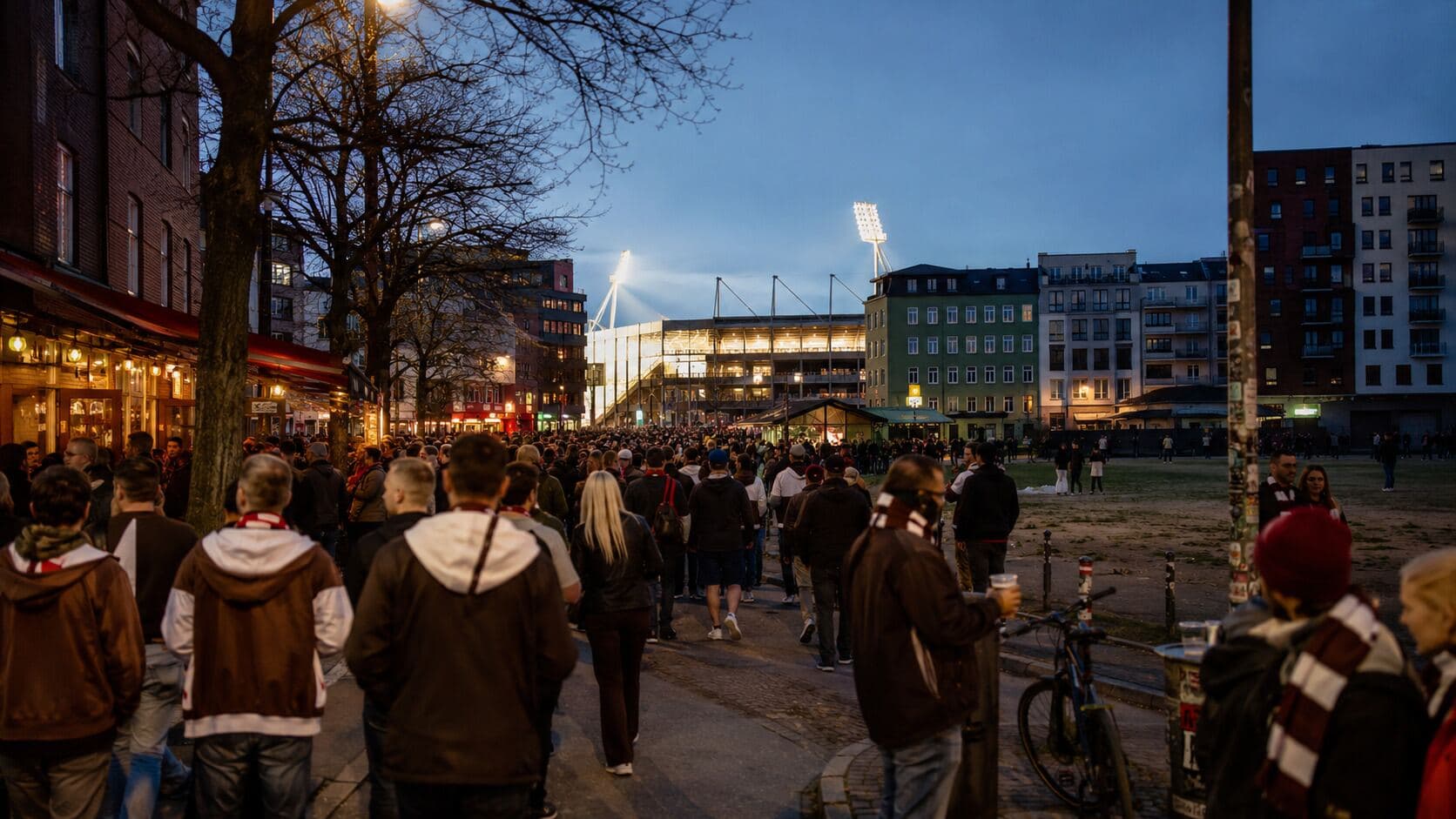
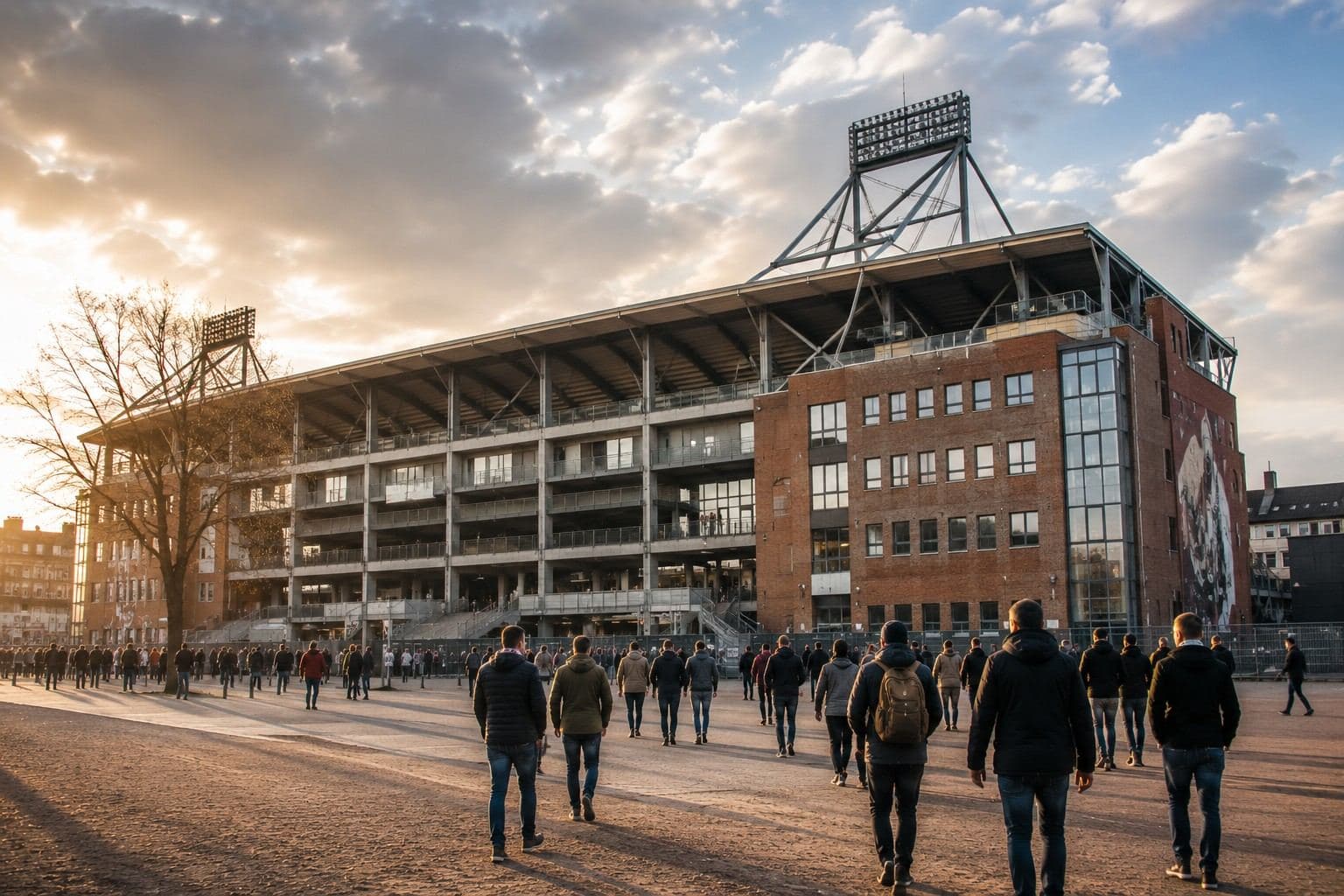
The Millerntor-Stadion does not wait beyond the centre of Hamburg. It stands beside the Heiligengeistfeld, close to the Reeperbahn and surrounded by the streets of St. Pauli.
Here, the boundary between neighbourhood and stadium is difficult to separate. Bars, cafés, homes, music venues and supporter spaces form part of the approach. The matchday does not arrive in the district from somewhere else. It grows out of it.
FC St. Pauli has become internationally recognised for an identity that reaches beyond results. Supporters helped shape a culture associated with anti-racism, anti-fascism, inclusion and social responsibility.
That identity is visible around the stadium, but it should not reduce the club to a collection of symbols. Once the teams emerge to “Hells Bells”, the Millerntor becomes intensely focused on football.
Values form part of the club's identity. So do tension, noise, expectation and the need to win.
IV
Beyond the Easy Labels
The simplest version of Hamburg's football story presents the clubs as opposites.
HSV becomes the large traditional club of the wider city. St. Pauli becomes the smaller alternative club of one neighbourhood. One represents established football; the other represents counterculture.
These descriptions contain recognisable elements, but they are too simple.
HSV is not supported by one type of person. Its stands bring together families, organised fan groups, lifelong season-ticket holders and supporters arriving from far beyond Hamburg.
FC St. Pauli is not merely a cultural idea expressed through football. It is a professional club with sporting ambitions, internal debates and supporters who care deeply about what happens on the pitch.
Neither community can be explained by a stereotype. Both contain different generations, opinions and relationships with the city.
V
When the Worlds Meet
For long periods, HSV and St. Pauli competed in different divisions. Their relationship existed through geography, identity and comparison more often than through regular matches.
When the Hamburg derby returned, it gave those differences a scoreboard.
A derby compresses the city. The familiar routes, colours and symbols suddenly point towards the same fixture. Colleagues, friends and families who usually follow separate football calendars find themselves waiting for the same result.
But the rivalry should not become the only way to understand football in Hamburg. Most weekends are not derby weekends. The two clubs spend far more time building their own traditions than confronting one another.
Their importance lies not only in opposition. It lies in the fact that both have created communities strong enough to define a different relationship with the same city.
VI
A City Large Enough for Both
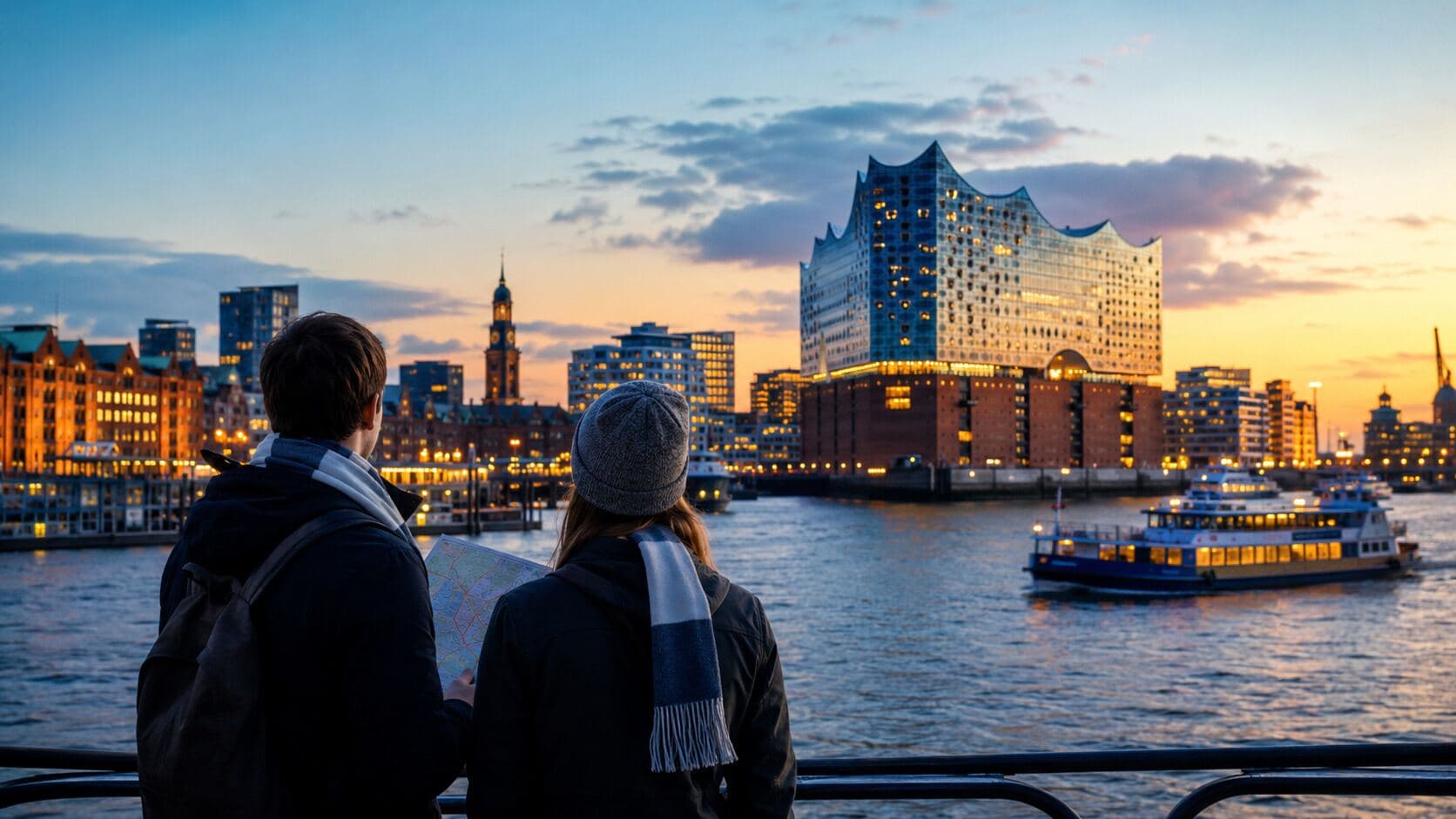
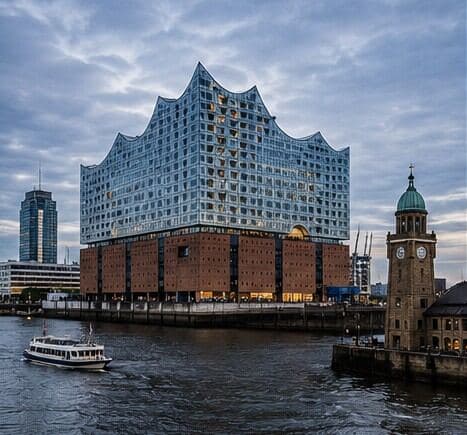
Hamburg's character has never come from a single place. The harbour, neighbourhoods, commercial centre, outer districts and waterways all reveal different versions of the city.
Its football reflects that complexity.
At the Volkspark, scale, memory and expectation shape the afternoon. At the Millerntor, neighbourhood, values and proximity give the matchday a different rhythm.
Choosing one does not make the other less authentic. Together, they explain why Hamburg is one of Germany's most compelling football destinations.
One weekend can take you west through the park or into the streets around St. Pauli. The songs will change. The colours will change. The story surrounding the match will change.
The city remains the same.
Continue Your Journey
Keep Exploring German Football.
Follow this story into its club, its football world and another chapter of German football culture.
Club World
HSV World
Northern Loyalty
Explore Club →
City World
Hamburg World
Experience one city, two completely different football worlds.
Explore World →
Another Club World
St. Pauli World
More Than a Football Club
Explore Club →
Related Culture
Northern Loyalty
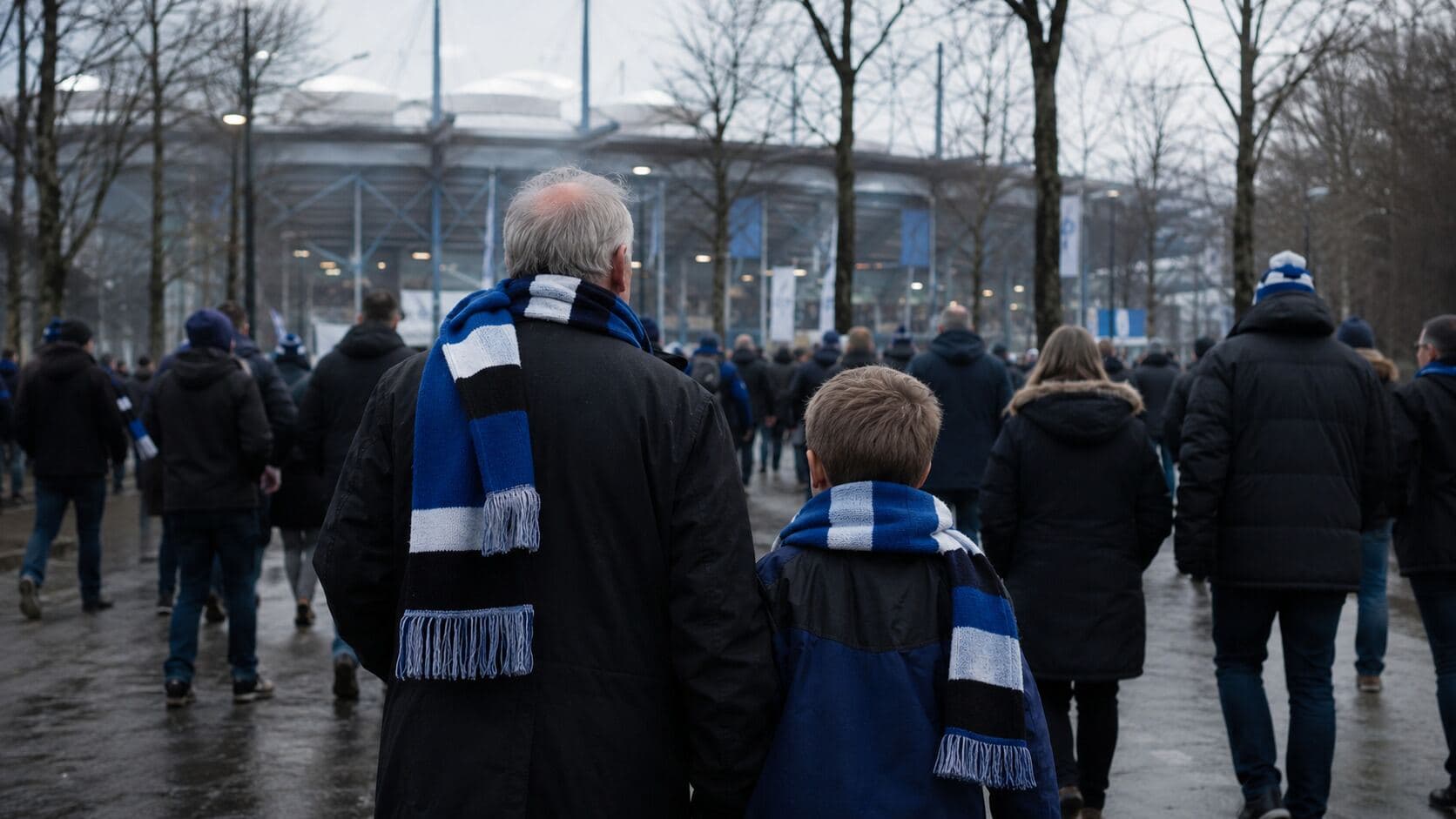
Through good times and bad. A story about generations, belonging and loyalty in Hamburg.
Read Story →