
Matchday Experience
The Energy Around the Millerntor
One matchday. One neighbourhood. And a football ground that never really ends at the stadium gates.
St. Pauli · Hamburg
I
The Neighbourhood
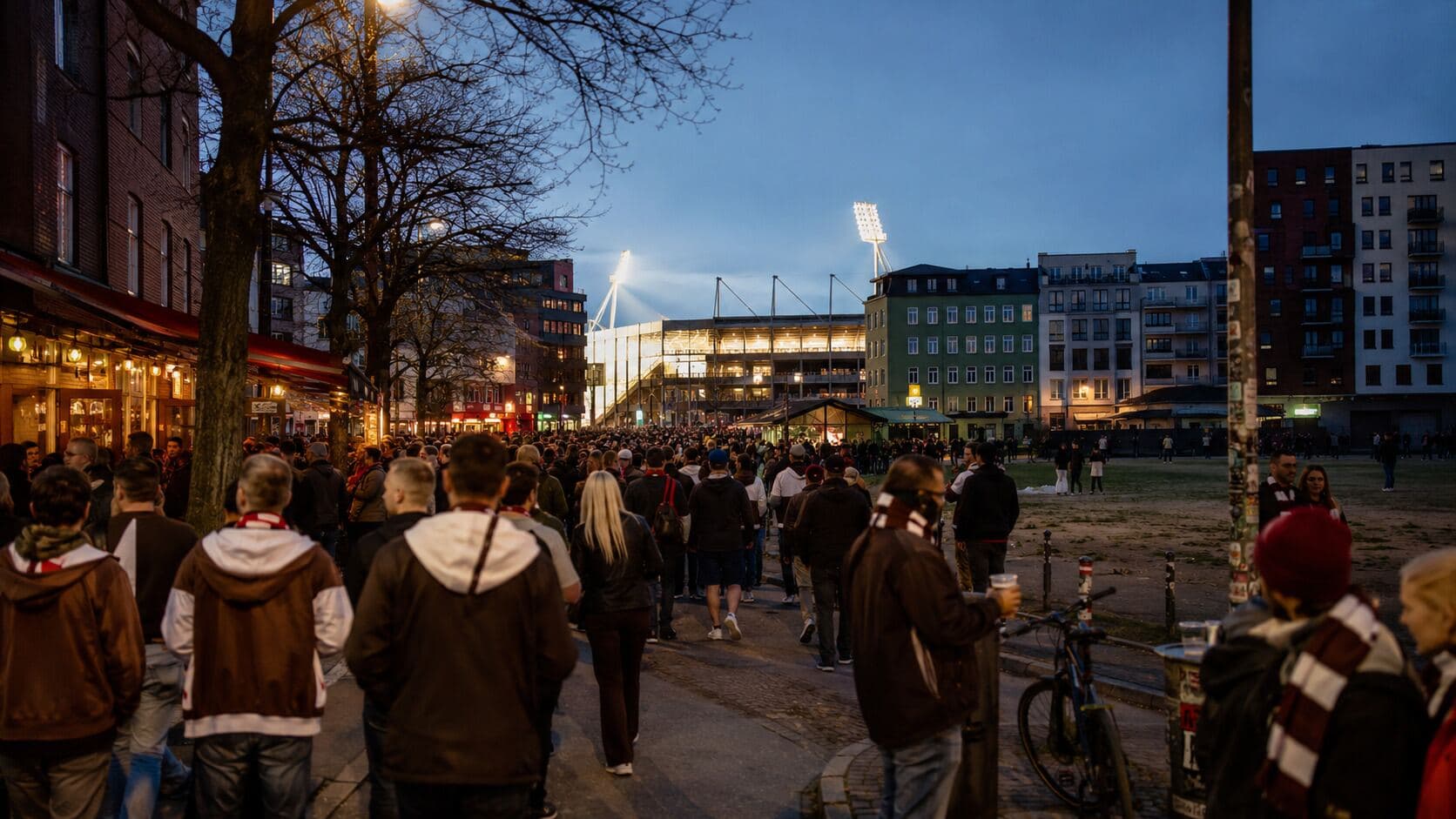
You notice the football before you see the stadium. It is still early in the afternoon, several hours before kick-off, and St. Pauli is going about its Saturday. Cars move along Budapester Straße. People sit outside cafés. Cyclists cut between pedestrians. Someone carries groceries home. But among the ordinary rhythm of the neighbourhood, something is beginning to change.
At first, it is only a scarf — brown and white, wrapped around the neck of a man waiting at a crossing. Then another. A skull and crossbones appears on the back of a jacket. Supporters stand outside a kiosk with bottles in their hands, talking with the easy lack of urgency of people who know exactly where they are going. The closer you get to the Heiligengeistfeld, the more these small signals begin to connect.
Football is arriving. Or perhaps that is the wrong way around. Perhaps football was here all along. That is the first thing to understand about a matchday at the Millerntor. There is no clean boundary between the stadium and the neighbourhood surrounding it. No long journey to an arena on the outskirts. No moment when the city suddenly stops and football begins. The Millerntor sits inside St. Pauli, and on matchday St. Pauli slowly becomes part of the stadium.
Coming from elsewhere in Hamburg, the U-Bahn brings you almost to the ground. St. Pauli station opens onto the Heiligengeistfeld, where the scattered signs of football suddenly become concentrated. Brown, white, red, black — and everywhere the skull. It appears on shirts, scarves, flags, patches and stickers. Sometimes it is the official club crest. Often it is not.
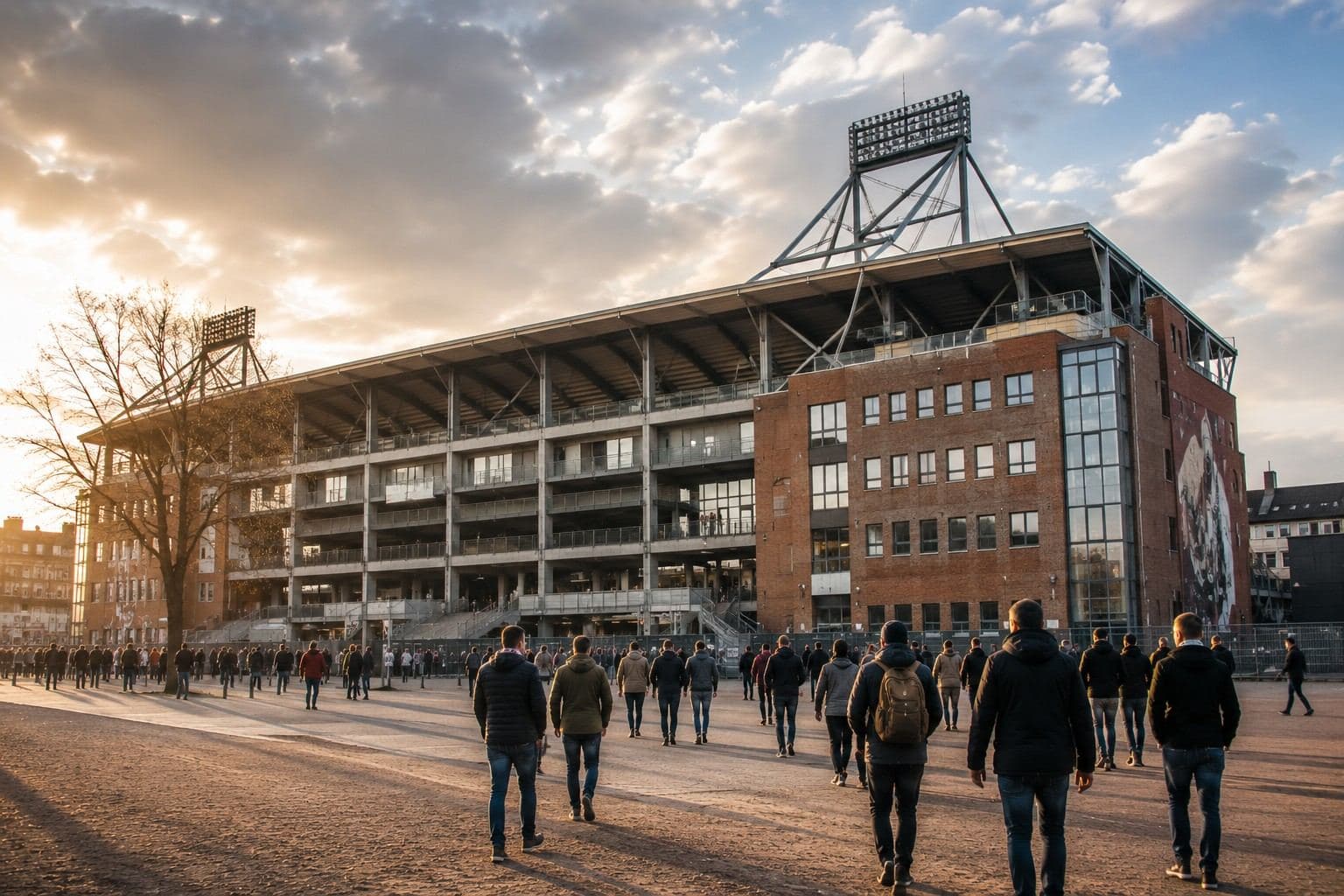
Across the Heiligengeistfeld, the Millerntor comes into view. It does not rise above the city like a monument. It sits within it. Behind you is the Reeperbahn. Around you are bars, apartments, restaurants and everyday life. The harbour is not far away. And directly ahead is a football ground. You have arrived. But it is far too early to go inside.
II
Before Football
There are football grounds where the sensible thing to do is arrive, find your entrance and take your seat. The Millerntor is not one of them. The hours before kick-off matter. Walk away from the stadium and you do not leave the matchday behind. Groups of supporters occupy tables outside bars. Friends greet each other on pavements. Nobody appears particularly interested in getting to the stadium yet. There is time. That is part of the rhythm.
The Reeperbahn is only one version of St. Pauli. Turn into the surrounding streets and the neighbourhood becomes smaller and more local: old brick buildings, graffiti, bicycles chained to railings, independent shops and bars that seem too small for the number of people standing outside them. Football shirts come from different eras. An elderly supporter wears a scarf that looks as though it has survived several versions of the stadium.
Students, tourists, long-time residents and supporters who have travelled hundreds of kilometres occupy the same streets. This is one of the contradictions of St. Pauli: it is intensely local and internationally recognisable at the same time. The club carries the name of a Hamburg neighbourhood, yet its symbols can be found thousands of kilometres away. Some visitors know the skull before they know the league table. Others standing beside them have been coming here since childhood.
That relationship between club and neighbourhood matters. Move the same stadium twenty kilometres outside Hamburg, surround it with car parks and access roads, and something essential would disappear. St. Pauli has a long history of nightlife, outsiders, workers, migrants, artists and political movements. The football club did not invent that identity. It grew inside it.
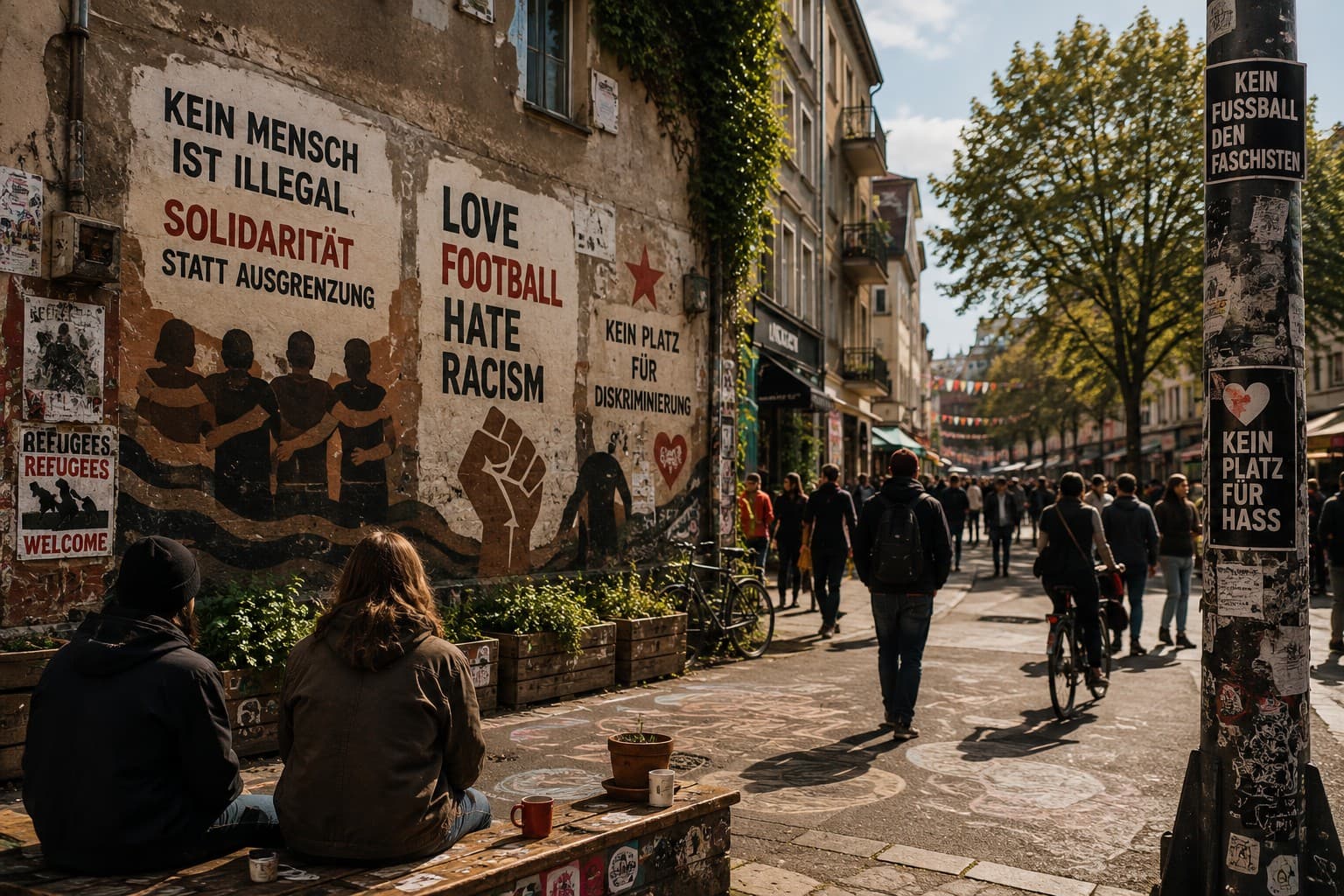
You see the relationship in details: stickers layered over stickers, political messages beside football slogans, the skull appearing where a conventional club badge might be expected. Then kick-off moves closer. Conversations finish. Glasses empty. Scarves are adjusted. People begin looking at the time. Almost without instruction, the neighbourhood starts moving.
III
The Walk
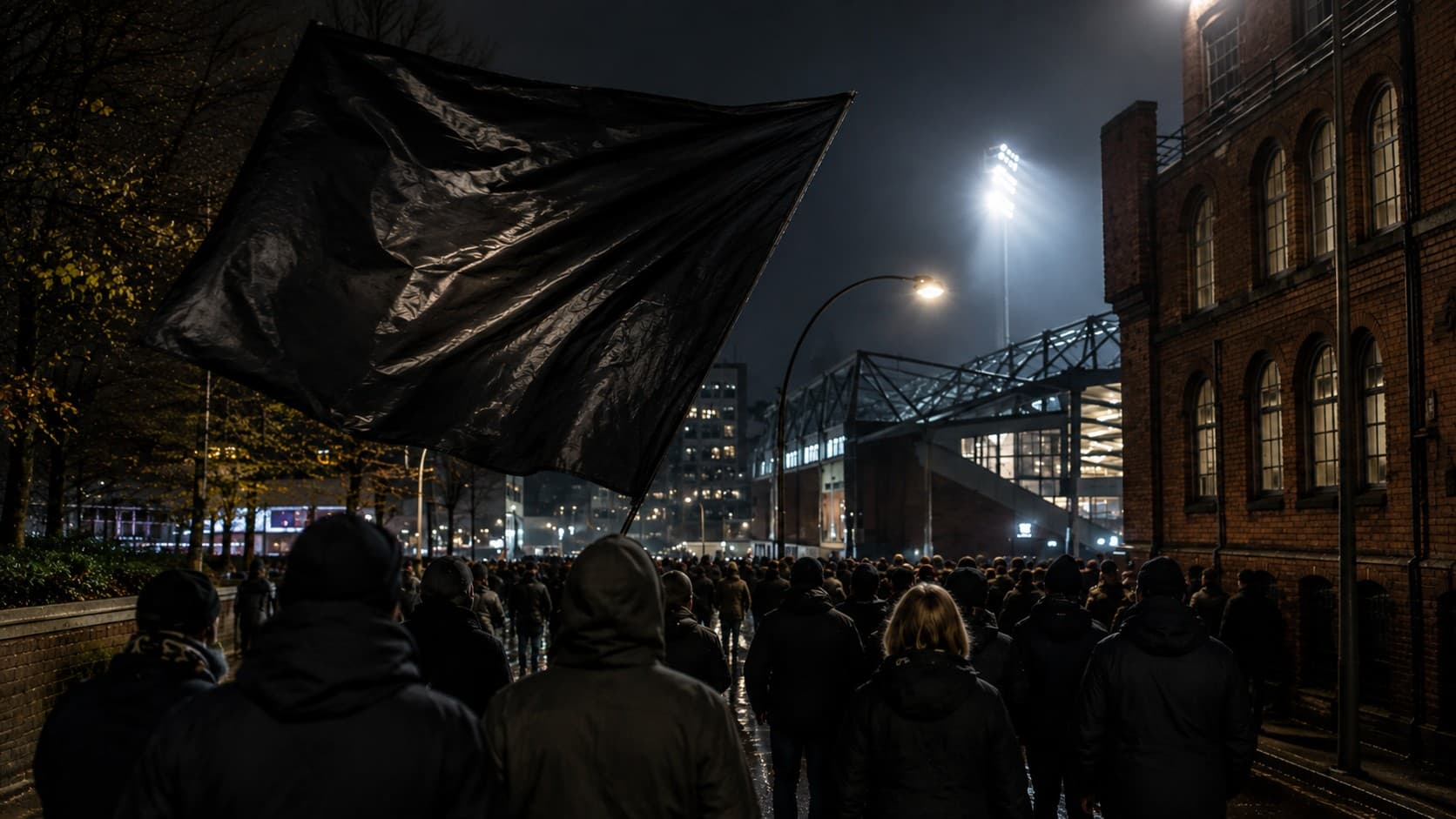
There is no starting whistle for the walk to the Millerntor. One moment people are standing outside bars; the next they are moving. Side streets feed into larger streets. Small groups become crowds. The pavements tighten. Earlier, football had been scattered across St. Pauli. Now it begins to concentrate.
You hear fragments of songs. Someone shouts to a friend across the street. A bicycle bell rings uselessly behind a wall of pedestrians. Above everything is the continuous sound of thousands of conversations moving in the same direction. Nobody needs a map anymore. Follow the crowd.
The Heiligengeistfeld opens in front of the stadium like a pause in the density of the neighbourhood. Turn around and Hamburg is still there: the television tower, the buildings of St. Pauli, the streets you have just walked through, the Reeperbahn only minutes away. Turn back and the entrances are filling. Drinks are finished, tickets appear on phones, friends with different entrances separate. The outside world begins to narrow. You pass through the gate.
IV
Inside the Millerntor
The first impression is proximity. Everything feels close: the stands, the pitch, the people, the roof above you, the opposite terrace. The Millerntor does not overwhelm through enormous scale. Other German stadiums are larger and more spectacular. That is not the point. The Millerntor compresses. Sound has nowhere to escape.
Supporters stand shoulder to shoulder. Flags move above heads. Banners hang from railings. Almost every piece of visual space seems to have acquired a message, symbol or memory. The skull is here, of course. So are references to anti-racism, anti-fascism, inclusion and solidarity that have become internationally associated with the club.
But there is something else here too: football. People discuss the starting eleven, complain about players, worry about the defence and react to missed chances and refereeing decisions with the same irrational intensity found in football grounds everywhere. The mythology does not disappear. It becomes grounded. This is a football club, and the football matters. A lot.
Conversations dissolve. The opening bell is unmistakable: heavy, slow, almost theatrical. The first notes seem to change the temperature inside the stadium. People stop talking. Scarves rise. The players wait. For a few seconds, the entire ground appears to hold itself in suspension.
Then the teams emerge and the noise comes down from the stands. Everything outside — the Reeperbahn, the bars, the tourists, the politics and the mythology — contracts into something much simpler. There is a ball in the centre of the pitch. There are two teams. There are ninety minutes.
V
Ninety Minutes
Football grounds reveal themselves when something goes wrong. A goal is easy. Everyone knows what to do when the home team scores. But a misplaced pass, a missed tackle or a promising attack that collapses exposes the real relationship between a crowd and its team. At the Millerntor, support is loud but not blind. Frustration moves quickly through the terraces. So does encouragement.
The crowd does not watch passively. Bodies lean with attacks. Hands rise with appeals. A player chasing a lost ball towards the touchline can pull an entire stand forward. For a visitor, there is initially a temptation to observe everything: the banners, the terraces, the songs, the things you have read about. Eventually the match prevents you.
A chance develops. The forward turns. The crowd rises and suddenly you are standing too. The shot goes wide and thousands of people make roughly the same sound. You make it with them. For a moment, the stadium stops being something you are visiting. You are simply inside it.
This is where one of the most important things about St. Pauli becomes clear. From outside Germany, the club is sometimes presented almost entirely through its values and countercultural identity. Those things are real and visible throughout the stadium. But reducing St. Pauli to them misses something fundamental: the people around you desperately want their team to win.
They argue about substitutions, curse wasted opportunities, celebrate ugly goals and remember defeats. Ideals do not make losing enjoyable. At the Millerntor, values and sporting obsession occupy the same space. Perhaps that is why the place is so difficult to reproduce elsewhere. You can copy symbols and play the same music. You cannot manufacture decades of relationship between a club, a stadium and the streets outside.
VI
Back Into St. Pauli
The final whistle does not end the matchday. It releases it. Players walk towards the stands. Some supporters immediately begin dissecting the match; others stay for the songs. Then the exits fill and the crowd moves through concrete corridors and stairways towards the gates.
And then something unusual happens. There is no real transition back to the city. You are simply in it. One moment you are inside a football stadium; minutes later you are beside the Heiligengeistfeld. The same streets, the same bars, the same kiosks — but now everyone has something to talk about.
If St. Pauli won, songs travel further and plans for one drink become plans for several. If they lost, the match is dissected in doorways and at bar counters. Either way, the football does not vanish. It disperses back into the neighbourhood from which it came.
Walk away from the stadium and the crowd gradually becomes smaller. Scarves disappear into side streets. Some supporters descend into the U-Bahn. Others turn towards the Reeperbahn. Behind you, the Millerntor remains visible until a building finally blocks it from view. Almost immediately you are among people who were never at the football at all. Saturday night in Hamburg has continued around you.
But the matchday has not quite disappeared. Another brown and white scarf passes. A skull on the back of a jacket disappears around a corner. And something that was difficult to see when you arrived becomes obvious: the energy around the Millerntor does not come from the stadium alone. It comes from the relationship between the ground and everything surrounding it.
At the Millerntor, football does not happen next to the neighbourhood. It happens inside it.
Continue Your Journey
Keep Exploring German Football.
Follow this story into its club, its football world and another chapter of German football culture.
Club World
St. Pauli World
More Than a Football Club
Explore Club →
City World
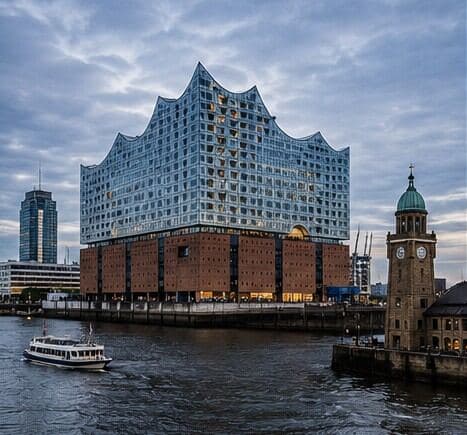
Hamburg World
Experience one city, two completely different football worlds.
Explore World →
Another Club World
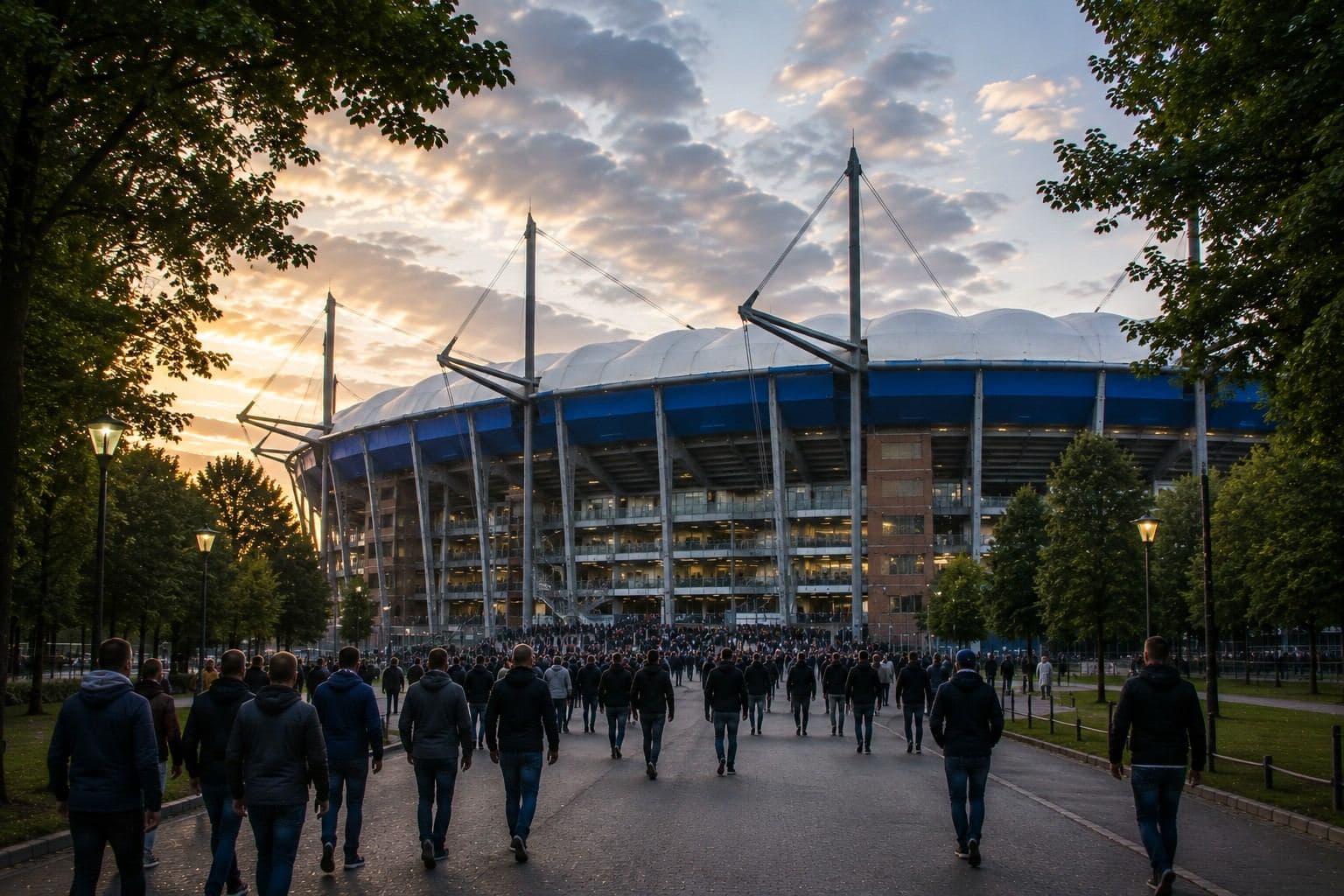
HSV World
Northern Loyalty
Explore Club →
Related Culture
More Than A Football Club
A neighborhood, a community and an identity that reaches far beyond the pitch.
Read Story →