Club Culture
Under the Skull
How a pirate flag carried into the Millerntor became one of football's most recognisable symbols.
Hamburg · St. Pauli
I
The Other Symbol
The official crest of FC St. Pauli is circular. It carries the club name, the colours red and white and the familiar image of Hamburg's city gate.
Yet far beyond Hamburg, another symbol is more immediately associated with the club.
A white skull above crossed bones on a black background.
It appears on flags inside the Millerntor, on shirts around the neighbourhood and in cities thousands of kilometres from Hamburg. It has become one of the most recognisable images in German football.
But it did not begin in a club office. There was no branding strategy and no campaign designed to give FC St. Pauli an international identity.
The skull entered the stadium with a supporter.
II
A Flag on a Broomstick
In the mid-1980s, a new supporter scene was forming around FC St. Pauli. Punks, squatters, students and people from the neighbourhood began arriving at the Millerntor in greater numbers.
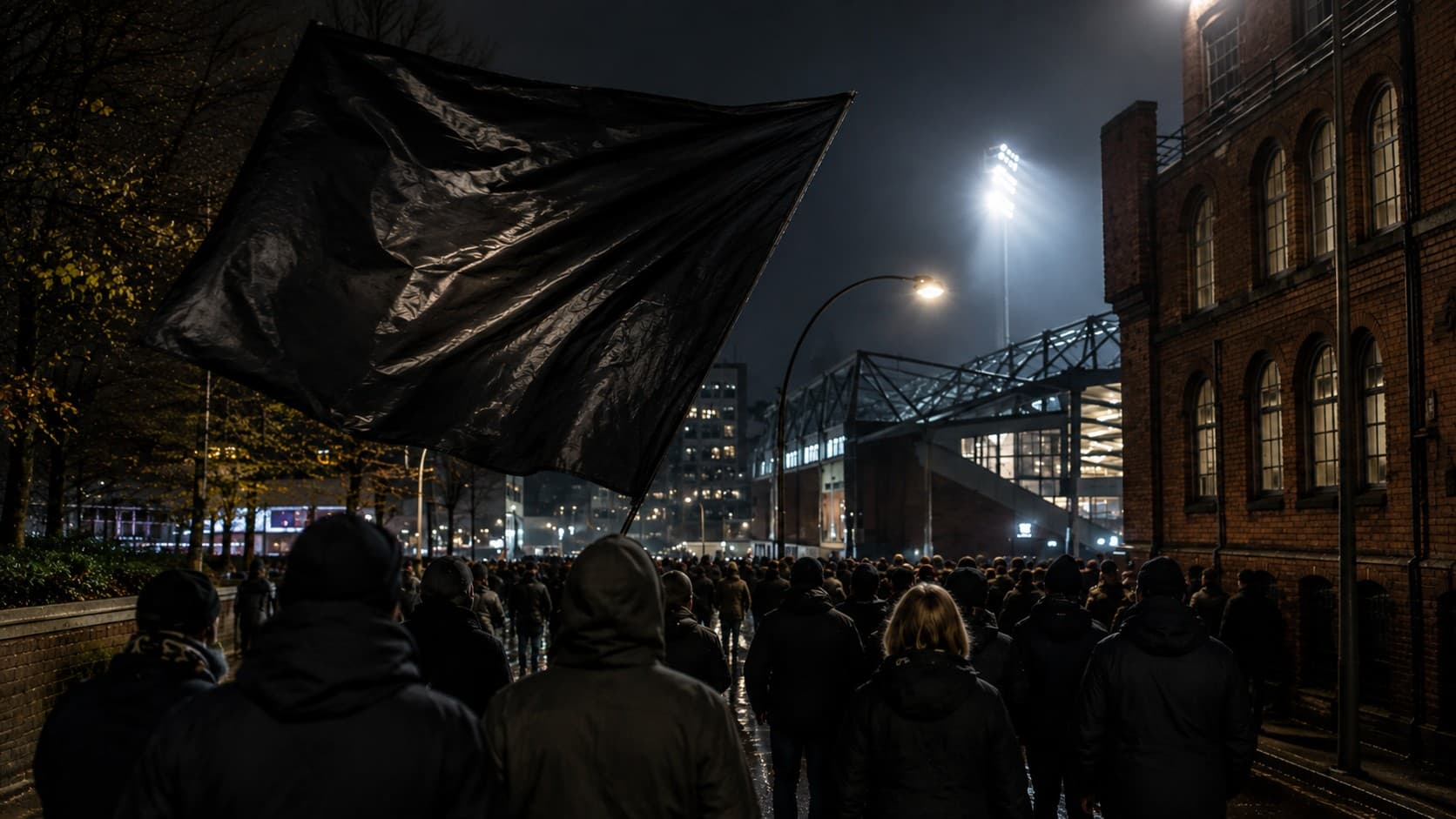
Among them was a supporter known as Doc Mabuse. The story has become part of St. Pauli folklore: he brought a pirate flag into the stadium, attached to a broomstick.
The flag was not created for FC St. Pauli. It was a Jolly Roger, the familiar pirate symbol found in the shops and alternative culture surrounding the district.
Inside the Millerntor, however, it found a new meaning.
Other supporters began bringing skull flags of their own. What started as one object carried onto the terrace became part of the visual language of the emerging fan culture.
III
A Symbol of Refusal
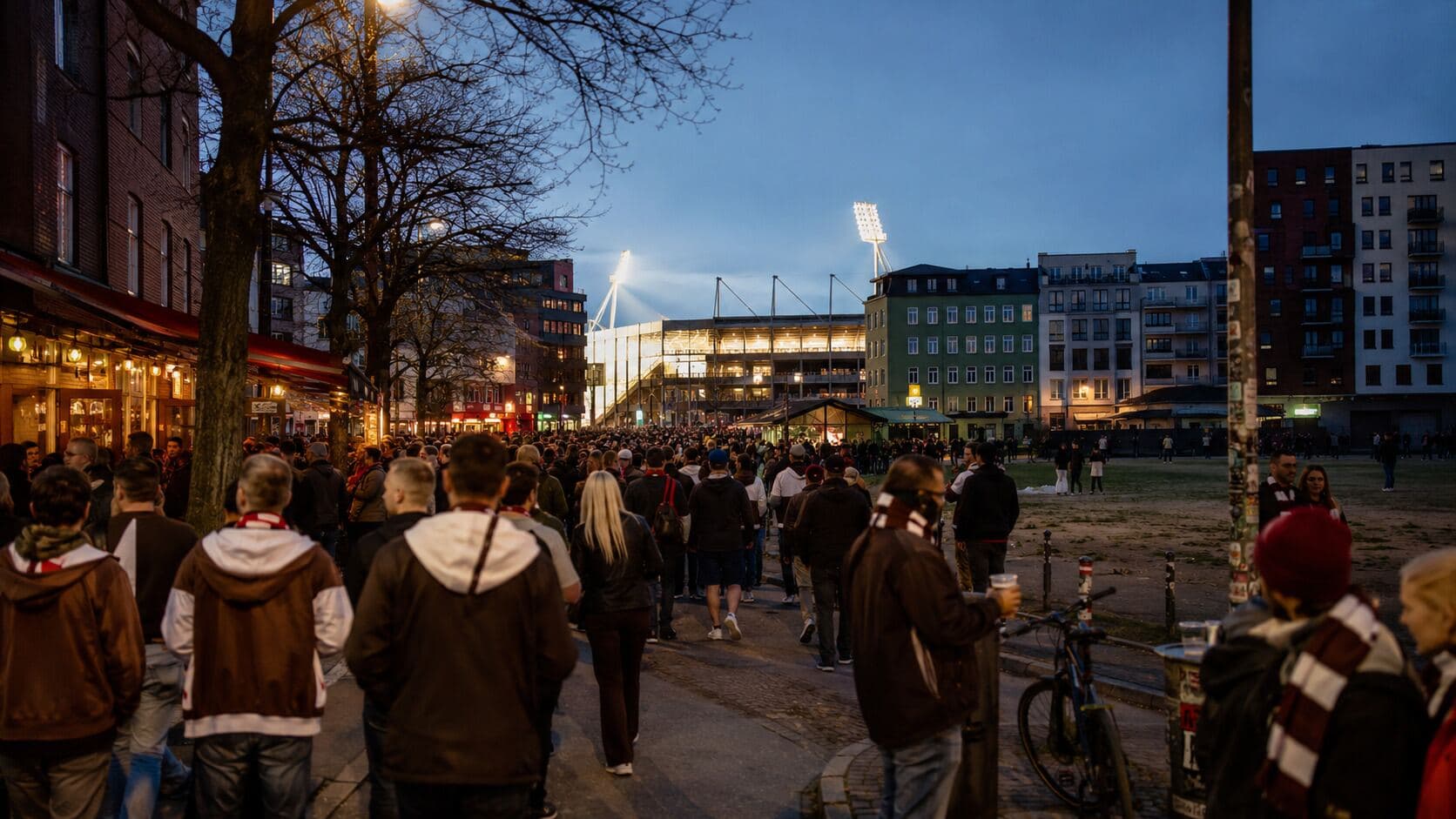
A skull and crossbones can represent danger, piracy or rebellion. At St. Pauli, it became associated with a supporter culture that refused to accept what was happening elsewhere in football.
During the 1980s, far-right groups and racist behaviour were visible on many German terraces. The developing scene at the Millerntor moved in another direction.
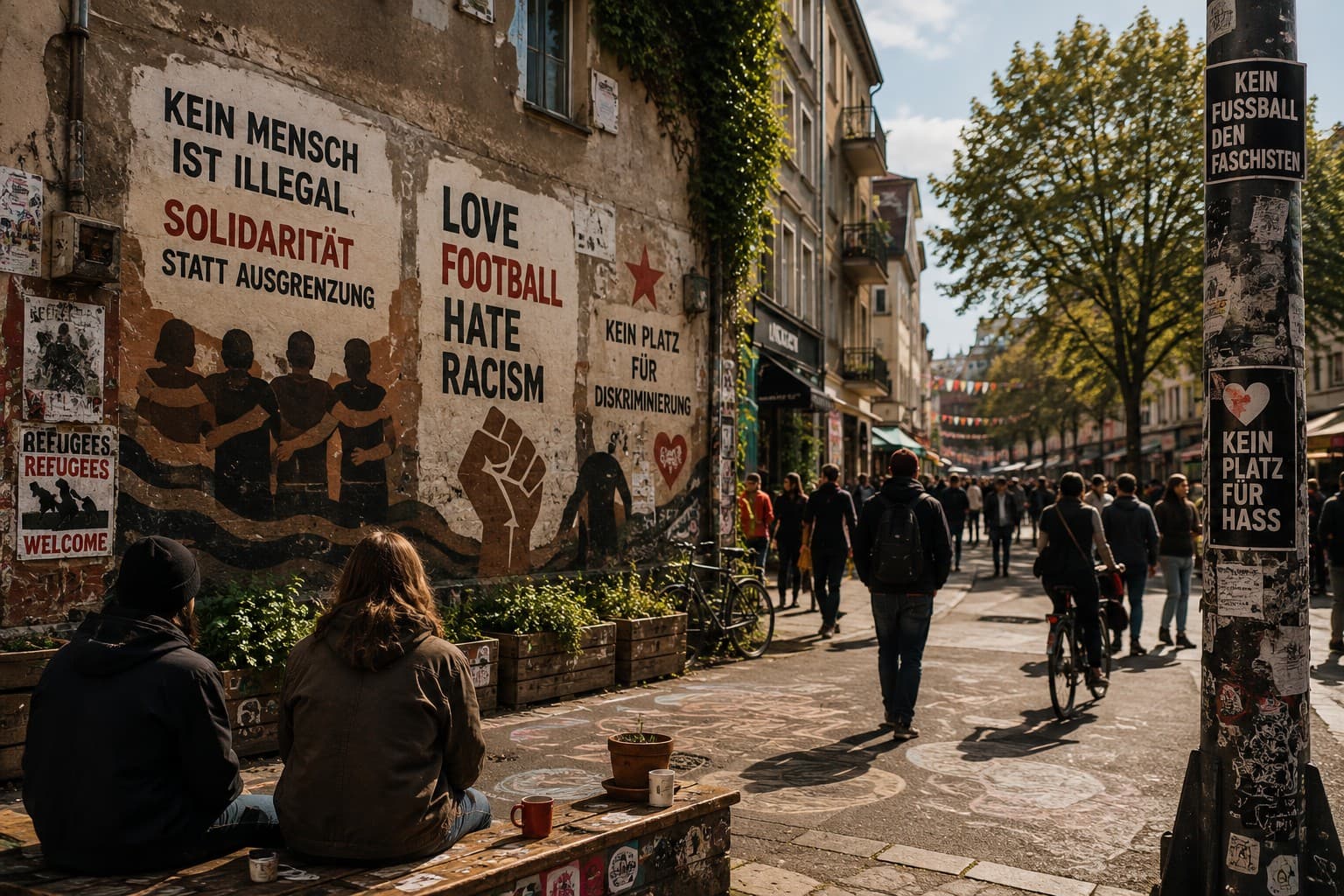
Supporters increasingly positioned themselves against fascism, racism, sexism and homophobia. These principles were not created by the skull, and the symbol did not automatically guarantee them. They grew through arguments, initiatives and decisions made by people around the club.
The flag provided an image for that culture: independent, disruptive and unwilling to fit comfortably into conventional football.
It also connected naturally with St. Pauli itself — a district shaped by the harbour, nightlife, counterculture and people living outside the expectations of respectable Hamburg.
IV
Invented Again
The skull associated with FC St. Pauli today is not simply the first pirate flag carried into the stadium.
In 1989, Hamburg screen printer Steph Braun created a new design. It combined a detailed skull and crossed bones with the words “ST. PAULI” beneath them.
The image was intended to represent the district rather than the football club alone. It was sold around St. Pauli and quickly adopted by supporters.
Over time, the distinction became almost impossible to maintain. The neighbourhood symbol, the fan symbol and the football symbol merged. The club later secured the rights and made the skull part of its official identity.
Something created outside the institution had been carried into the institution by the people around it.

V
From Rebellion to Recognition
The skull travelled much further than anyone carrying a flag at the Millerntor in the 1980s could have expected.
It appeared on shirts, stickers, scarves and records. Musicians wore it on stage. Supporters' clubs adopted it in countries where few people had ever attended a match at the Millerntor.
FC St. Pauli became internationally visible in a way that could not be explained by sporting success. People recognised something in the club's values, neighbourhood and outsider identity.
That success created a contradiction. A symbol associated with resistance became commercially valuable. The anti-establishment image became a global brand.
This tension remains part of modern St. Pauli. Commercial income helps the club compete and sustain its work. At the same time, supporters continue to question whether the symbols and values emerging from their culture are being protected or merely sold.
The debate is not evidence that the identity has disappeared. The willingness to have that debate is part of the identity itself.
VI
Under the Skull
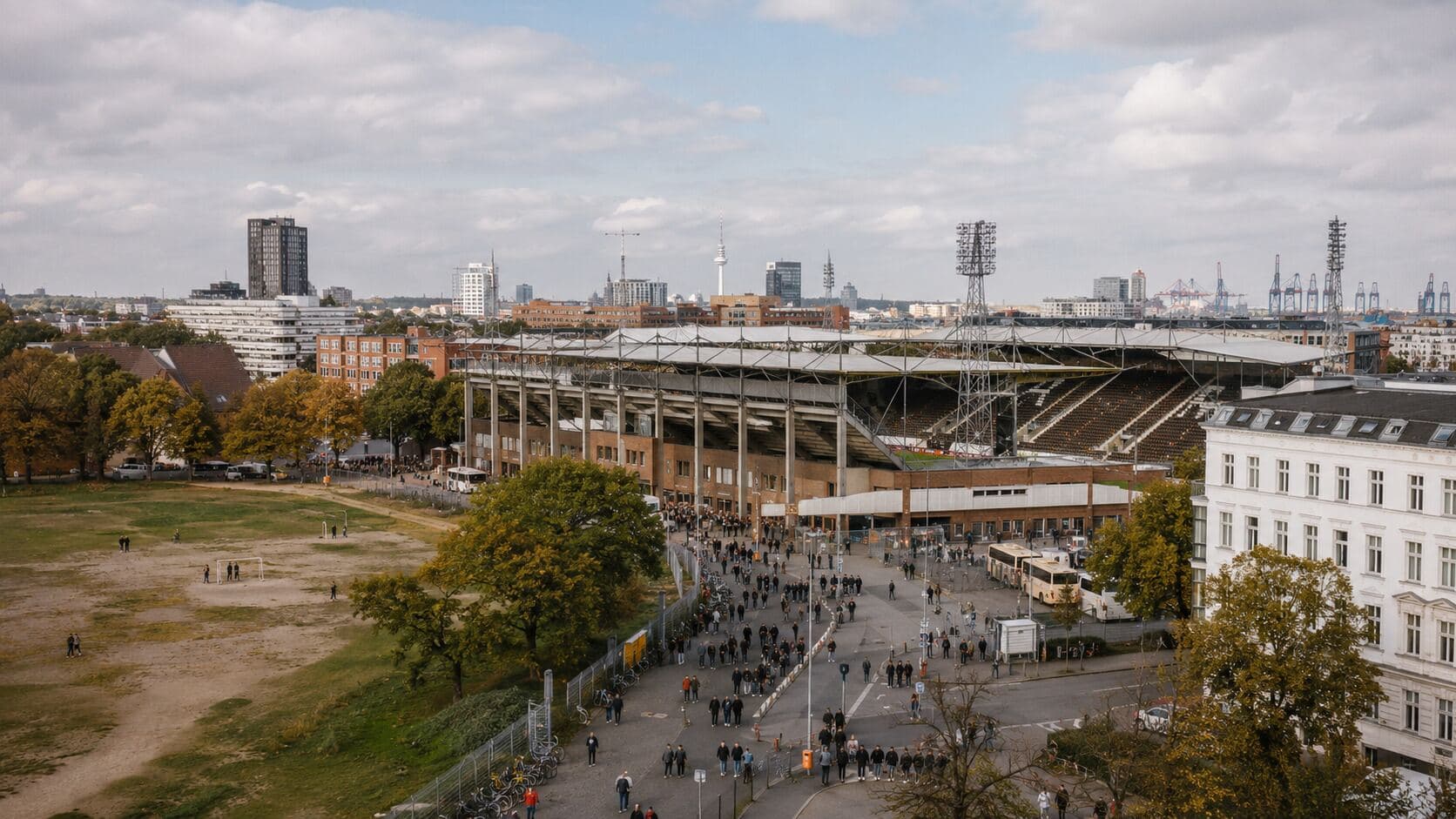
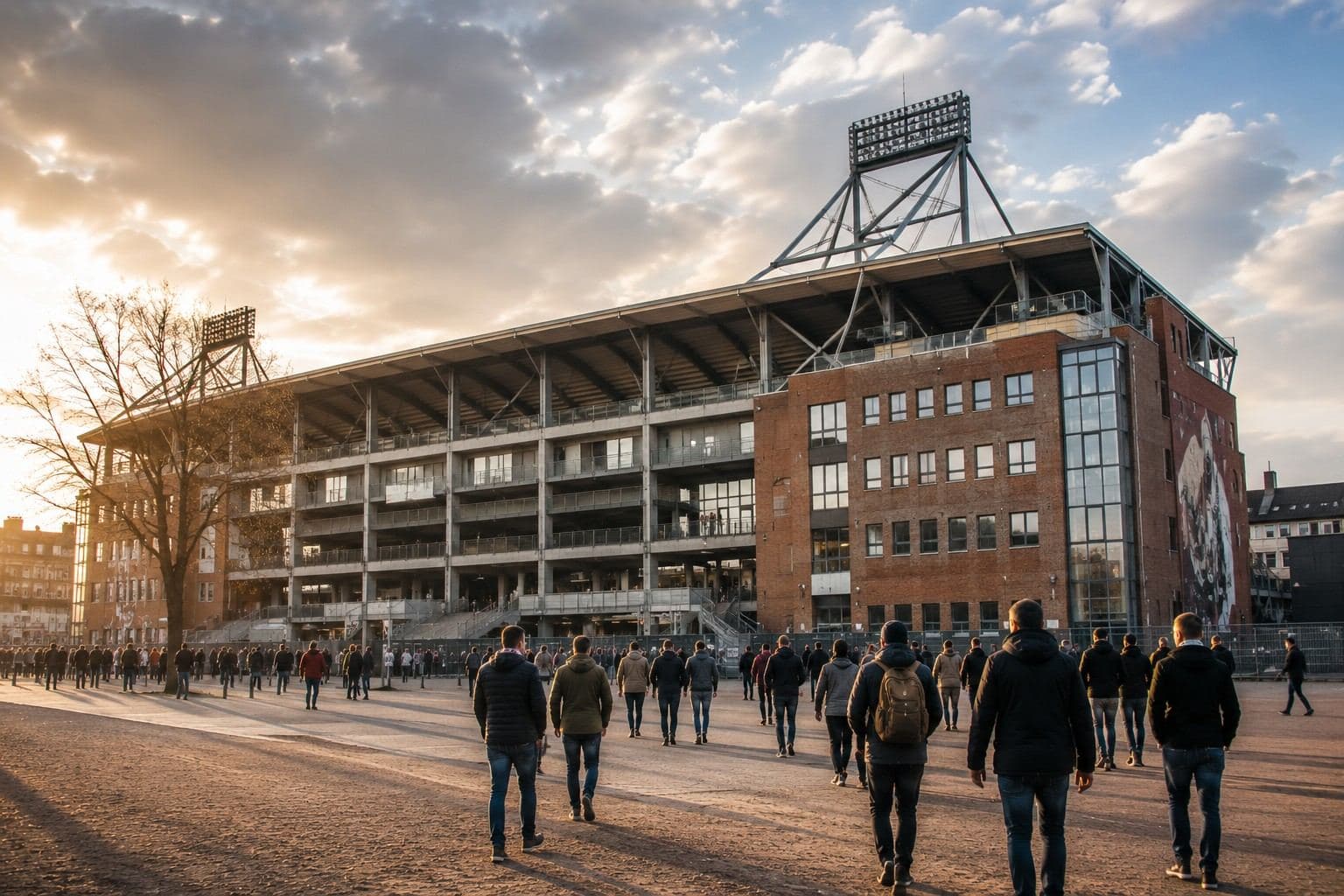
On matchday, the skull is everywhere around the Millerntor. It flies above the terraces, appears on clothing and watches over the streets surrounding the stadium.
For a visitor, it may first look like an unusually powerful piece of football branding. Its real story runs in the opposite direction.
It began with supporters who were changing the culture of their stadium. It gained meaning through the positions they took and the community they built. Only later did it become one of the club's defining images.
The skull does not replace the official crest. It tells a different story: not where the club was founded, but what the people around it wanted it to represent.
Continue Your Journey
Keep Exploring German Football.
Follow this story into its club, its football world and another chapter of German football culture.
Club World
St. Pauli World
More Than a Football Club
Explore Club →
City World
Hamburg World
Experience one city, two completely different football worlds.
Explore World →

Another Club World
HSV World
Northern Loyalty
Explore Club →
Related Culture
More Than A Football Club
A neighborhood, a community and an identity that reaches far beyond the pitch.
Read Story →