Football Culture
Northern Loyalty
What remains when success disappears?
Hamburg · HSV
I
A Club That Belonged at the Top
For generations, Hamburger SV belonged to the top of German football. Not because every season ended with a trophy, and not because every decade was successful, but because being part of the Bundesliga felt permanent. HSV was there when the league began and remained there year after year, through changing teams, changing stadiums and changing expectations.
The club carried the weight of a major football city and the memory of greater times. European nights, national titles and players whose names had become part of German football history created a standard that never completely disappeared. Even when performances declined, the idea remained: HSV was supposed to be one of Germany's major clubs.
That expectation became part of the problem. Every difficult season was measured against what the club had once been. Every recovery was supposed to become the beginning of something bigger. Survival was not enough because survival had never been the point.
Yet beneath the expectations, something more durable existed. The relationship between the club and the people who followed it was not built only on success. It was built on repetition: the same journey, the same scarf, the same stadium, the same place in the stand. Season after season. Generation after generation.
II
Hamburg in Blue, White and Black
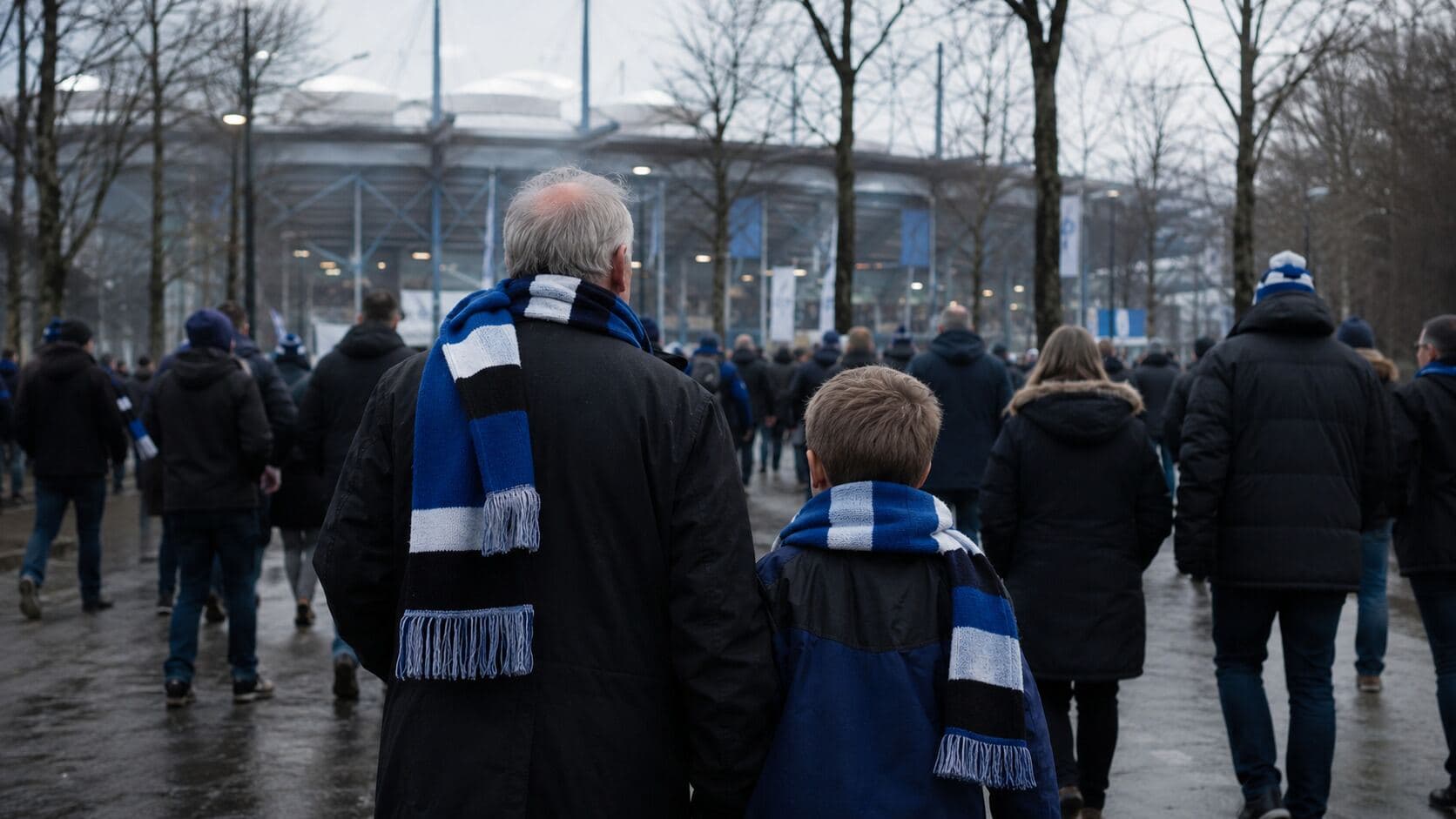
HSV is inseparable from Hamburg, but not in the obvious tourist sense. The identity does not begin at the harbour or on a postcard. It lives in routines. In the S-Bahn towards Stellingen. In scarves appearing across the city on a Saturday morning. In families who have made the same journey to the Volkspark for decades.
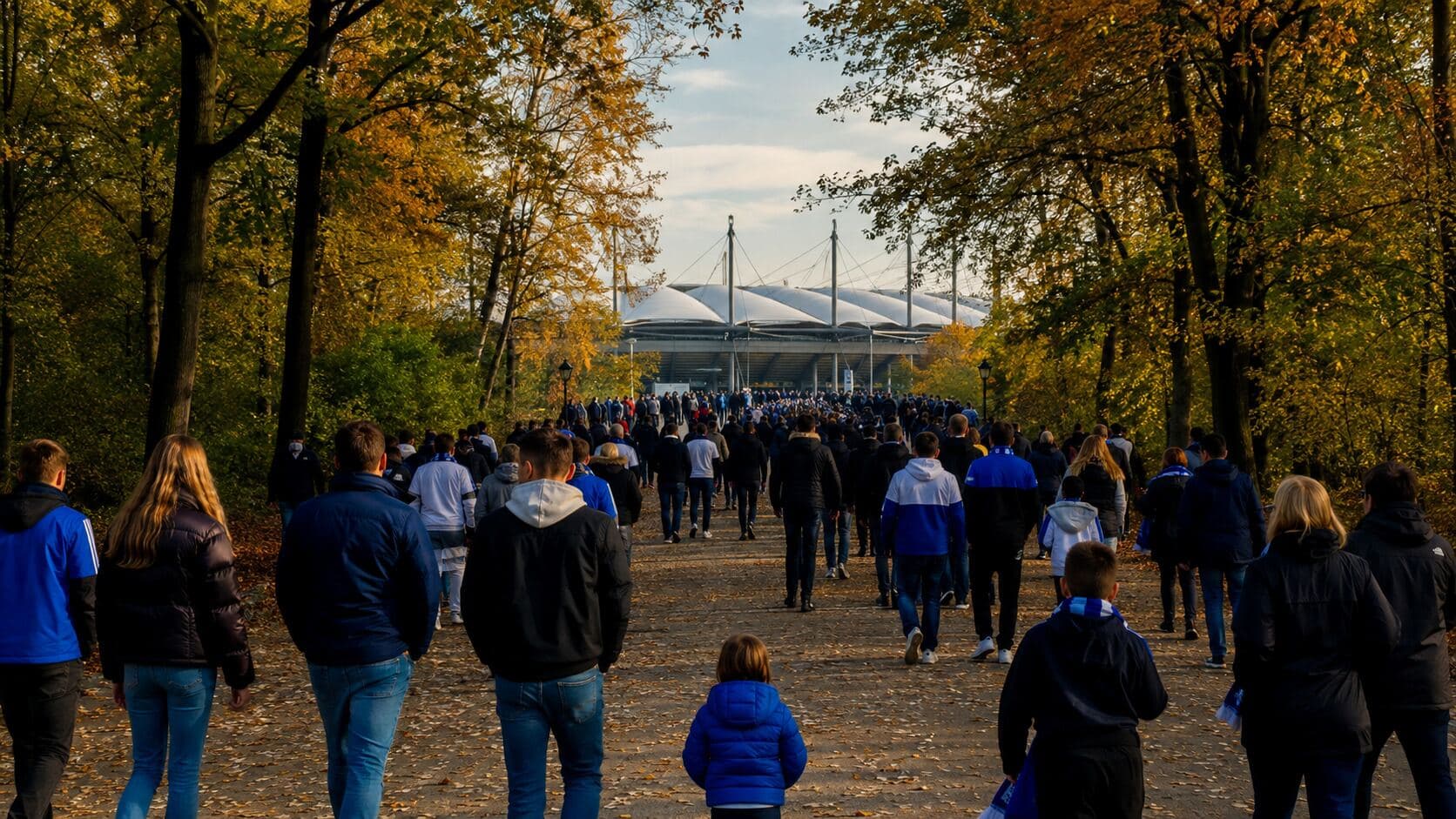
The stadium sits away from the dense streets of the city centre, surrounded by trees and open space. Matchday has its own geography. Supporters arrive from different parts of Hamburg, from Schleswig- Holstein, Lower Saxony and much further away. Streams of people merge on the final walk towards the ground.
The colours are simple: blue, white and black. The diamond is simpler still. Yet simplicity can carry enormous weight when a symbol has remained with people for most of their lives. Shirts change. Players leave. Sponsors disappear. The diamond stays.
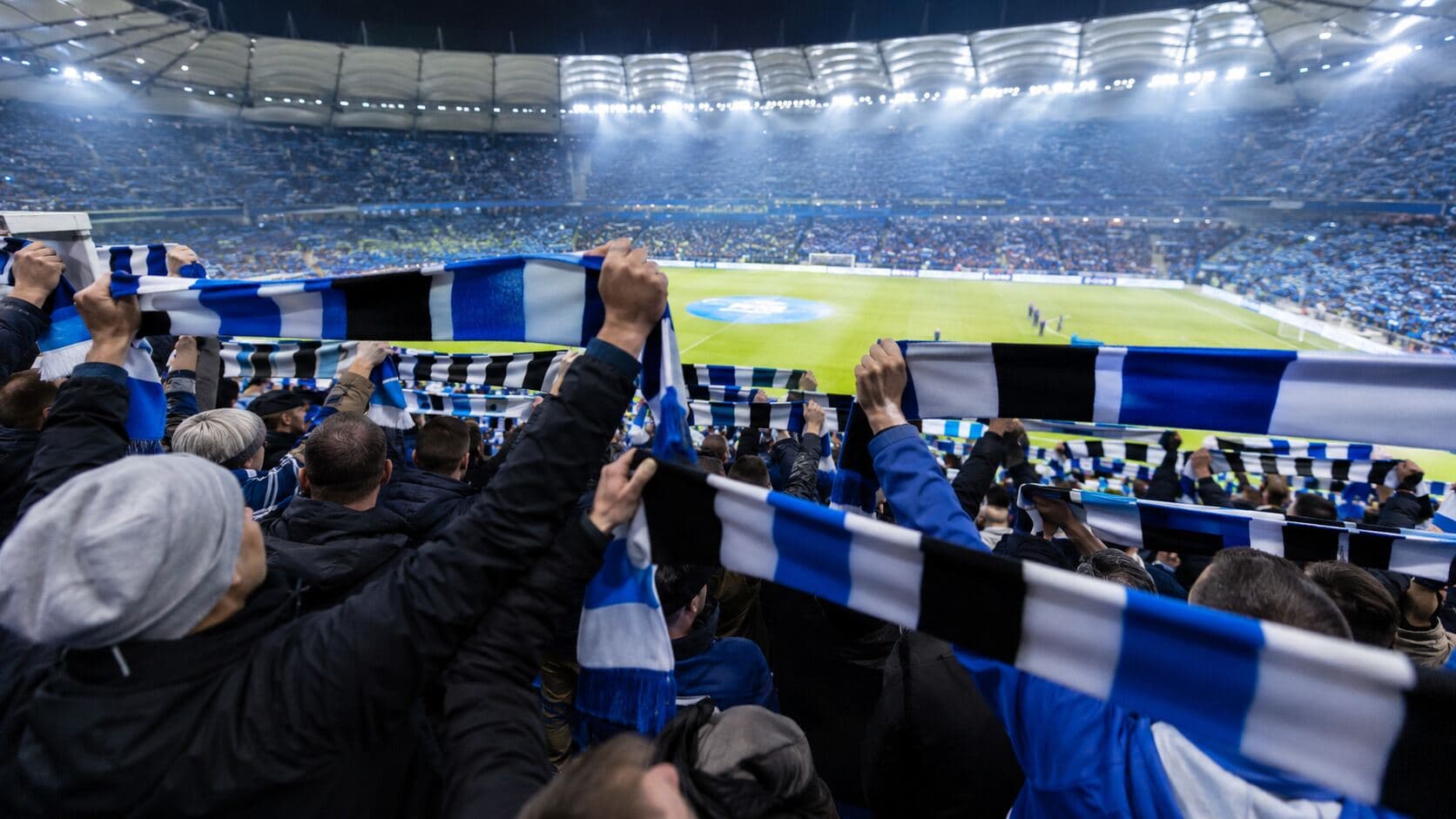
So do the songs. Some belong to the stadium, others to the city itself. Together they create the sense that HSV is not simply a team people watch. It is part of how many supporters understand where they come from.
III
The Clock
For years, one object inside the Volksparkstadion came to represent HSV's position in German football more clearly than almost anything else: the clock. It counted the time the club had spent continuously in the Bundesliga.
At first, it was a celebration of continuity. Later, it became something more complicated. As the club struggled and relegation battles became increasingly common, the clock stopped feeling like a monument to strength and started to feel like a countdown.
Every narrow escape added another layer to its meaning. HSV remained. The clock continued. Another season began. Supporters could still say that their club had never been relegated from the Bundesliga.
But football has little respect for permanence. History can feel untouchable right until the moment it changes.
IV
The Day It Stopped
On 12 May 2018, the contradiction was almost impossible to process. HSV won its final match of the season. The stadium celebrated goals. Hope survived deep into the afternoon. Yet results elsewhere meant that the club was relegated anyway.
After fifty-five seasons, the uninterrupted Bundesliga story was over. The clock that had measured it had reached the end of what it was built to count.
The final minutes became chaotic. Smoke drifted through parts of the stadium. Play was interrupted. Confusion mixed with anger, grief and disbelief. But the lasting image was not simply the disorder. It was the realization that something many supporters had assumed would always exist had disappeared.
Relegation did not erase the club, of course. The stadium remained. The supporters remained. The diamond remained. But the relationship changed. For the first time, HSV had to discover what its identity looked like without the status it had carried since the Bundesliga began.
V
Through Good Times and Bad
The assumption was that HSV would return quickly. A club this large, with this stadium, this support and this history, was not supposed to remain in the second division for long.
Football did not cooperate. Promotion campaigns collapsed. Strong starts turned into difficult springs. Seasons ended with frustration, disbelief and the familiar promise that next year would be different.
And still the Volkspark filled. Supporters travelled across Germany. Away sections turned blue, white and black. Thousands followed the club to grounds that previous generations of HSV fans had rarely imagined visiting in league competition.
This is where the phrase Northern Loyalty begins to mean something. Loyalty is easy to celebrate when it is rewarded. The harder version appears when the reward does not come. When the train leaves early in the morning anyway. When the season ticket is renewed anyway. When another disappointment becomes another story told on the journey home.
The difficult years changed the club's supporters as much as they changed the club. Expectations remained, but certainty disappeared. Pride became mixed with frustration. Humour became a defence mechanism. Hope survived because football supporters are remarkably good at rebuilding it.
VI
Northern Loyalty
There is a tendency to explain football loyalty through great moments: trophies lifted, famous goals, European nights, packed squares and celebrations that become part of a city's memory. HSV has those moments. They matter.
But they do not explain everything. The deeper identity is visible on ordinary Saturdays. In cold weather. In disappointing seasons. In supporters who bring children to the same stadium where their own parents once brought them. In old scarves and new shirts sharing the same stand.
That continuity is more important than any single result. Players come and go. Coaches arrive with plans and leave with explanations. League tables change. A clock can stop. What remains is the habit of returning.
Perhaps that is the most northern thing about it. Not endless noise. Not grand declarations. Simply continuing. When the season disappoints, you come back. When promotion disappears, you come back. When the club finally gives you something to celebrate, you are there because you were also there when it did not.
The diamond survives because people keep carrying it back to the Volkspark.
Continue Your Journey
Keep Exploring German Football.
Follow this story into its club, its football world and another chapter of German football culture.
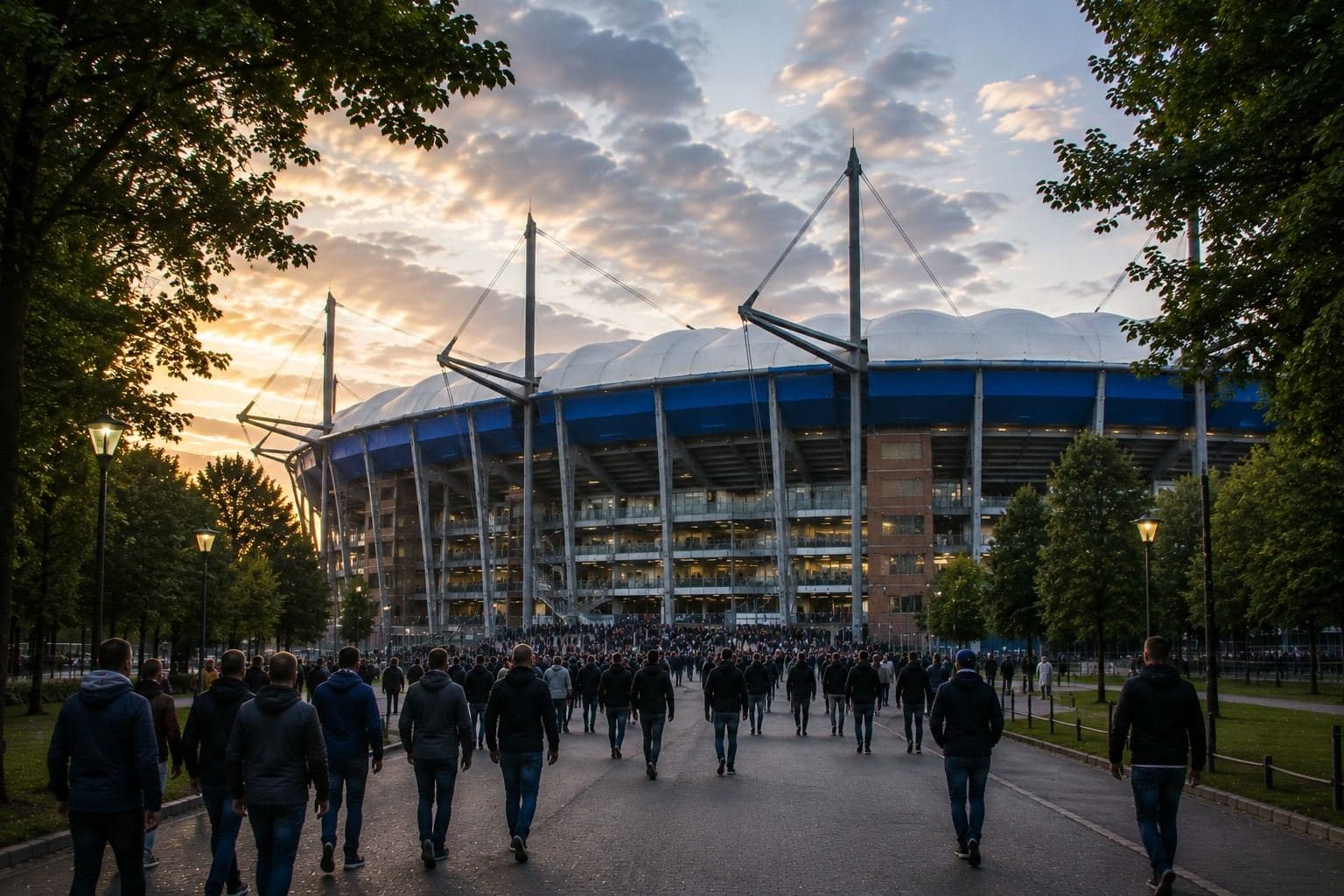
Club World
HSV World
Northern Loyalty
Explore Club →
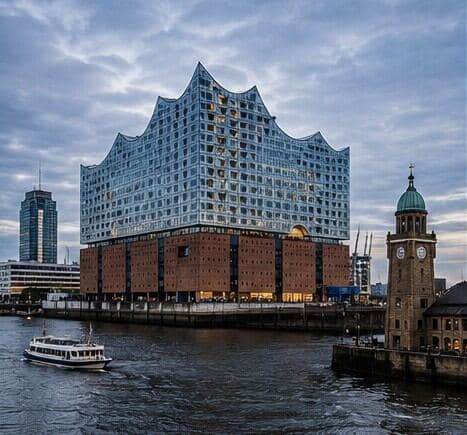
City World
Hamburg World
Experience one city, two completely different football worlds.
Explore World →
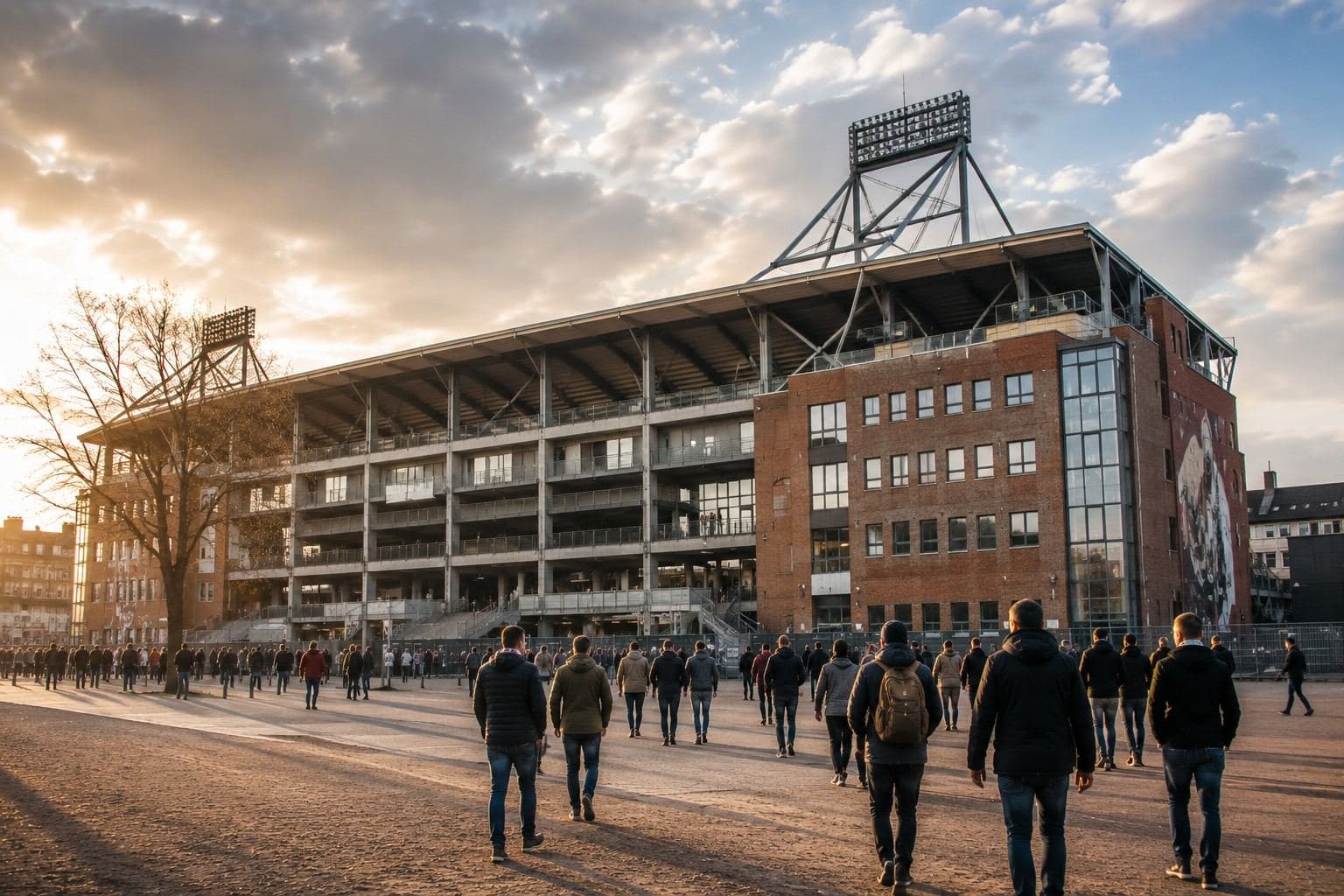
Another Club World
St. Pauli World
More Than a Football Club
Explore Club →
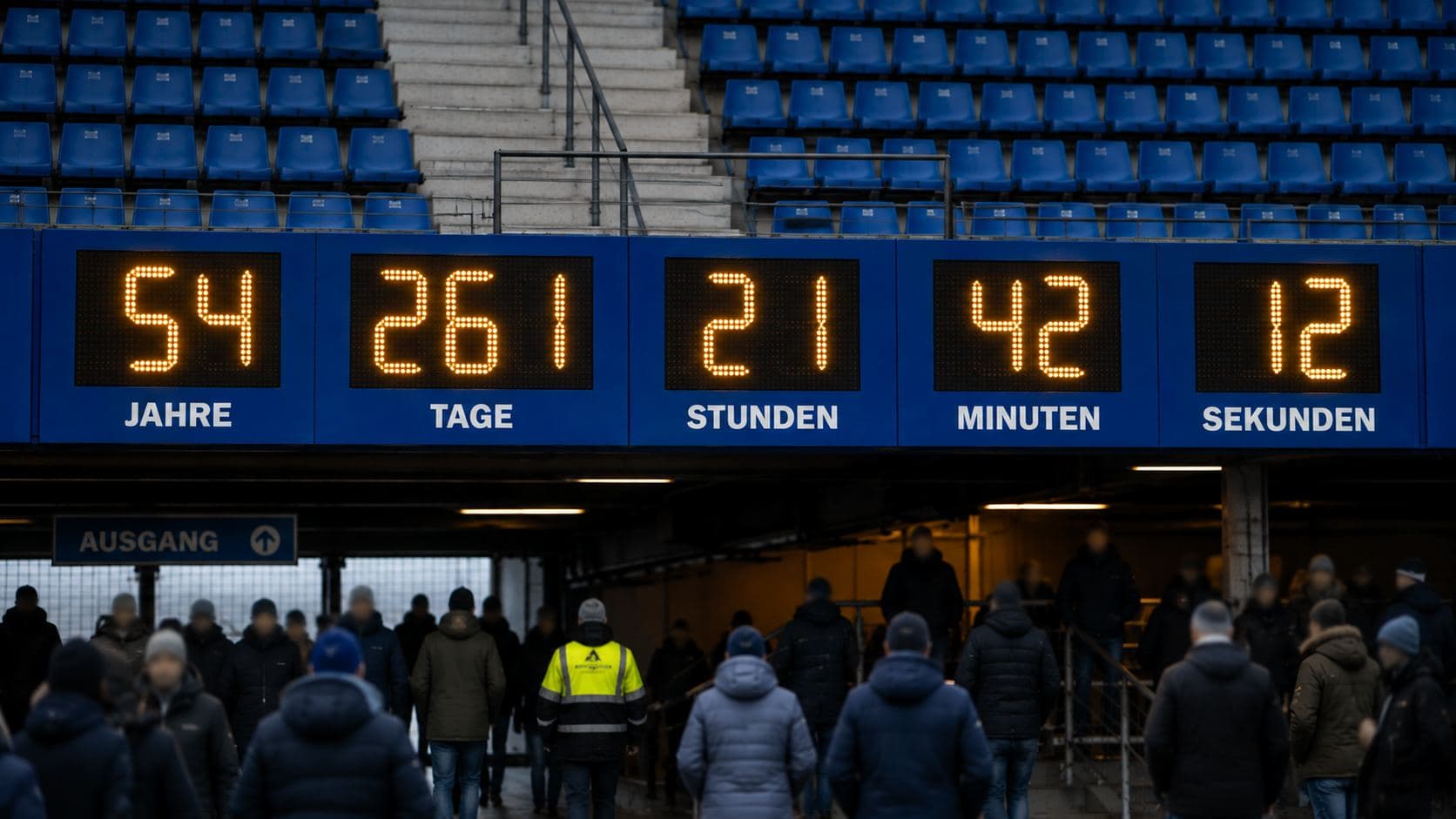
Related Culture
The Day The Clock Stopped
The famous clock inside the Volksparkstadion counted HSV's uninterrupted Bundesliga history. Then, in 2018, it stopped.
Read Story →