Football Culture
The Day the Clock Stopped
For decades, one clock counted HSV's uninterrupted Bundesliga history. Then came the day everything changed.
Hamburg · HSV
I
The Clock
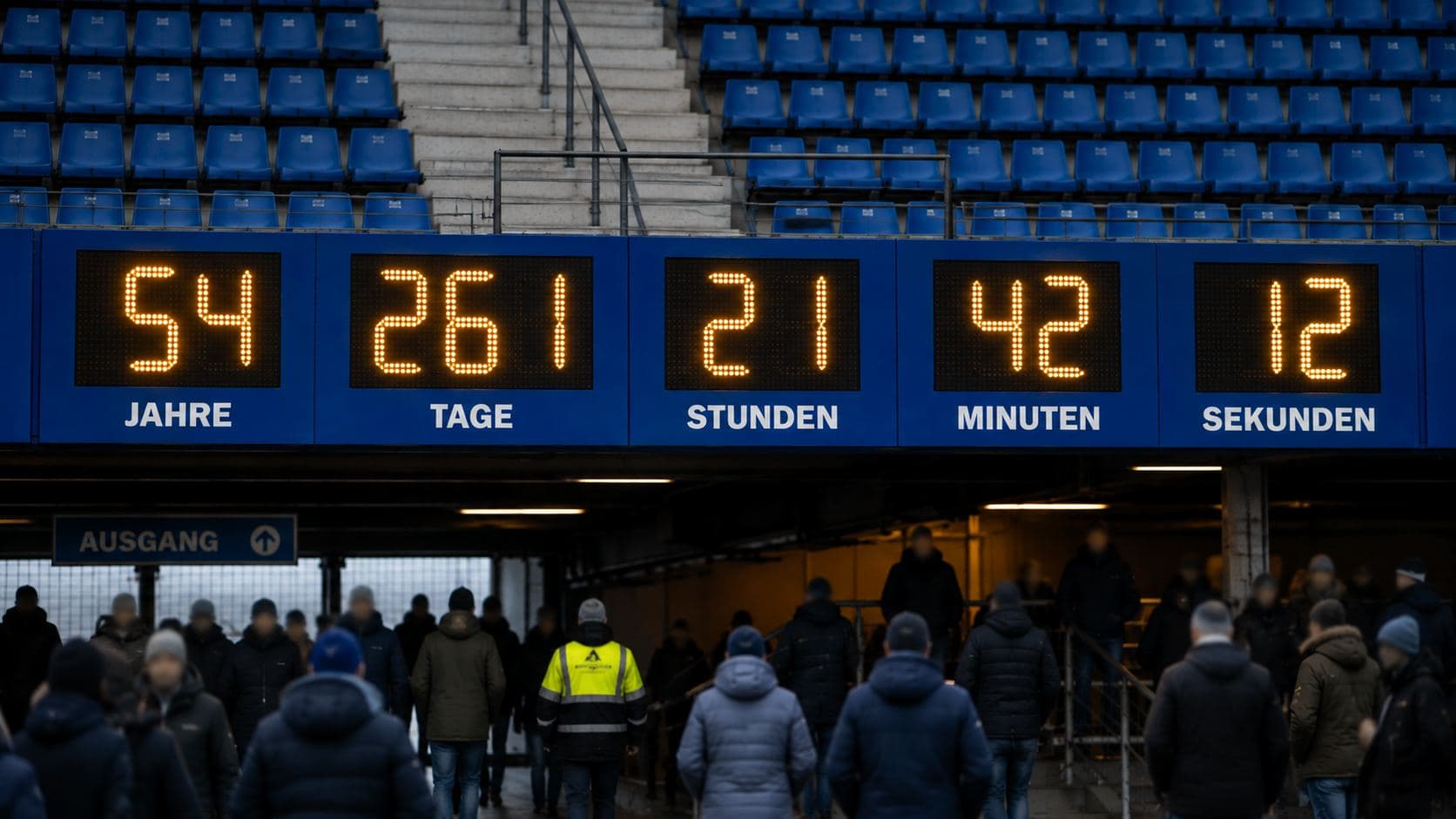
High inside the Volksparkstadion, a clock counted something no other Bundesliga club could still claim. Season after season, year after year, it measured the time Hamburger SV had spent continuously in Germany's top division.
HSV had been there from the beginning. When the Bundesliga started in 1963, Hamburg was one of its founding clubs. Others disappeared, returned, won titles and fell away. HSV remained. Over time, that continuity became part of the club's identity.
But as the great years became more distant and relegation battles more frequent, the meaning of the clock changed. What had once been a symbol of permanence slowly became a reminder of what could be lost.
II
One Last Saturday
On 12 May 2018, there was almost nothing left to calculate. HSV had to beat Borussia Mönchengladbach at the Volksparkstadion. And even that would not be enough. In Wolfsburg, already-relegated 1. FC Köln also had to help Hamburg.
The afternoon began with hope. Aaron Hunt converted a penalty in the 11th minute. Gladbach equalised through Josip Drmić, but in the 63rd minute Lewis Holtby put HSV ahead again.
On the pitch, Hamburg was doing what it had to do. Around the stadium, however, another match mattered almost as much. Every update from Wolfsburg changed the mood in the Volkspark.
Wolfsburg scored early. Köln equalised. For a while, possibility remained. Then Wolfsburg went ahead again. Then came a third. Eventually a fourth.
HSV was winning its football match. And losing its place in the Bundesliga.
III
The Last Minutes
By the final minutes, the contradiction filled the stadium. HSV led 2:1. Supporters stood and sang. Some were already crying. The team had done enough to win the match, but the result hundreds of kilometres away had made the victory almost meaningless.
In stoppage time, black smoke appeared from part of the home end as pyrotechnics were set off and the match was interrupted. Police moved towards the pitch. From elsewhere inside the Volkspark came a clear response: whistles, anger and chants directed against those responsible.
Eventually the players returned. The final seconds were played. Then came the whistle.
Hamburger SV had beaten Borussia Mönchengladbach 2:1.
Hamburger SV had been relegated from the Bundesliga for the first time.
IV
54 Years. 261 Days.
For decades, the numbers above the stadium had continued to move. Now their meaning had disappeared.
A number became an ending. Fifty-five Bundesliga seasons were now history. HSV was no longer the club that had always been there.
The strange thing about symbols is that they can become more powerful at the moment they lose their purpose. The clock had once represented pride. In the difficult years it had become a burden. Now it became a memorial to something that was gone.
The stadium remained full. The diamond remained on thousands of shirts and scarves. The supporters remained in their places. Only the certainty had disappeared.

V
From Hamburg to Dortmund
The clock did not physically stop forever that afternoon. After relegation, HSV changed its purpose. Instead of displaying the club's uninterrupted Bundesliga membership, it began counting the time since the club's founding in 1887.
But the symbolism no longer worked in the same way. After HSV failed to return immediately to the Bundesliga, the club decided in 2019 to remove the clock from the Volksparkstadion. The message was clear: Hamburg needed to stop measuring itself against a past it could no longer change.
And then the clock made an extraordinary journey of its own.
It left Hamburg and became part of the collection of the German Football Museum in Dortmund. An object created to celebrate HSV's unique place inside the Bundesliga had become an artefact of Bundesliga history.
There is something almost perfect about that transformation. The clock no longer needs to count anything. Its numbers belong to the past. Its purpose now is to tell the story of why those numbers once mattered.
VI
The Story Kept Going
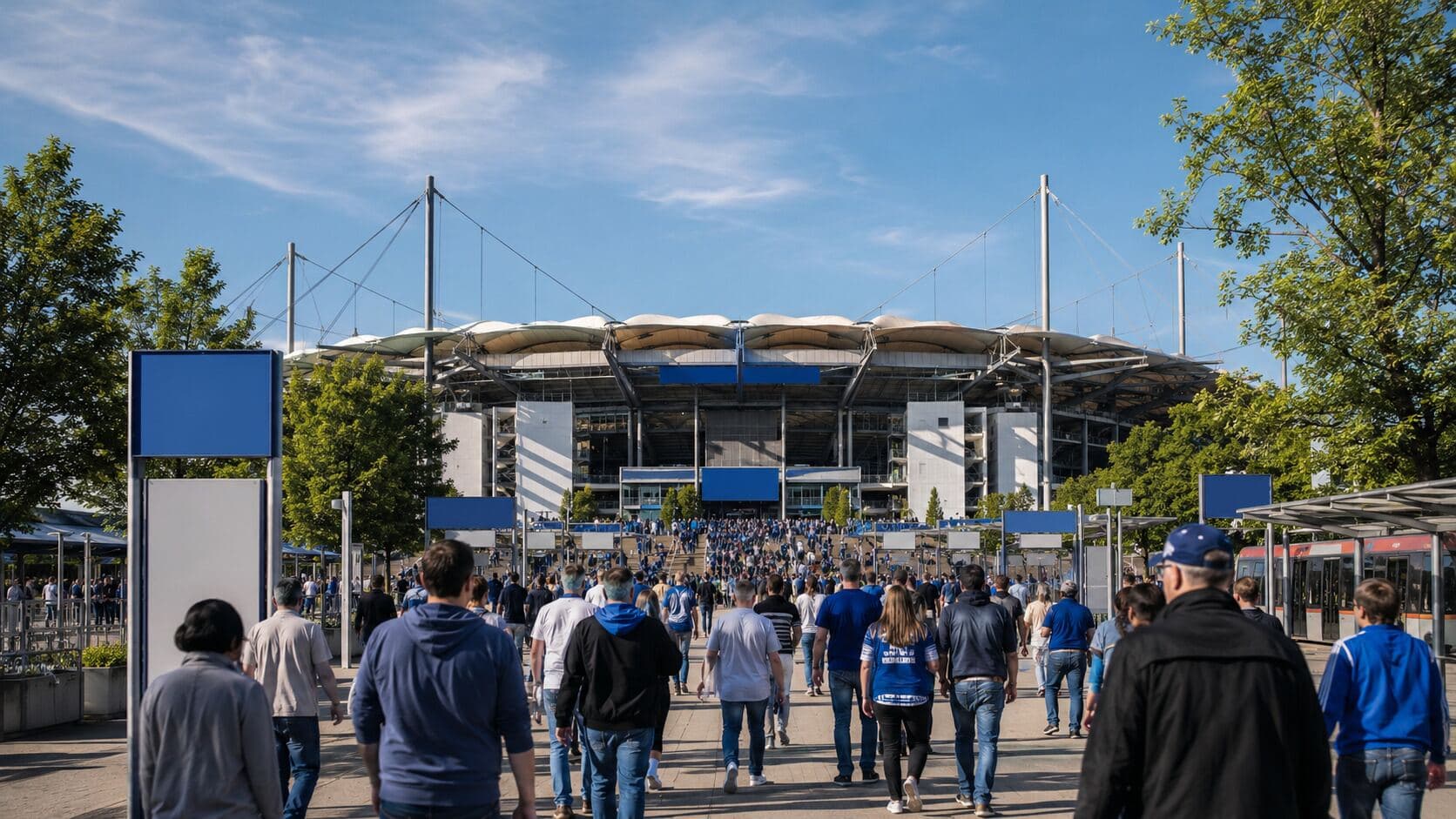
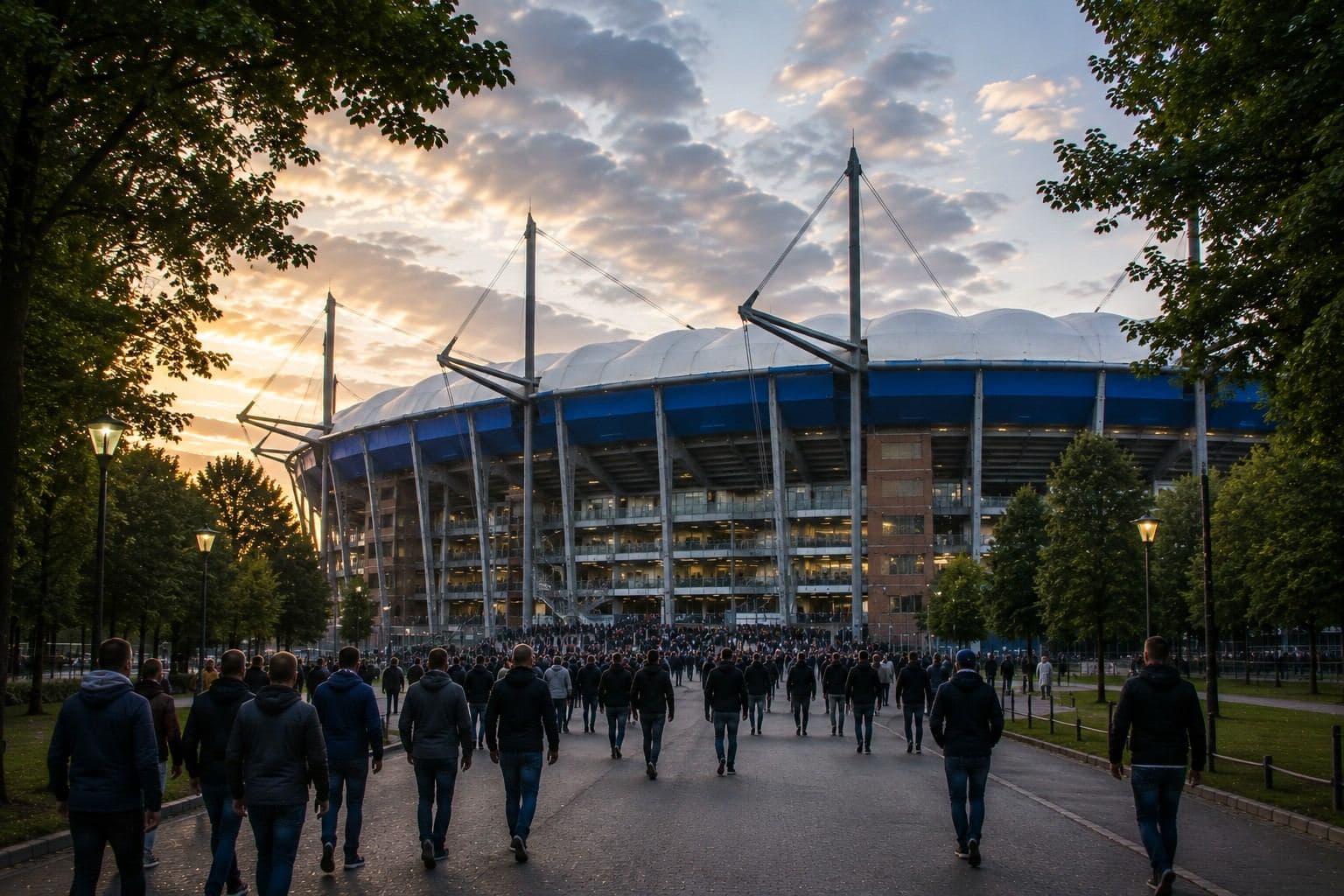
Remove the clock and the Volksparkstadion is still the Volksparkstadion. The supporters still make the journey through Hamburg. Blue, white and black still fill the stands. The diamond still appears everywhere you look.
Perhaps that was the lesson hidden inside the worst day in HSV's Bundesliga history. Permanence had been attached to the wrong thing. League status could disappear. Records could end. Even a clock that had watched over the stadium for years could eventually be taken down.
What mattered was what came back the following season.
The people did.
Continue Your Journey
Keep Exploring German Football.
Follow this story into its club, its football world and another chapter of German football culture.
Club World
HSV World
Northern Loyalty
Explore Club →
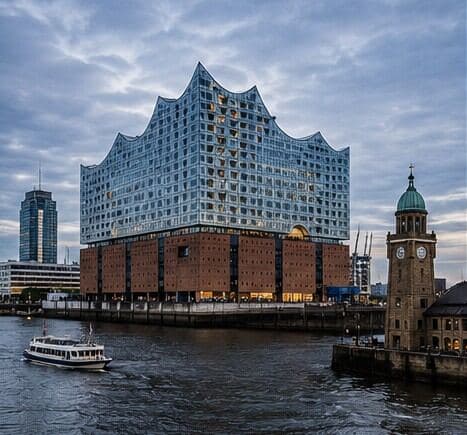
City World
Hamburg World
Experience one city, two completely different football worlds.
Explore World →
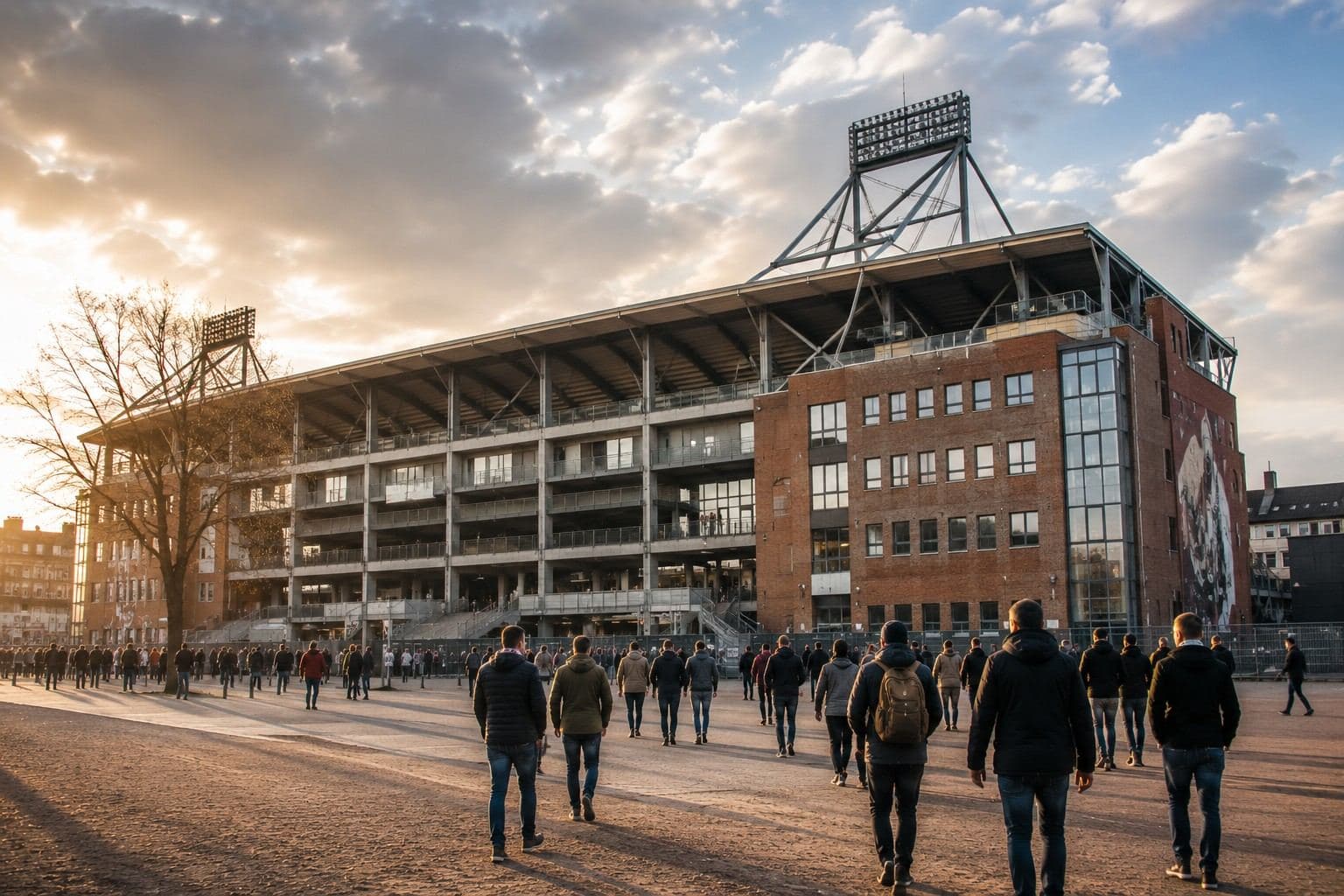
Another Club World
St. Pauli World
More Than a Football Club
Explore Club →
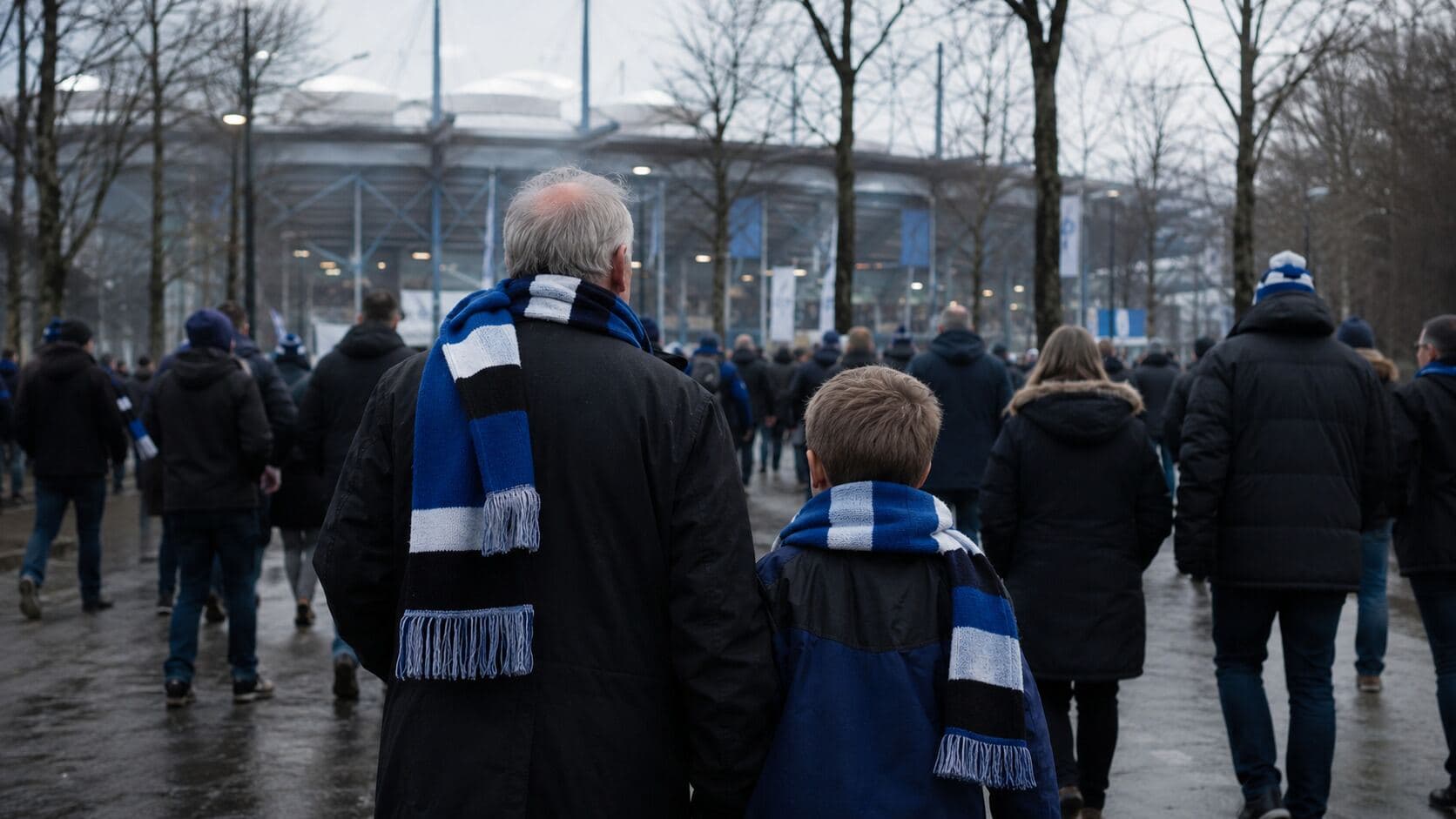
Related Culture
Northern Loyalty
Through good times and bad. A story about generations, belonging and loyalty in Hamburg.
Read Story →