Matchday Culture
Before Kick-Off in Cologne
Follow the red-and-white journey through Cologne to the songs, rituals and anticipation of Müngersdorf.
Cologne · 1. FC Köln
I
The City Changes Colour
On an ordinary day, Cologne belongs to commuters, visitors and the constant movement of a large city. On an FC matchday, another pattern begins to appear.
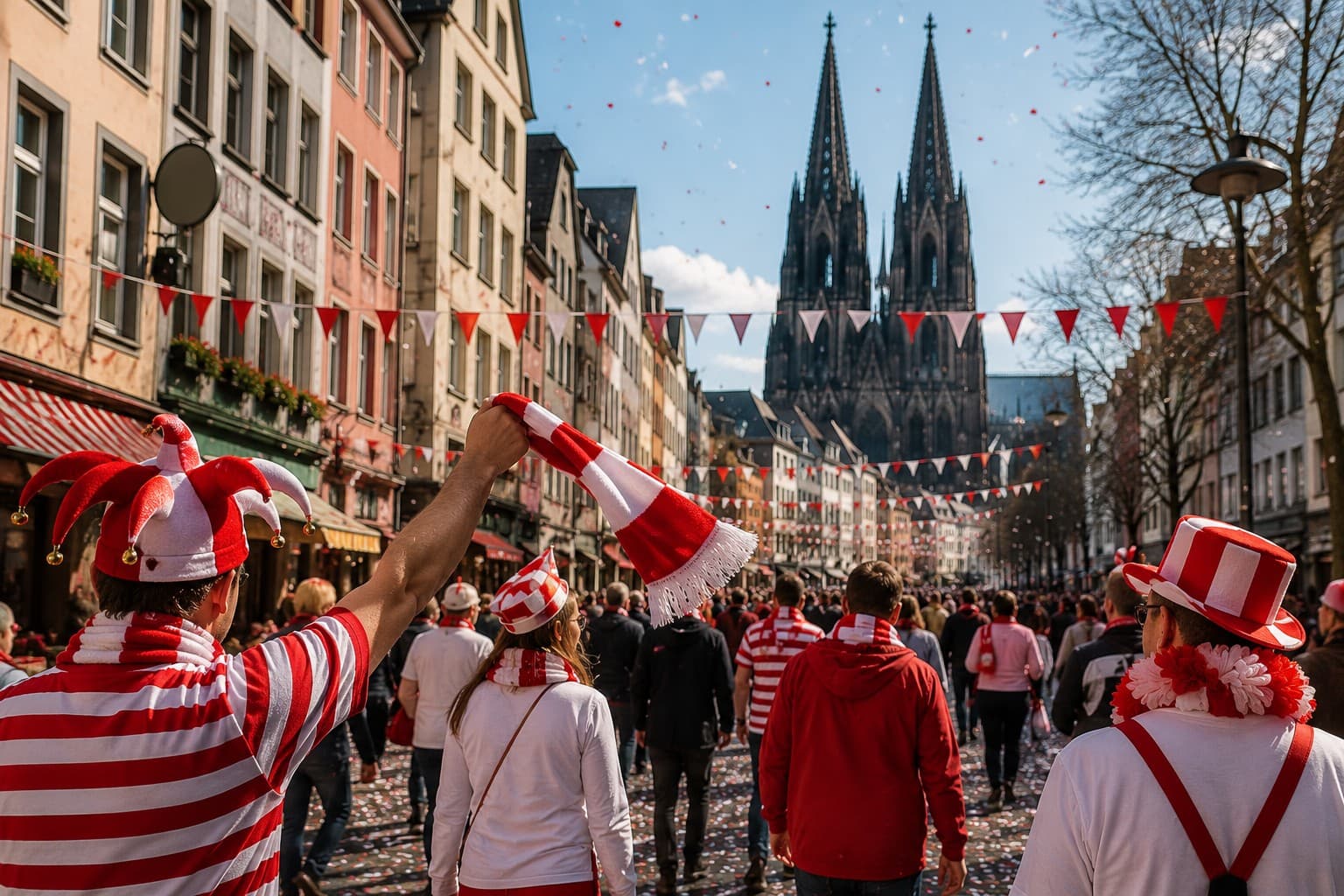
Red-and-white scarves emerge at railway stations, on platforms and outside neighbourhood bars. Shirts appear beneath open jackets. Conversations turn towards the team, the opponent and the familiar question of what kind of FC will appear today.
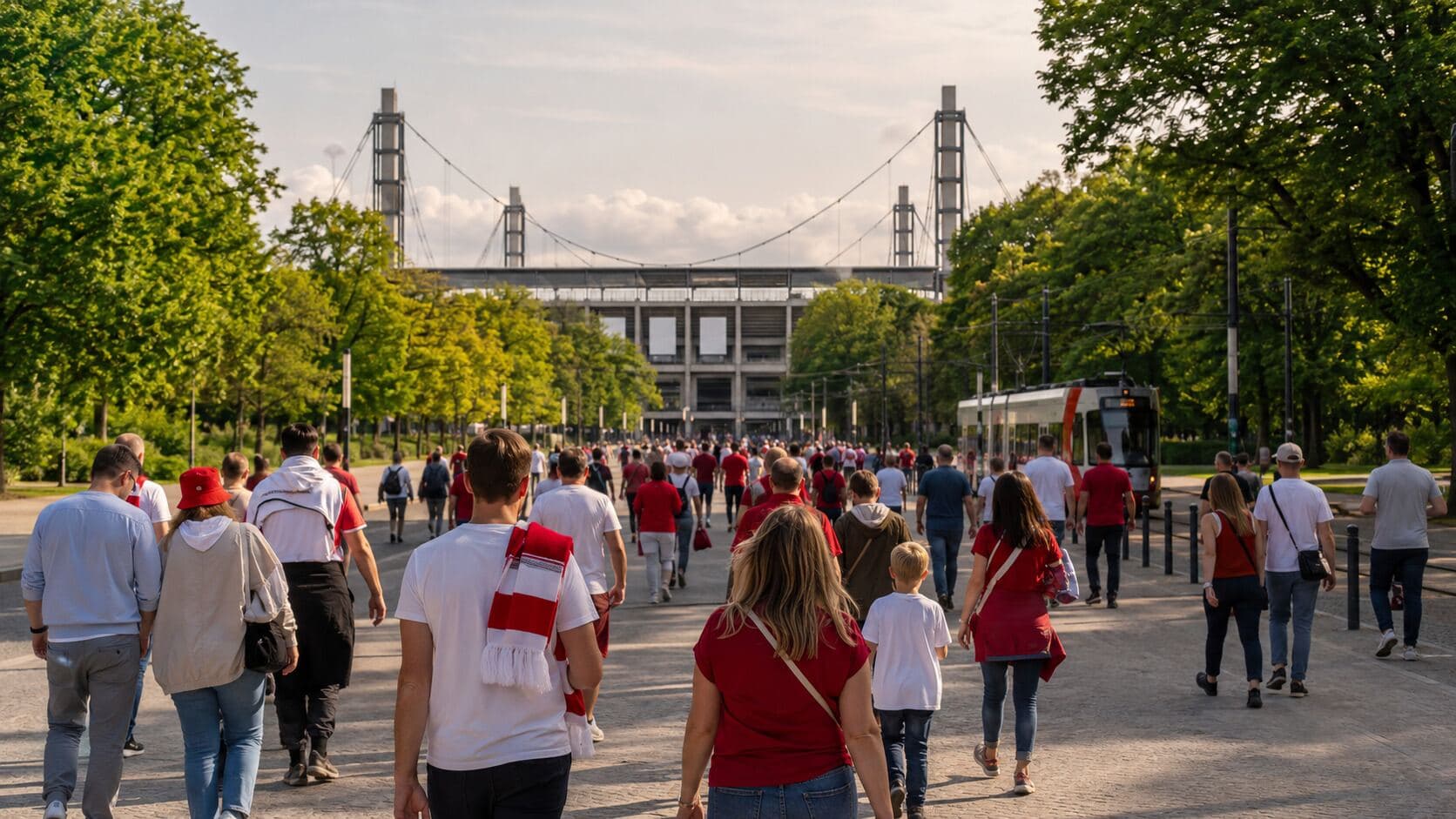
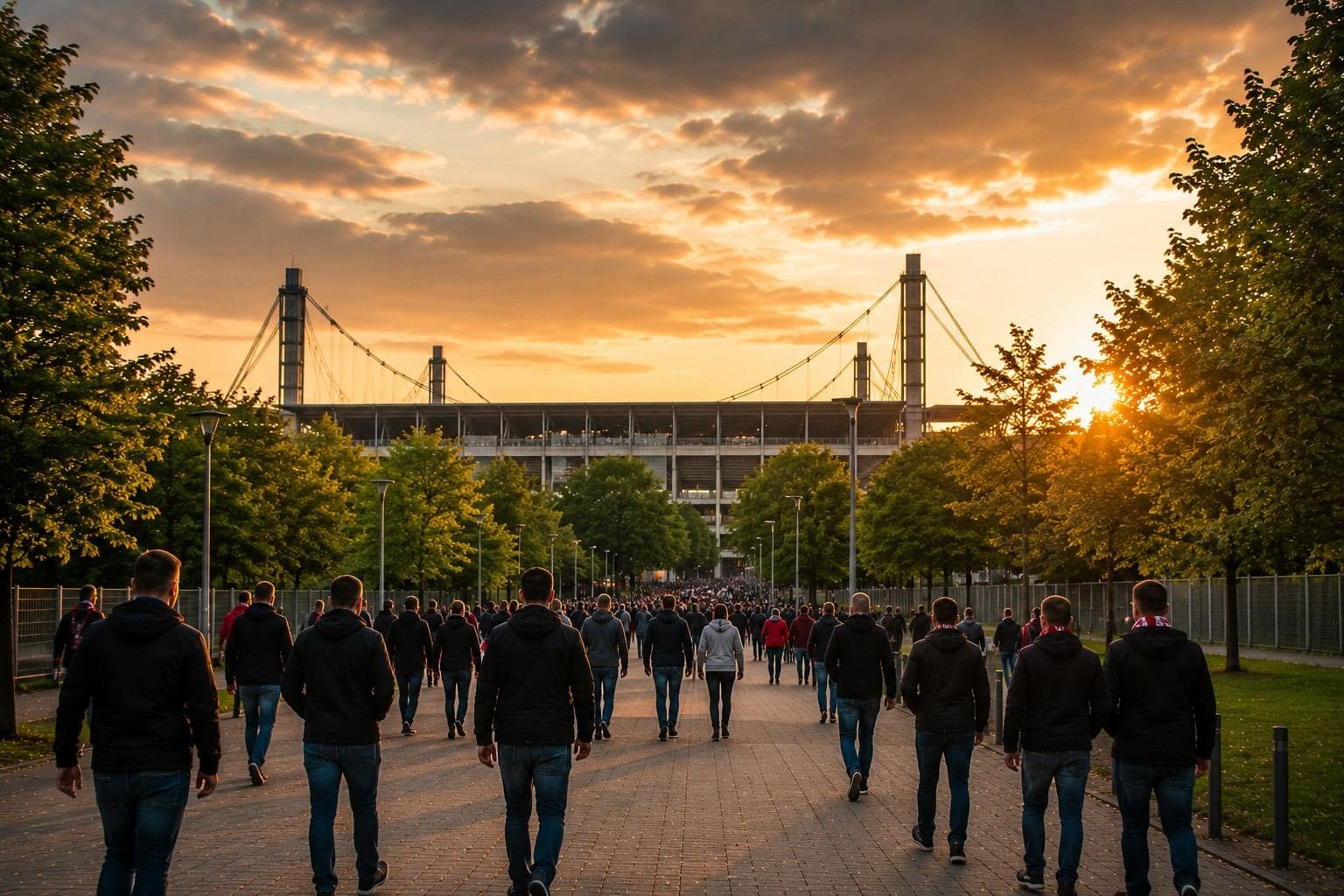
There is no single starting point. Supporters arrive from every part of Cologne and from towns across the Rhineland. Some begin in the centre. Others meet in their local Veedel before travelling west.
Their routes gradually merge around one destination.
II
Line One
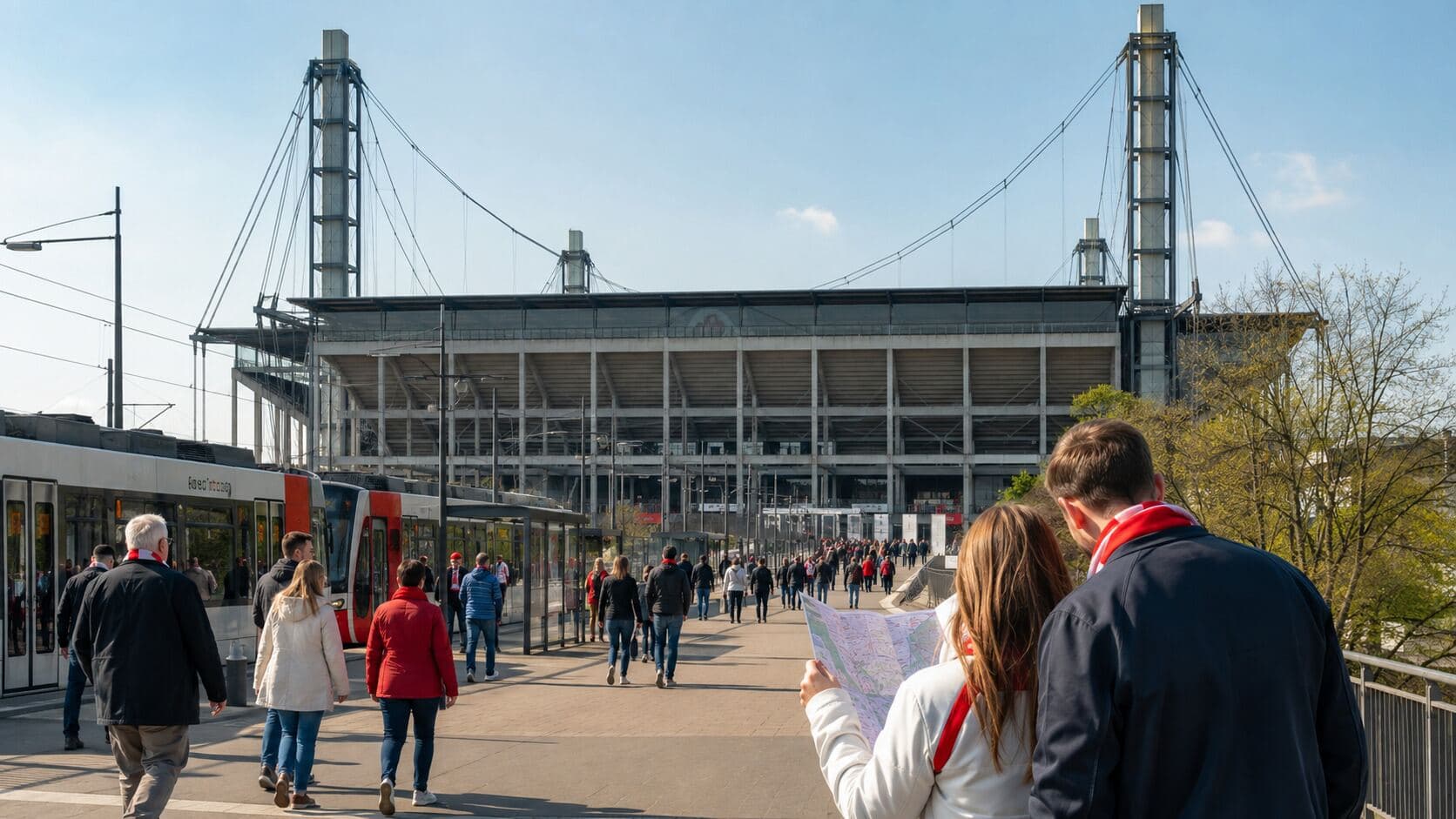
For many supporters, the most recognisable route to the stadium is KVB tram line 1. It travels west through the city and stops directly outside the RheinEnergieSTADION.
On matchdays, the journey becomes increasingly crowded. Supporters enter at successive stops until scarves, shirts and conversations occupy almost every part of the carriage.
The tram connects people who began their day in different places. By the time it reaches Müngersdorf, they are moving as one crowd.
Then the doors open and the stadium's four towers rise beyond the platform. There is no complicated final search and no distant silhouette on the horizon. The tram delivers its passengers directly into the matchday.
III
Müngersdorf
The official name is RheinEnergieSTADION, but many people in Cologne still describe the destination simply as Müngersdorf.
Football has been played on this site for generations. The current stadium was constructed between 2002 and 2004, but it stands where earlier versions of the Müngersdorfer Stadion once welcomed the city.
That continuity gives the place a meaning beyond its present architecture. Supporters may have experienced different stands, different teams and different eras, yet they continue to travel towards the same part of Cologne.
Outside the ground, the streams from the tram, surrounding streets and nearby meeting places come together. The four illuminated corner towers provide an unmistakable frame for what follows.
IV
The Sound of Cologne
Inside the stadium, the build-up belongs to Cologne long before it belongs to the match.
Kölsch music fills the ground. Songs heard during carnival and in bars across the city become part of the football ritual. They are not selected merely to keep the crowd entertained. They establish where the match is taking place and who the afternoon belongs to.
The dialect matters. A visitor may not understand every word, but the response from the stands makes translation unnecessary. People sing, sway and place their arms around one another.
This is one of the defining qualities of an FC matchday. The club does not need to manufacture a separate stadium culture. It draws from the culture already surrounding it.
V
Hennes Is Here
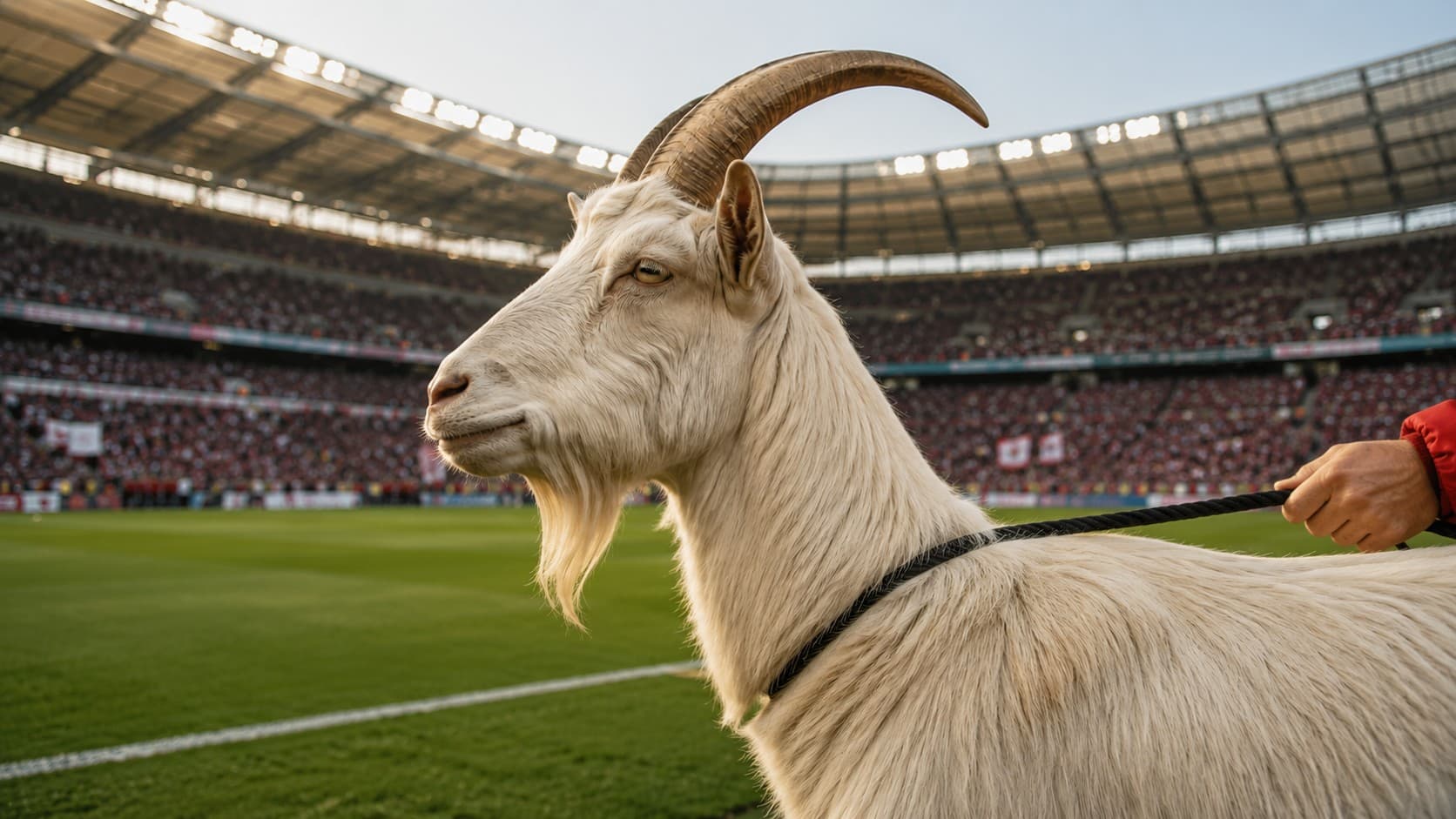
One arrival receives particular attention. Hennes IX travels from his home at Cologne Zoo to attend FC home matches.
A live goat beside a football pitch may initially appear unusual. In Cologne, it belongs naturally to the occasion. The tradition has continued since Hennes I was presented to the club at a carnival gathering in 1950.
For younger supporters, Hennes may be the first recognisable figure connecting them to the club. For older generations, the ninth goat continues a tradition they have known throughout their lives.
His presence links matchday to the club crest, to carnival and to more than seven decades of FC history.
VI
The Promise Before the Match
As kick-off approaches, the separate parts of the afternoon begin to concentrate into one moment. Conversations stop. Scarves rise. The opening notes of “Mer stonn zo dir, FC Kölle” enter the stadium.
The anthem was released by the Höhner in 1998, the year of the club's first relegation from the Bundesliga. Its central promise is therefore not built around success.
It expresses something intended to survive the result: standing by the FC.
Arms rest across shoulders as the stadium moves and sings together. Whatever uncertainty surrounds the team disappears briefly beneath a much older certainty about the relationship between the club and its people.
Then the anthem ends. The players are ready. The noise changes from ceremony to expectation.
The journey through Cologne is over. The unpredictable part of the afternoon can begin.
Continue Your Journey
Keep Exploring German Football.
Follow this story into its club, its football world and another chapter of German football culture.
Club World
1. FC Köln World
Where Football Feels Like Carnival
Explore Club →
City World
Cologne World
A football city full of emotion and tradition.
Explore World →
Another Club World
St. Pauli World
More Than a Football Club
Explore Club →
Related Culture
Hennes
What began as a carnival gift became a living symbol that has accompanied 1. FC Köln through nine generations.
Read Story →