City Culture
Football, Carnival and Cologne
In Cologne, football and carnival speak the same language: local, emotional and always experienced together.
Cologne · 1. FC Köln
I
More Than Red and White
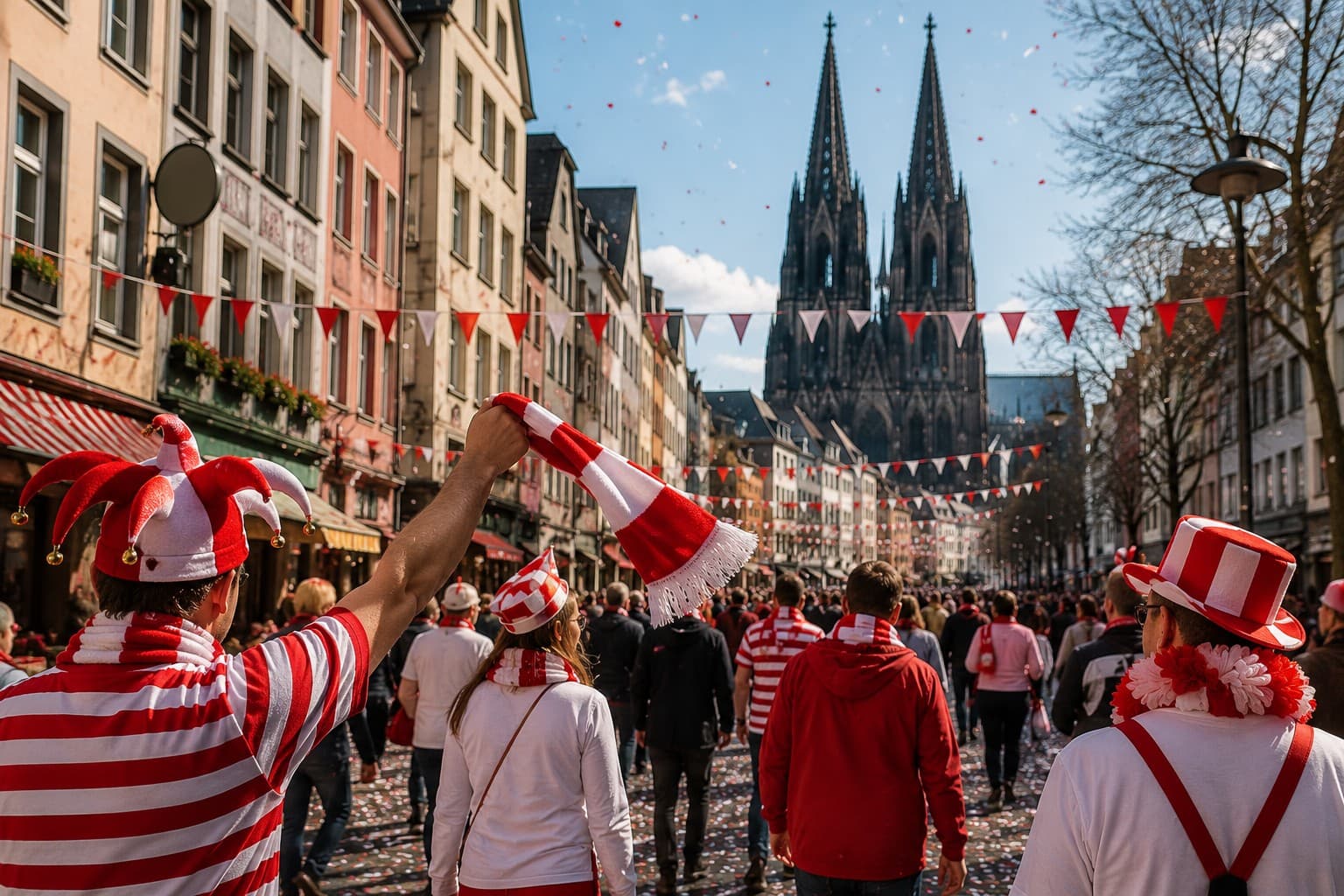
Red and white belong everywhere in Cologne. They fly above the streets during carnival, appear across the city throughout the year and fill the stands in Müngersdorf whenever 1. FC Köln plays at home.
This shared colour is more than a convenient visual connection. Carnival and football occupy similar places in the life of the city. Both turn strangers into temporary companions. Both fill the streets with music. Both give Cologne a way to express its identity together.
Neither is experienced quietly. Cologne sings, celebrates, complains and suffers in public.
That is why a match involving the FC can sometimes feel less like a sporting event taking place inside the city and more like another expression of the city itself.
II
The Language of the City
The connection can be heard before it can be seen. Music is central to both carnival and an FC matchday, and much of it is sung in Kölsch.
Kölsch is more than the name of the local beer. It is the dialect through which Cologne tells stories about itself. Its songs speak about neighbourhoods, friendship, home and the emotional attachment people have to the city.
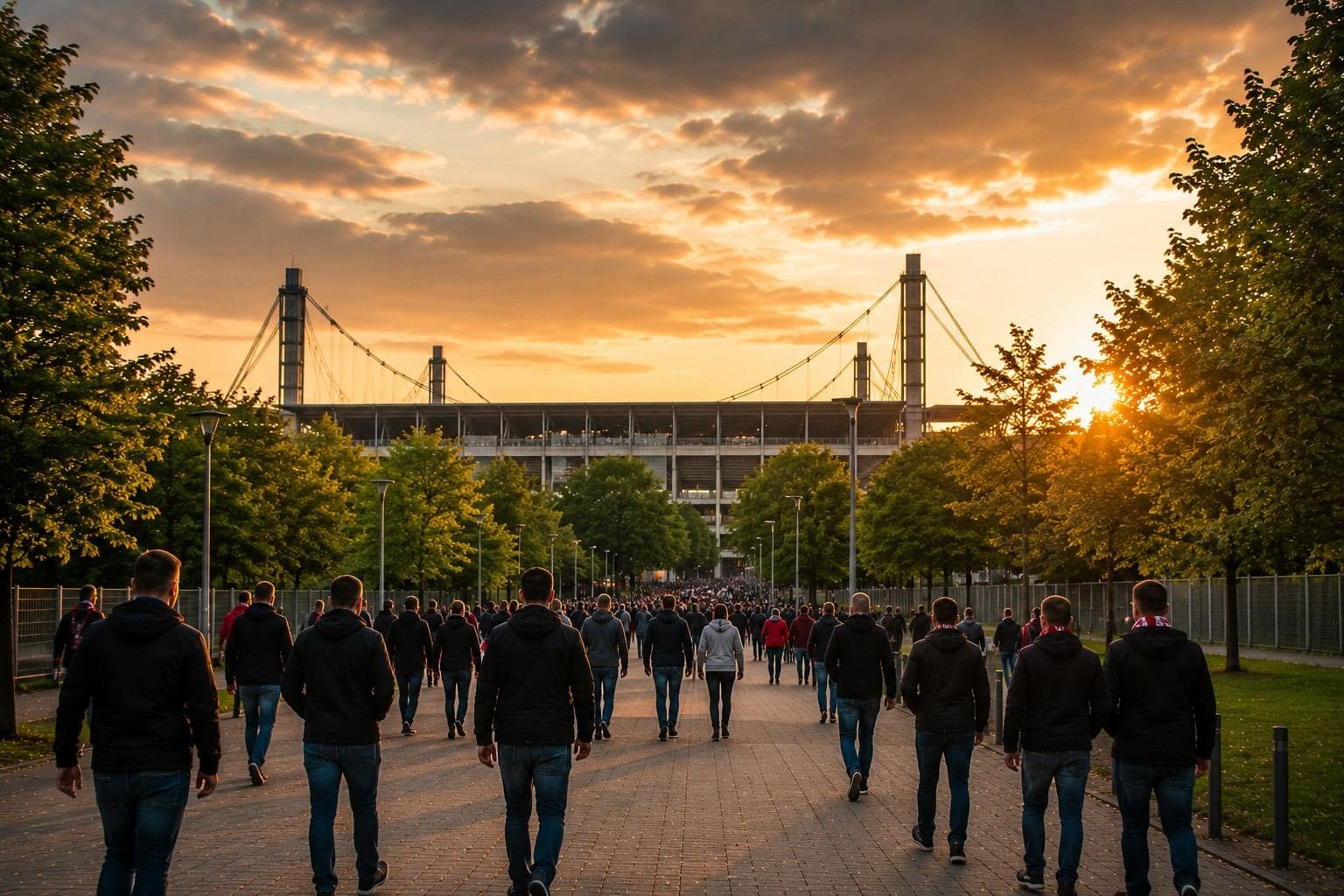
Those themes move naturally into football. Before kick-off in Müngersdorf, local songs pass through the stadium. Visitors may not understand every word, but the meaning of the moment is unmistakable.
The language gives the matchday a sense of place. This could not be any stadium in Germany. It could only be Cologne.
III
Mer Stonn Zo Dir
No song brings the relationship between city and club together more clearly than “Mer stonn zo dir, FC Kölle”, the FC anthem recorded by the Cologne band Höhner and released in 1998.
The title is a promise: we stand by you, FC Cologne. It does not depend on the score, the division or the success of a particular team. That matters for a club whose modern history contains repeated promotion and relegation.
When the anthem begins before a home match, supporters place their arms around one another and move together. The gesture resembles the shared swaying of carnival, but inside the stadium it becomes a declaration of loyalty.
The song is heard beyond matchday too. It belongs at carnival events, city celebrations and any gathering where Cologne and its football club become difficult to separate.
IV
A Goat Walks Onto the Stage
One of the club's most important traditions was born directly from carnival.
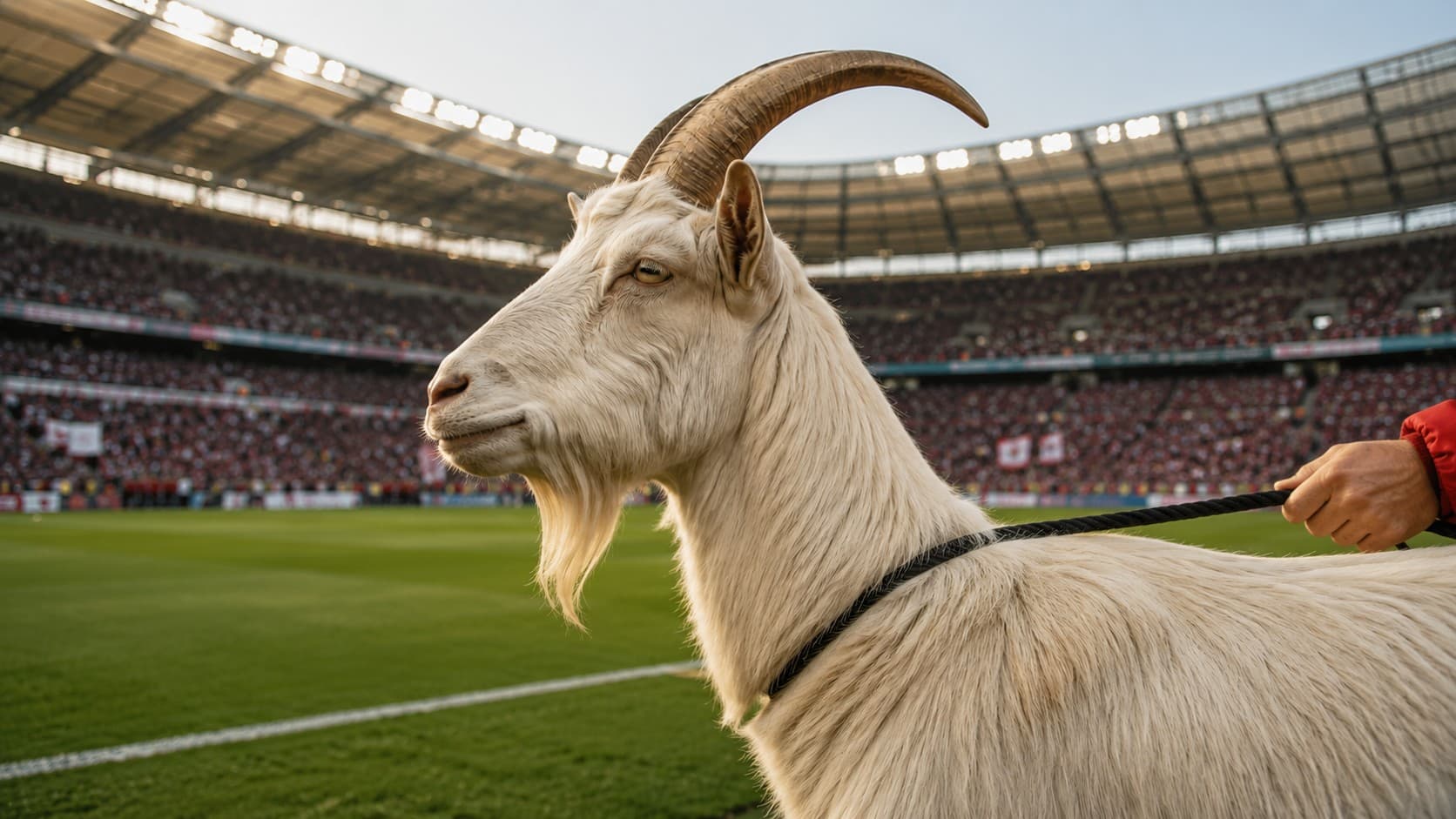
On 13 February 1950, Circus Williams presented 1. FC Köln with a young goat during the club's second carnival gathering. The animal was named Hennes after player-coach Hennes Weisweiler.
What might have remained an amusing moment became a permanent part of the club. Hennes developed from a carnival gift into the living mascot of 1. FC Köln. The tradition has continued through nine goats.
The story captures something characteristic about Cologne. Humour and symbolism do not need to be opposites. A goat can begin as part of the entertainment and become an identity carried across generations.
Today the animal appears on the club crest, merchandise and flags throughout the stadium. A carnival moment became one of the most recognisable images in German football.
V
Fastelovend on the Shirt
The connection is renewed every season through the club's carnival jersey. These shirts do more than exchange the usual kit for a colourful alternative.
Their designs use the visual language of Fastelovend: red-and-white costumes, local symbols, carnival mottos and references to the city. The team carries those details onto the pitch.
The shirts change, but their purpose remains consistent. They remind supporters that the FC represents a culture extending far beyond ninety minutes of football.
Carnival also enters the club through gatherings, music and community participation. The relationship is not created for one themed match. It continues through institutions, traditions and the people involved in both worlds.
VI
Zesamme
Cologne often describes itself through togetherness. The word “zesamme” — together — appears naturally in the language of both the city and the club.
Carnival briefly transforms the streets into shared spaces. Football performs a similar transformation in Müngersdorf. People arrive from different neighbourhoods and generations, stand close together and participate in the same ritual.
This does not mean Cologne is permanently harmonious. Football creates frustration, disagreement and disappointment. Carnival has tensions and contradictions of its own.
But both provide a way for the city to gather and recognise itself. They use the same colours, many of the same songs and the same local language.
The carnival season eventually ends. The next FC match is never far away.
Continue Your Journey
Keep Exploring German Football.
Follow this story into its club, its football world and another chapter of German football culture.
Club World
1. FC Köln World
Where Football Feels Like Carnival
Explore Club →
City World
Cologne World
A football city full of emotion and tradition.
Explore World →
Another Club World
HSV World
Northern Loyalty
Explore Club →
Related Culture
Hennes
What began as a carnival gift became a living symbol that has accompanied 1. FC Köln through nine generations.
Read Story →