Club Identity
Hennes
What began as a carnival gift became a living symbol that has accompanied 1. FC Köln through nine generations.
Cologne · 1. FC Köln
I
Not a Costume
Many football clubs have animal mascots. Usually, a person inside a costume waves to children and appears beside the pitch.
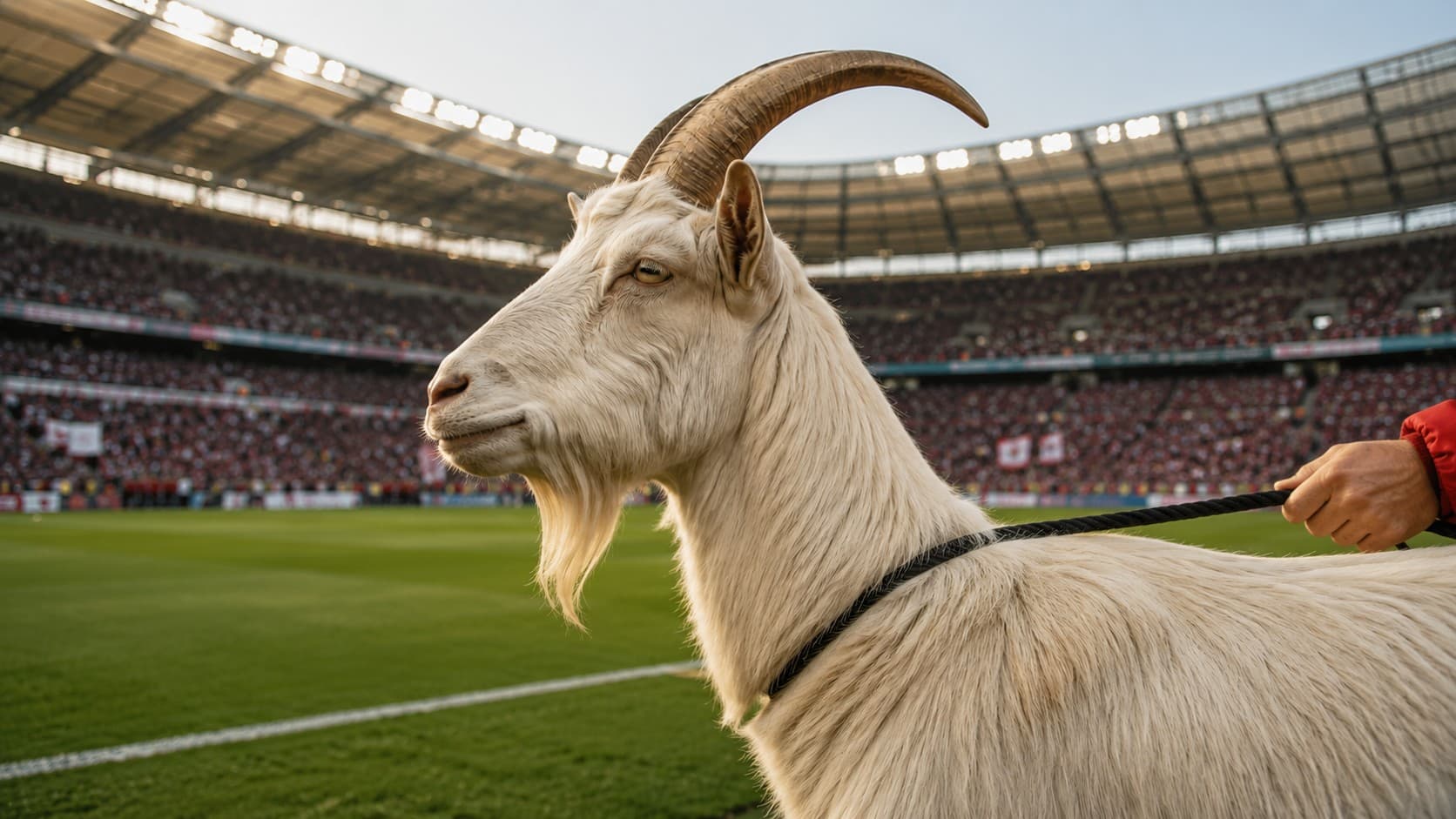
At 1. FC Köln, the mascot has horns, hooves and a home at Cologne Zoo.
Before home matches, Hennes stands beside the pitch while the stadium fills with red and white. Cameras turn towards him. Supporters call his name. Visitors discover that the goat on the club crest is not only a graphic.
He is there.
II
A Carnival Gift
The tradition began on 13 February 1950, only two years after the creation of 1. FC Köln.
During the club's second carnival celebration, Circus Williams presented FC with a young goat as a good-luck charm.
The animal was named Hennes that same evening in honour of the club's player-coach, Hennes Weisweiler.
A frequently repeated story claims that the frightened goat urinated on Weisweiler during the presentation. According to the club and witnesses, it never happened.
The real story needed no embellishment. A carnival gift had given a new football club one of the most distinctive identities in the game.
III
Hennes I
The first Hennes became part of the team's life rather than an occasional visitor.
He attended home matches and, during the early years, travelled to many away games. At first, he rode in the team bus. Later, a special trailer was attached for him.
Hennes I watched Köln grow from a newly formed club into one of the strongest teams in West Germany. During his lifetime, FC became German champions in 1962 and won the first Bundesliga title in 1964.
When he died in 1966, the tradition did not end. Another goat became Hennes II.
The mascot had become an office passed from one generation to the next.
IV
Nine Generations
Each Hennes has occupied a different chapter of the club's history.
Hennes IV witnessed the league and cup double of 1978. Hennes V was present for the DFB-Pokal victory in 1983, the club's most recent major trophy.
Later generations experienced a different Köln. Hennes VII and Hennes VIII accompanied promotions, relegations and repeated attempts to establish the club in the Bundesliga.
Results changed. The goat remained.
This continuity gave Hennes a role beyond matchday entertainment. He became a way of connecting successful teams, difficult seasons and generations of supporters.
V
Hennes IX
The current mascot, Hennes IX, took over in 2019.
He belongs to the Bunte Deutsche Edelziege breed and has lived at Cologne Zoo since 2018. Veterinary care and suitable living conditions allow him to attend home matches without compromising his welfare.
His appearance deliberately recalls Hennes I, particularly through his longer horns.
The connection is immediately visible: a modern professional club continuing a tradition created during a carnival celebration in 1950.
Hennes IX does not understand promotion, relegation or the importance of a derby. The people greeting him do.

VI
Hennes
Hennes works because he does not feel invented.
He emerged from the same culture that surrounds the club: carnival, humour, local personality and the willingness to turn an unusual moment into a lasting tradition.
The goat appears on the crest, gives the club its nickname and waits beside the pitch before home matches.
Players, coaches and divisions continue to change. Hennes continues looking towards the field.
Continue Your Journey
Keep Exploring German Football.
Follow this story into its club, its football world and another chapter of German football culture.
Club World
1. FC Köln World
Where Football Feels Like Carnival
Explore Club →
City World
Cologne World
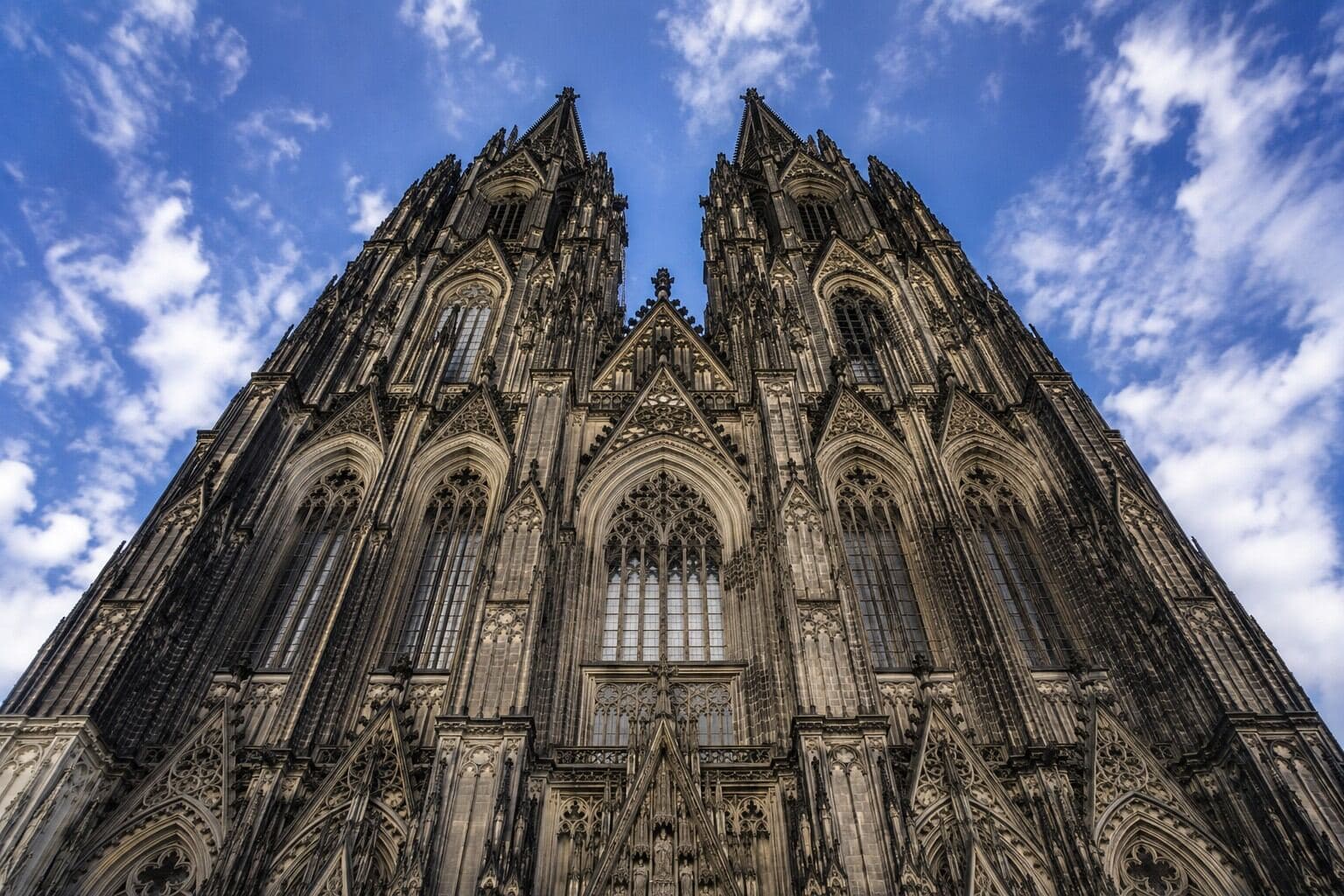
A football city full of emotion and tradition.
Explore World →

Another Club World
RB Leipzig World
Going Our Own Way
Explore Club →
Related Culture
Football, Carnival and Cologne
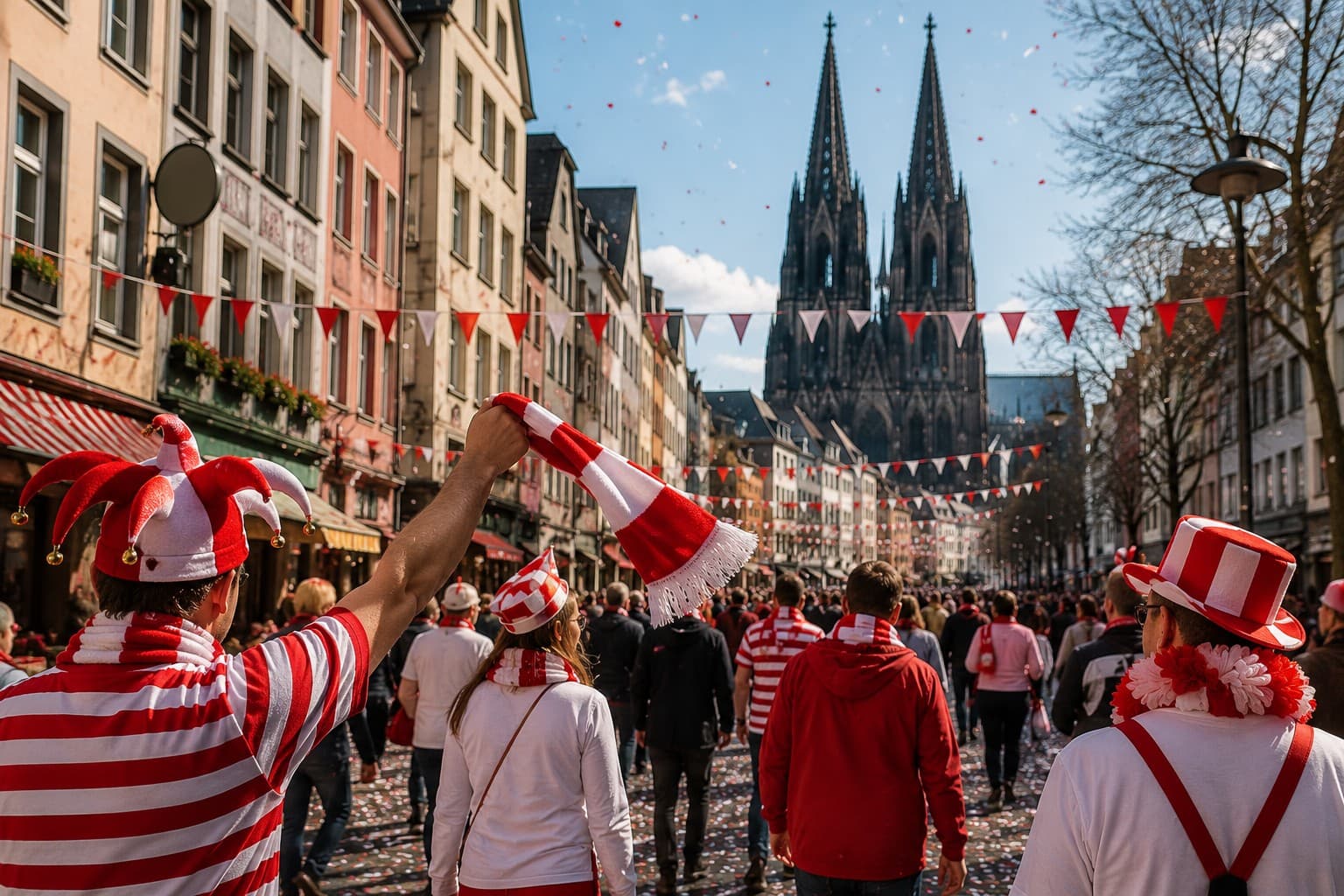
How football, carnival, Kölsch music and 1. FC Köln express the shared identity of an entire city.
Read Story →