Club Culture
Christmas at the Alte Försterei
What began with 89 supporters singing in a dark stadium became one of German football's most extraordinary traditions.
Berlin · Union Berlin
I
A Stadium Without Football
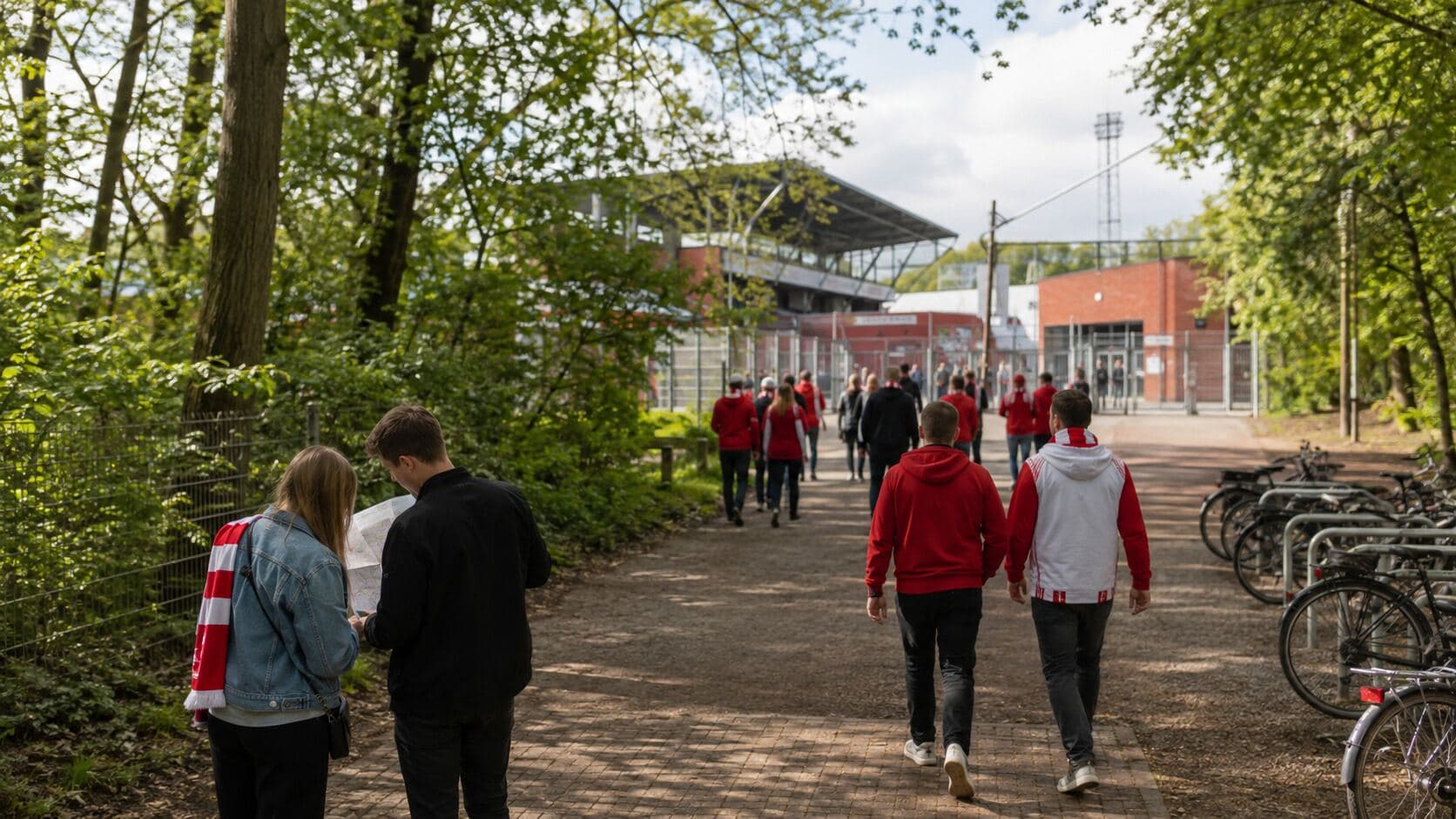
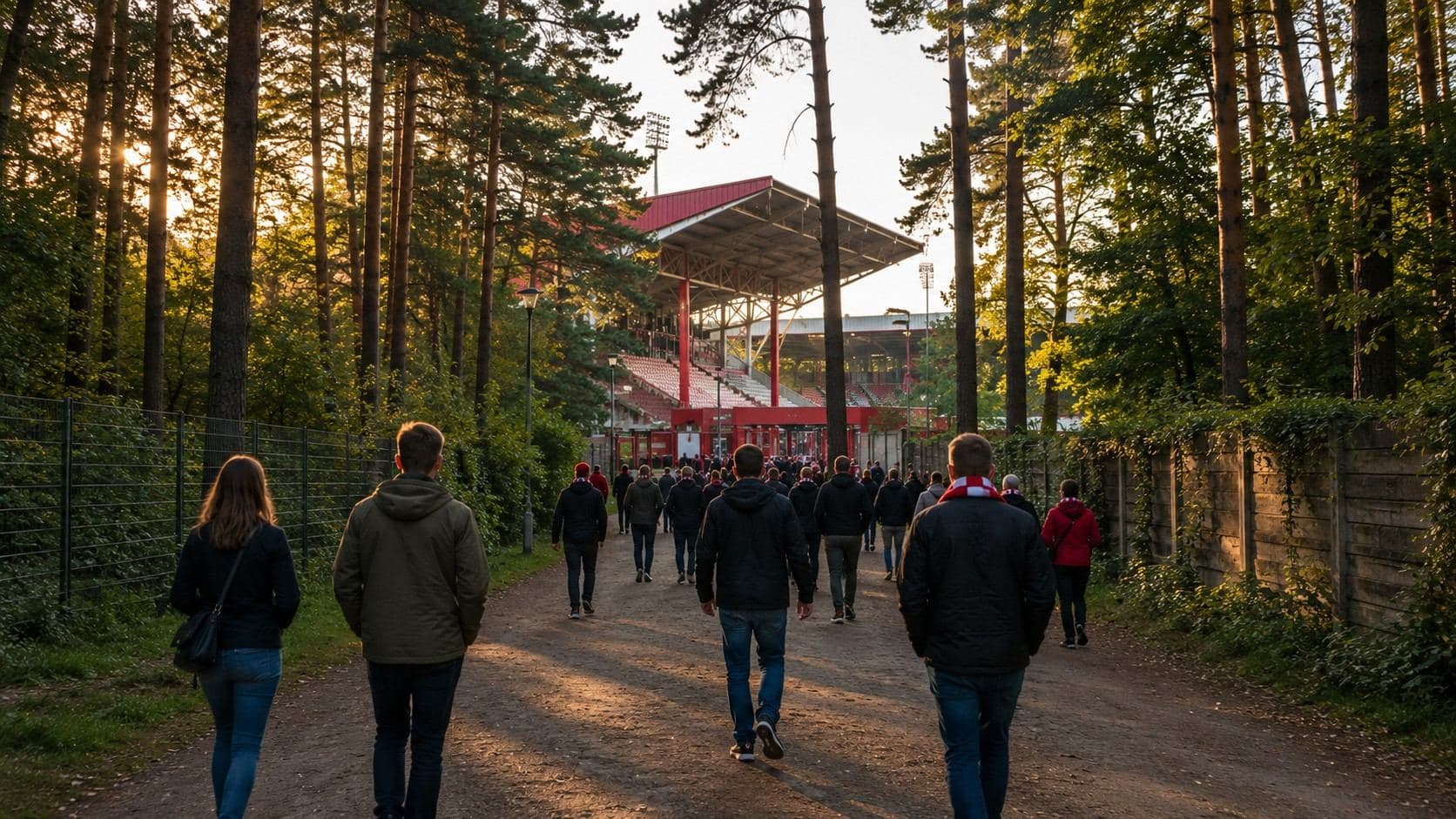
On 23 December, thousands of people travel through Köpenick towards the Stadion An der Alten Försterei.
They wear red and white. They carry scarves. The terraces fill and the familiar Union songs echo through the ground.
But there is no opponent. There are no teams warming up and no points to be won.
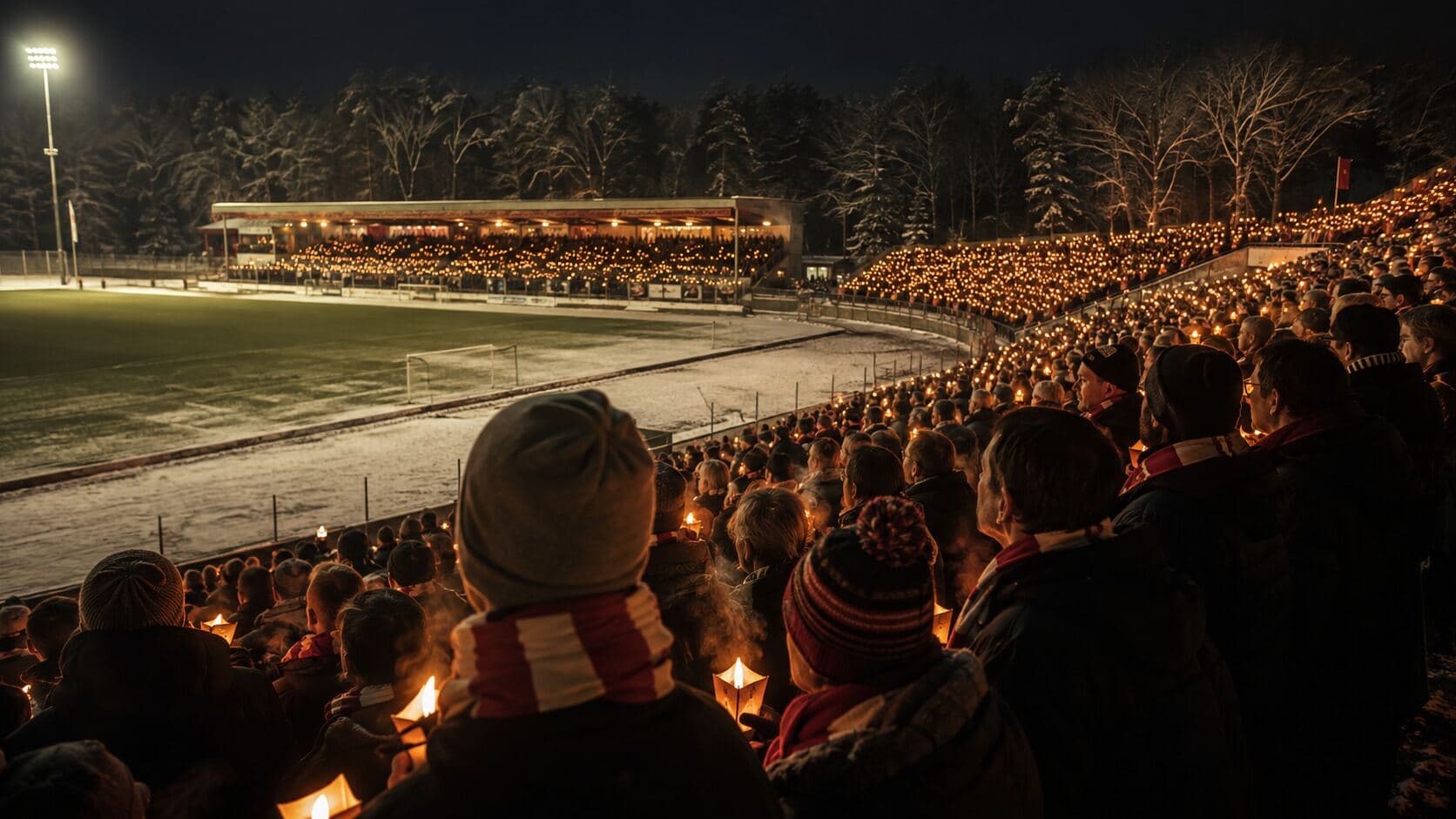
Instead, people hold candles and songbooks. Football chants give way to Christmas carols as an entire stadium sings together.
For one evening, Union's home becomes one of Germany's largest Christmas choirs.
II
The First 89
The tradition began on 23 December 2003 during a difficult period for Union Berlin.
The team had endured a disappointing first half of the season. Supporters wanted to meet once more before Christmas and finish the year together.
The idea appeared on an Union internet forum only a few days earlier. A supporter known online as EisernTorsten invited others to gather at the Alte Försterei and sing.
Eighty-nine people arrived.
They climbed over the closed stadium gates, stood together on the dark terraces and sang Christmas songs. There was no large stage, no professional event organisation and no plan for the gathering to become an annual institution.
It was simply a group of supporters who did not want the football year to end without seeing one another again.
III
More People Every Year
The following Christmas, the supporters returned. This time, more people knew about the gathering.
The numbers continued to grow. Hundreds became thousands. Eventually, the event filled the terraces and expanded onto the pitch.
What had started unofficially became a carefully organised evening. Music accompanied the singing. A programme and songbook gave the crowd a shared sequence. The Christmas story became part of the event.
Yet the central idea remained remarkably simple: people meeting in their football ground and singing together.
The Weihnachtssingen eventually attracted more visitors than the Alte Försterei could accommodate during an ordinary Union home match. Similar events appeared at football grounds across Germany.
The original remained in Köpenick.
IV
Candles on the Terraces
The transformation begins when the stadium lights soften and thousands of small candles become visible across the ground.
The same terraces that normally move with football chants now glow quietly in the winter darkness. Breath appears in the cold air. Scarves remain wrapped around shoulders while cups of warm drinks pass between hands.
Traditional German Christmas songs are mixed with Union songs. The tone moves between celebration, reflection and the familiar rough voices of a football crowd trying to sing together.
Perfection is not the purpose. Participation is.
Nobody needs to sing particularly well. They only need to add their voice to the people around them.
V
Why It Belongs to Union
Christmas singing could happen inside any large stadium. At the Alte Försterei, it feels connected to the way Union understands its home.
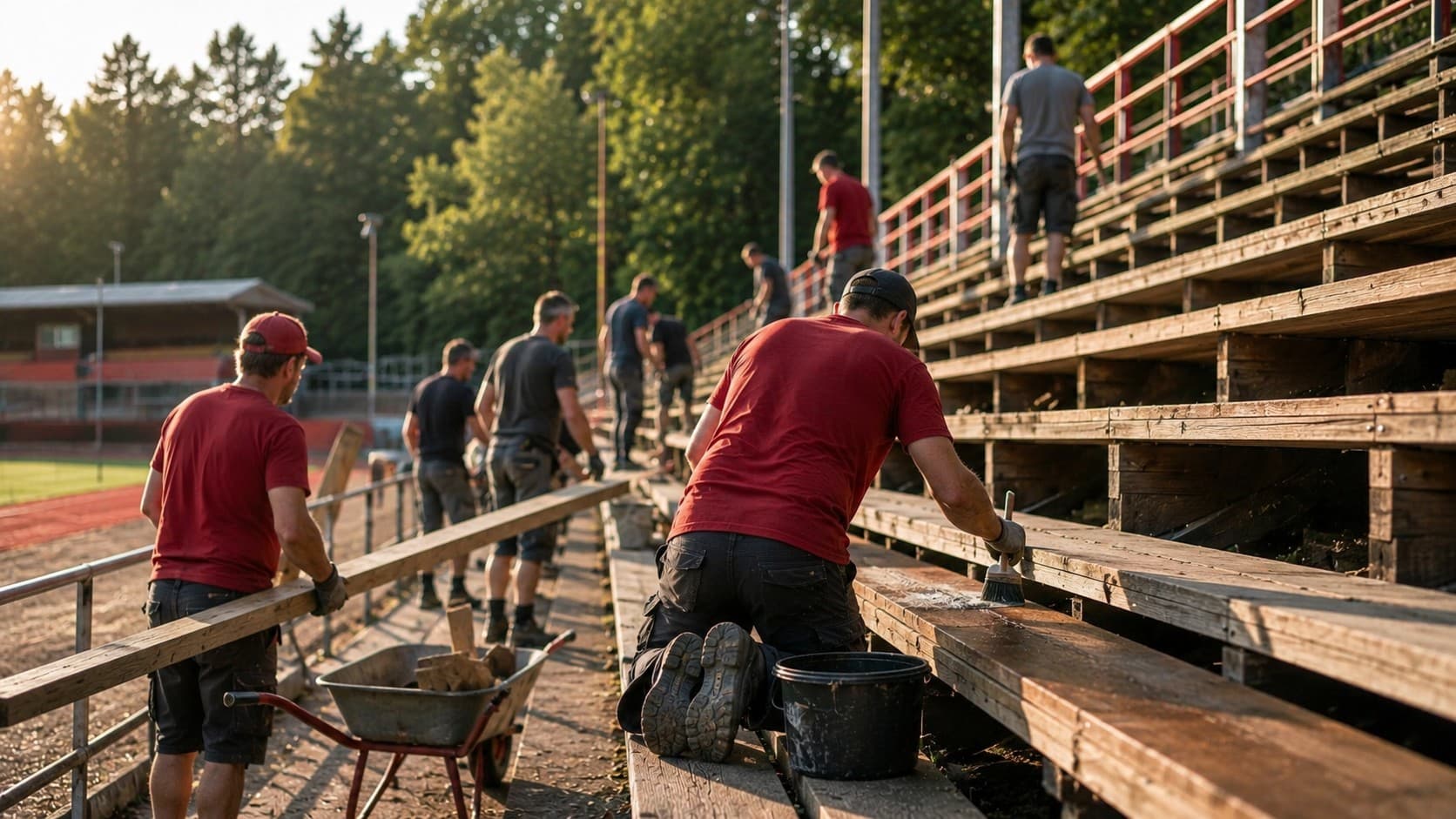
This is the stadium supporters helped rebuild with their own labour. It is where the relationship between the club and its community has repeatedly become something practical rather than symbolic.
The Weihnachtssingen follows the same pattern. It was not originally invented by a commercial department searching for a festive event. Supporters created something they wanted and invited others to join.
As it grew, the club provided the organisation necessary to make the gathering possible. The scale changed, but the story of its origin remained visible.
The stadium belongs to Union on matchday. On 23 December, it belongs to a community preparing for Christmas together.
VI
The Night Before the Night Before
When the final song ends, there is no result to discuss on the journey home.
Nobody debates a missed chance or studies the league table. The important moment was the gathering itself.
That is why the tradition survived Union's changing sporting fortunes. It existed when the club struggled in the lower divisions. It continued as Union reached the Bundesliga and European football.
Success changed the attention surrounding the club. It did not change the date marked in the calendar.
Every 23 December, people return to the forest. They stand inside the home built by Union supporters and repeat something that began with only 89 voices.
Continue Your Journey
Keep Exploring German Football.
Follow this story into its club, its football world and another chapter of German football culture.
Club World
Union Berlin World
Built Together
Explore Club →
City World
Berlin World
Explore Germany's biggest football city.
Explore World →
Another Club World
Hertha BSC World
The Dream Remains
Explore Club →
Related Culture
Built Together
A football identity built around community, participation and an extraordinary relationship with its supporters.
Read Story →