Matchday Experience
Köpenick Matchday
Leave central Berlin behind and follow the red and white crowd towards a football ground hidden beside the forest.
Berlin · Union Berlin
I
Another Berlin
A Union matchday begins by leaving the Berlin many visitors know.
The television tower, Brandenburg Gate and broad central avenues gradually disappear. The train moves east through the city towards Köpenick.
With every stop, more red and white enters the carriage. Scarves appear above winter jackets. Conversations turn towards the match. The ordinary journey begins to acquire a destination.
Union belongs to the German capital, but its football world feels rooted in a particular corner of it.
II
Fifteen Minutes
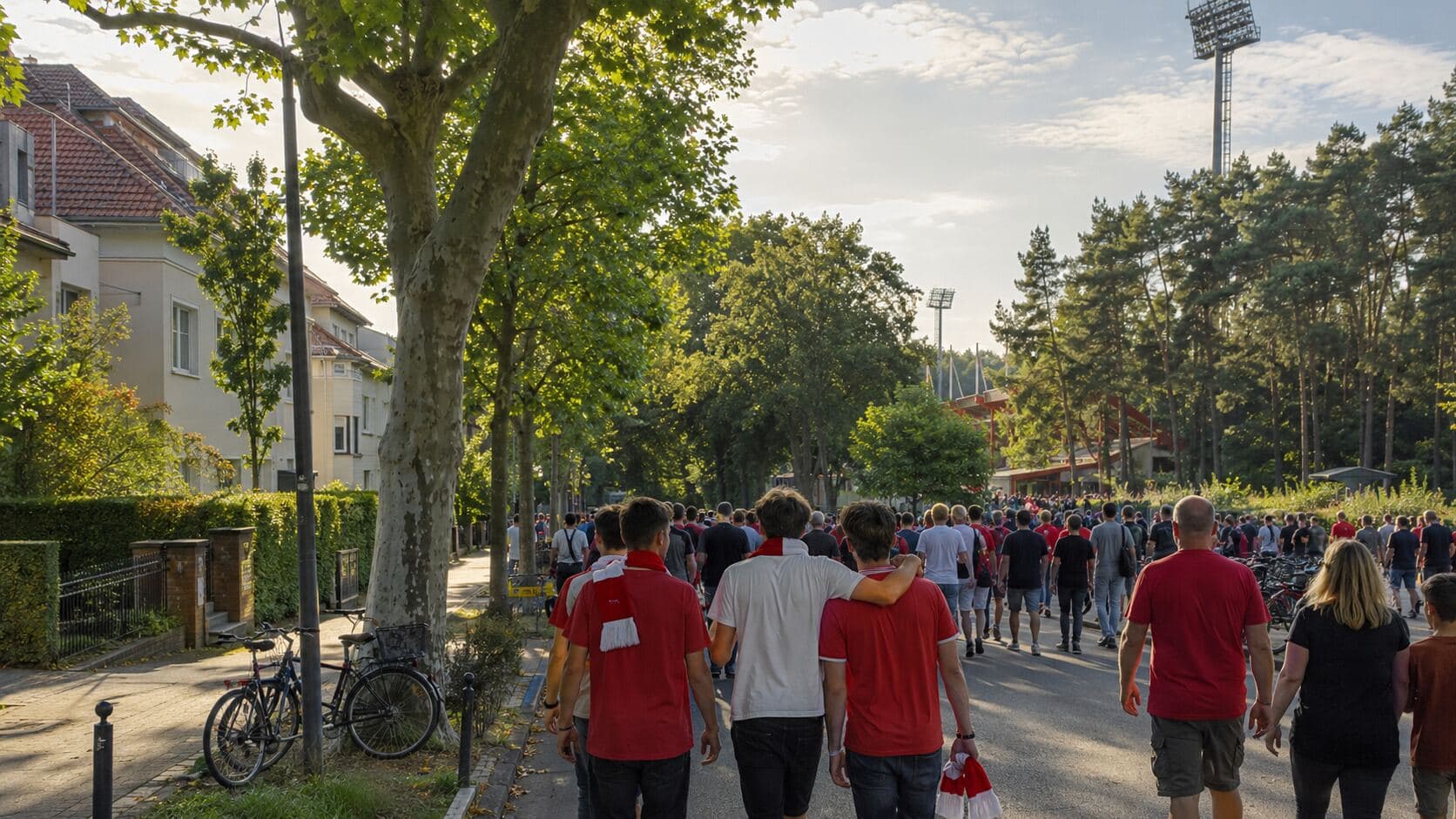
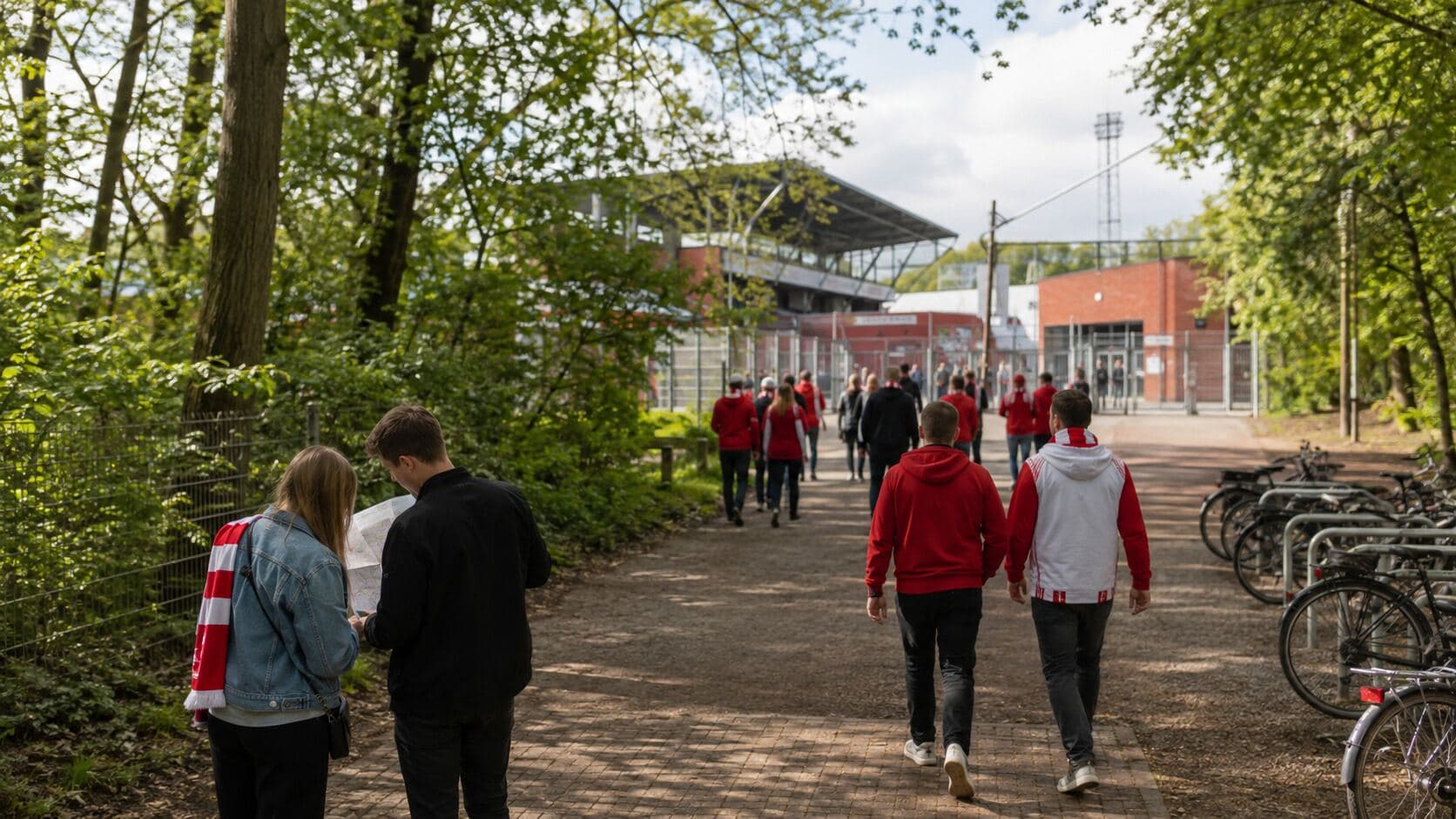
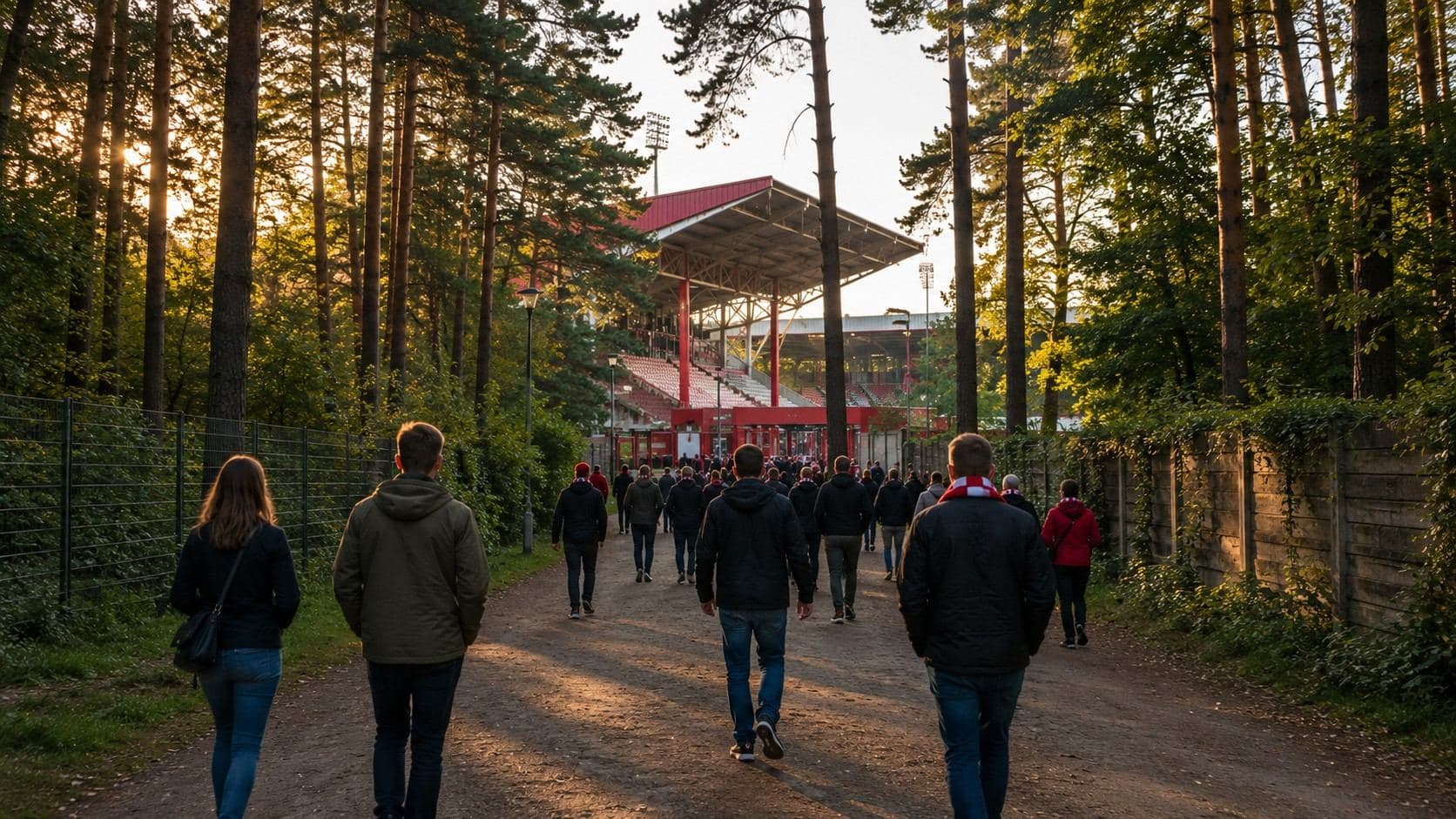
From Köpenick station, the official route to the Stadion An der Alten Försterei takes approximately fifteen minutes on foot.
On matchday, there is little need to study a map. Follow the red and white scarves moving along the railway line and into the Hämmerlingstraße.
Food stands, conversations and familiar greetings slow the crowd. Some supporters continue directly towards the stadium. Others stop and meet friends before taking the final steps together.
The walk is short, but it separates Union's home from the rest of the city. The forest and surrounding neighbourhood gradually replace the scale and noise of central Berlin.
Then the sound of the stadium begins to travel through the trees.
III
Inside the Alte Försterei
The Alte Försterei is different from the large modern arenas that dominate much of professional football.
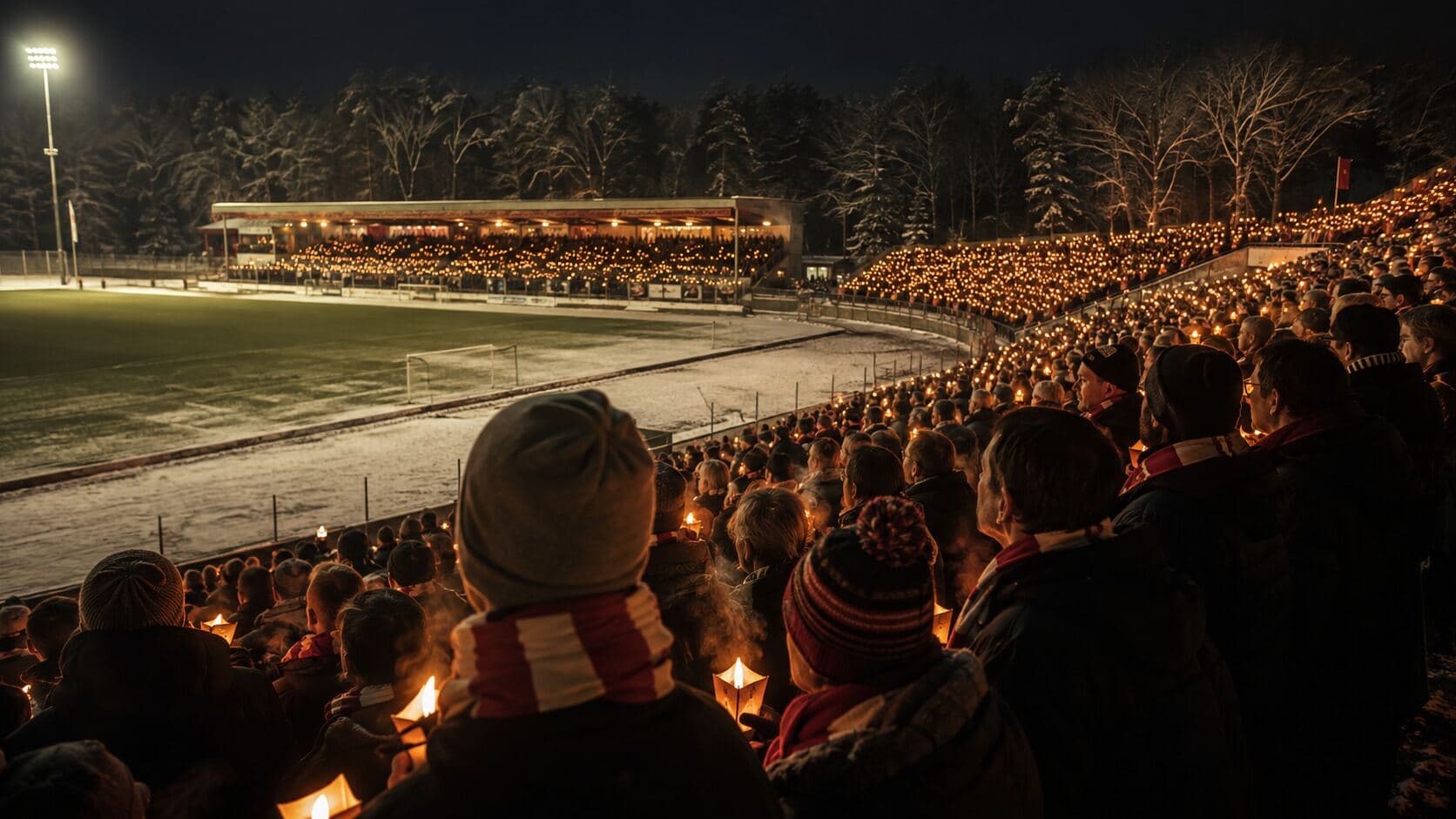
Most of its capacity consists of standing places. Three sides of the pitch are shaped by terraces, keeping supporters close to one another and close to the action.
There is less separation between watching and participating. The crowd does not sit back and wait for the match to provide entertainment. Songs begin before kick-off and move across the terraces.
When one side calls “Eisern”, the answer returns from another: “Union”.
The ground can hold just over 22,000 spectators. It feels smaller because of its intimacy and larger because so many people contribute to the same sound.
IV
A Stadium With Memory
Many of the people surrounding you know the Alte Försterei as more than the location of Union's home matches.
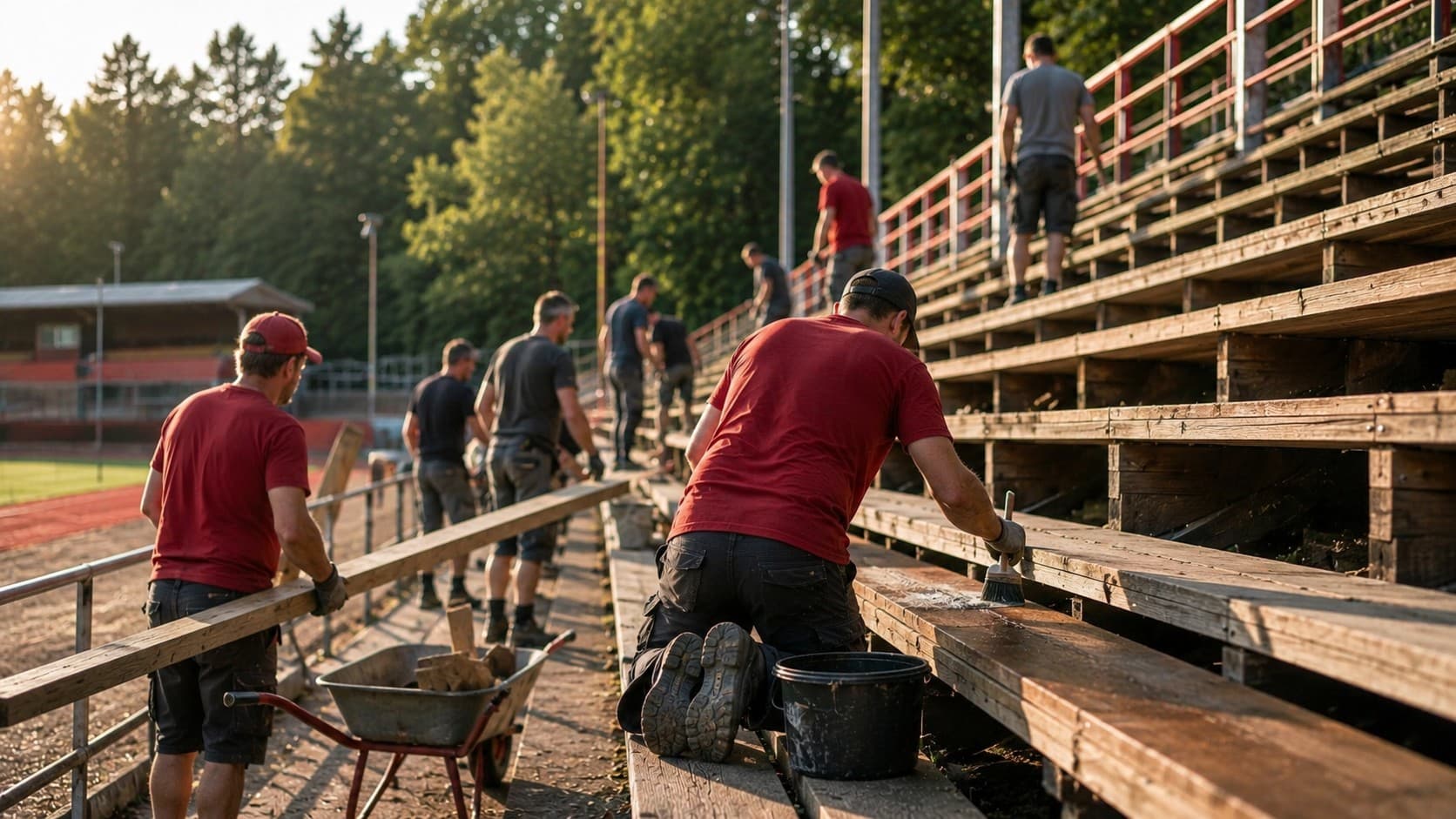
Supporters volunteered thousands of hours to rebuild its terraces between 2008 and 2009. Every December, the stadium becomes a Christmas choir. Generations have returned through promotion, financial uncertainty and the club's rise into European competition.
That history changes how the ground is experienced.
A terrace is not simply concrete beneath the crowd. It is part of a home supporters helped preserve. The forest is not decorative scenery. It is part of the route Union has followed since football was first played here in 1920.
Matchday takes place inside a story that already belongs to the people attending it.
V
Ninety Minutes Standing
Standing changes the rhythm of watching football.
The people around you shift, lean, sing and react together. A chance pulls the terrace forward. A tackle produces a roar. A goal removes the remaining space between strangers.
Union's matchday atmosphere is not based on permanent noise. Tension rises and falls with the game. Frustration is real. So is the expectation that the team should show the effort represented by the club's identity.
The phrase “Eisern Union” is not simply a nickname. It expresses the endurance supporters want to recognise on the pitch and in themselves.
The opponent matters. The score matters. The afternoon is not a staged celebration of authenticity.
It is a football match, experienced at close range.
VI
Back Through the Trees
After the final whistle, the terraces empty into the paths around the stadium.
The crowd moves back towards Köpenick station. The match is replayed through conversations: the goal, the decision, the chance that should have been taken.
The stadium disappears behind the trees more quickly than it appeared. Central Berlin waits at the other end of the train line.
But the separation is what makes the experience memorable. A Union matchday does not feel like visiting one more attraction in the capital.
It feels like travelling to a football home with its own geography, rituals and sense of belonging.
Continue Your Journey
Keep Exploring German Football.
Follow this story into its club, its football world and another chapter of German football culture.
Club World
Union Berlin World
Built Together
Explore Club →
City World
Berlin World
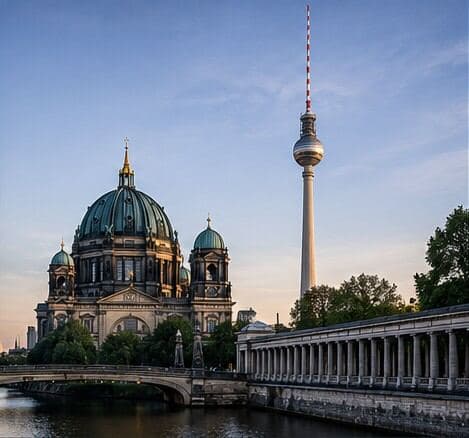
Explore Germany's biggest football city.
Explore World →
Another Club World
Hertha BSC World
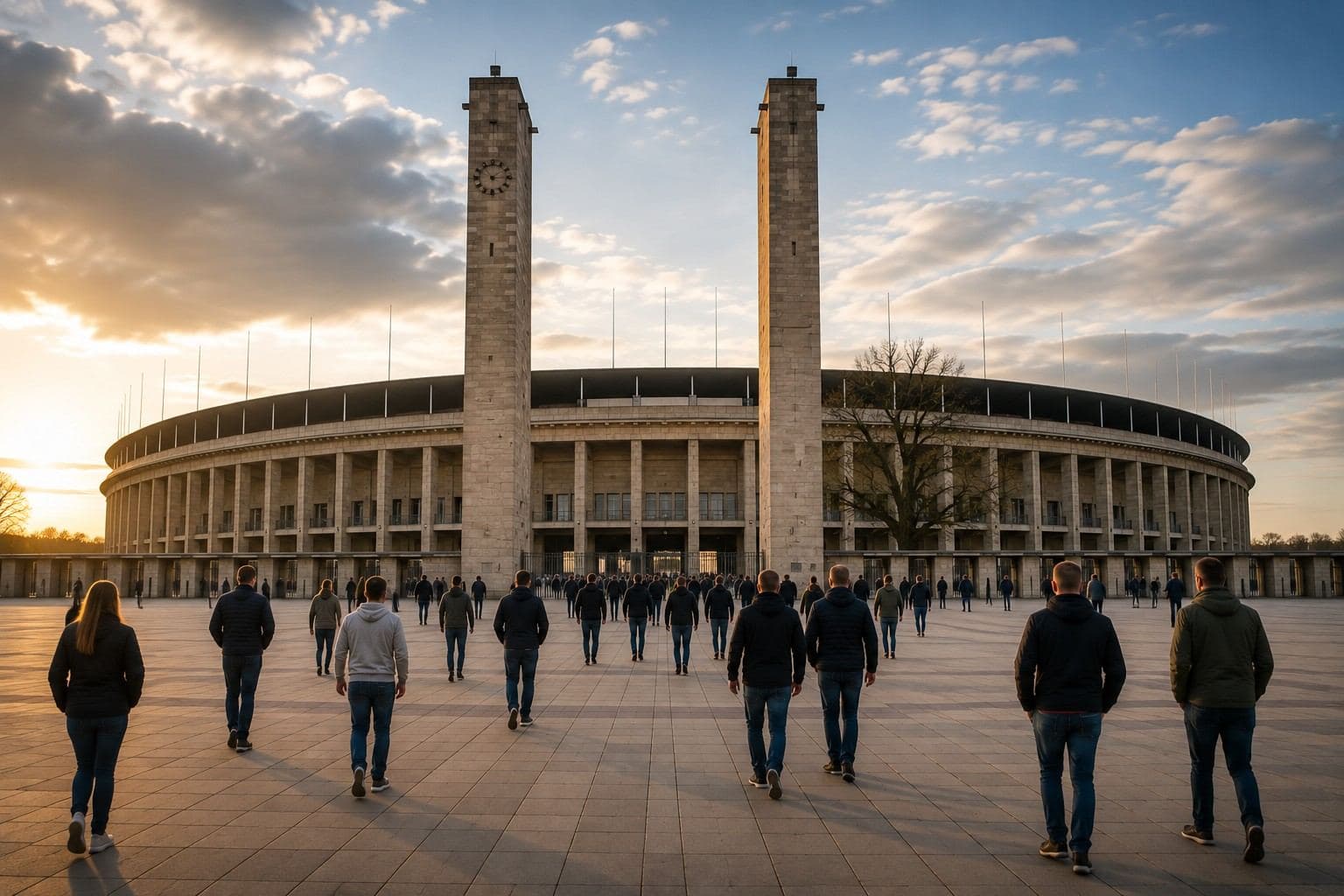
The Dream Remains
Explore Club →
Related Culture
Built Together
A football identity built around community, participation and an extraordinary relationship with its supporters.
Read Story →