Matchday Germany
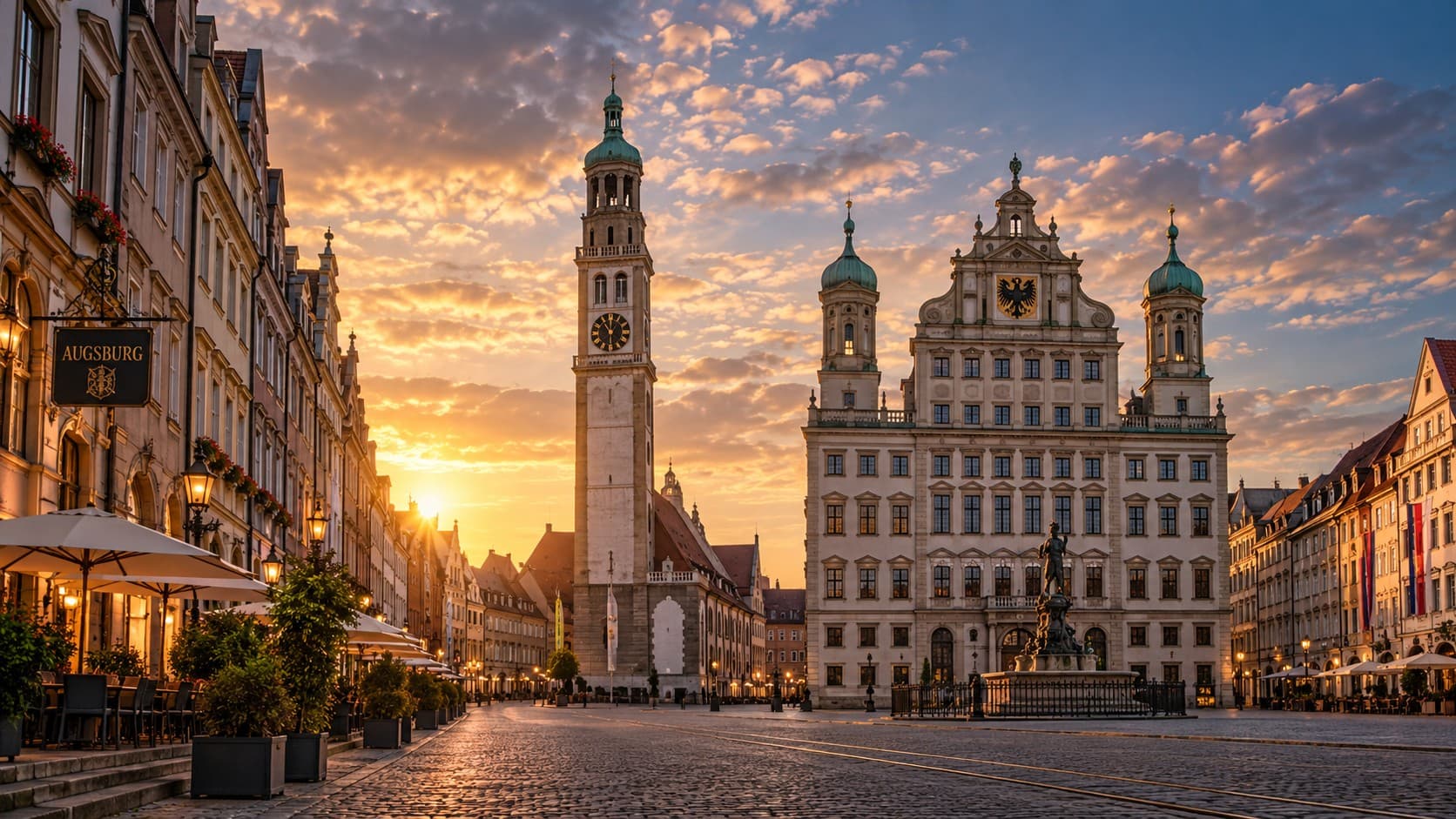
Historic centre of Augsburg

Football Weekend Guide

A Football Weekend In Augsburg

Roman history, Renaissance streets, local traditions and a Bundesliga matchday deeply connected to the city.

AI-generated image

Weekend Overview

History runs deep. Football feels local.

Augsburg is one of Germany's oldest cities, but it rarely appears near the top of international football travel lists. That is precisely part of its appeal.

The historic centre brings together Roman roots, Renaissance architecture, the Fuggerei and a remarkable network of canals and waterworks. On matchday, the focus shifts south to the WWK ARENA and FC Augsburg.

The result is a compact football weekend where the city never feels like something you simply pass through on the way to the stadium.

Augsburg works because the football and the city belong to the same story: historic, local and more distinctive than you might expect.

Friday

Arrive. Walk the old streets. Discover Augsburg.

Friday belongs to the city — and Augsburg rewards exploring it on foot.

Arrival

Start at Augsburg Hauptbahnhof.

Augsburg sits on one of southern Germany's major railway corridors and is easy to reach by train from Munich and other German cities.

From the Hauptbahnhof, the historic centre is close enough to begin exploring almost immediately.

First Stop

Walk towards Maximilianstraße.

Make your first walk through central Augsburg towards Rathausplatz and Maximilianstraße.

The Rathaus, Perlachturm, fountains and Renaissance façades reveal a city shaped by centuries of trade, wealth and civic ambition.

Augsburg History

More than 2,000 years of city life.

Augsburg traces its origins to a Roman settlement founded in 15 BC, making it one of Germany's oldest cities.

Its later history was shaped by powerful merchant families, especially the Fuggers and Welsers, whose influence reached far beyond Bavaria.

Tip: A first walk around Rathausplatz and Maximilianstraße gives you the best introduction to Augsburg's scale and character.

Early Evening

Follow the Lech canals.

Augsburg's relationship with water is visible throughout the old town. Small canals run between streets and buildings, creating a side of the city that can easily be missed if you stay only around the main squares.

The city's historic water management system is recognised as a UNESCO World Heritage Site.

Friday Night

Stay in the centre.

Spend the evening around Maximilianstraße, the old town or the streets surrounding Rathausplatz.

Augsburg is compact enough that restaurants, bars and many of the city's major sights remain within walking distance.

Where To Stay

Base yourself in central Augsburg.

The Altstadt and city centre offer the strongest combination of sightseeing, restaurants and public transport.

Staying around Hauptbahnhof is particularly practical if you are arriving by train and heading to the WWK ARENA on matchday.

Saturday

Matchday.

Saturday brings together Augsburg's historic identity and its modern Bundesliga club.

Start with the Fuggerei.

Before football takes over the day, visit one of Augsburg's most famous institutions.

Founded by Jakob Fugger in 1521, the Fuggerei is the world's oldest existing social housing complex. Its small streets, houses and courtyards form a remarkable city within the city.

The visit provides a very different perspective on Augsburg before the journey towards the WWK ARENA begins.

Tip: Visit early enough that your sightseeing never competes with matchday. Aim to begin your journey towards the stadium around two hours before kick-off.

Your Matchday

FC Augsburg At The WWK ARENA

A modern stadium, strong local roots and traditions that could only belong to Augsburg.

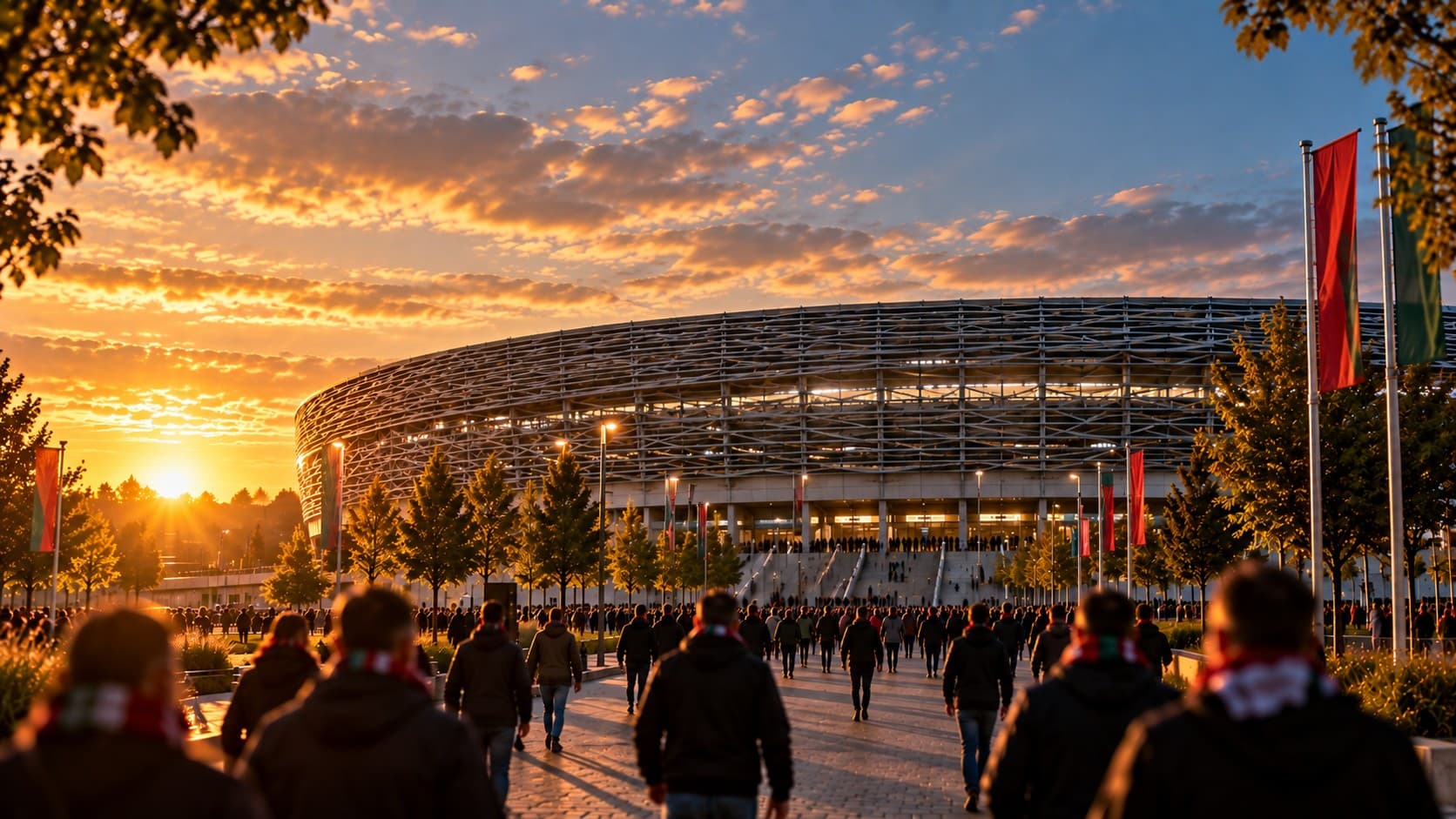
WWK ARENA Augsburg

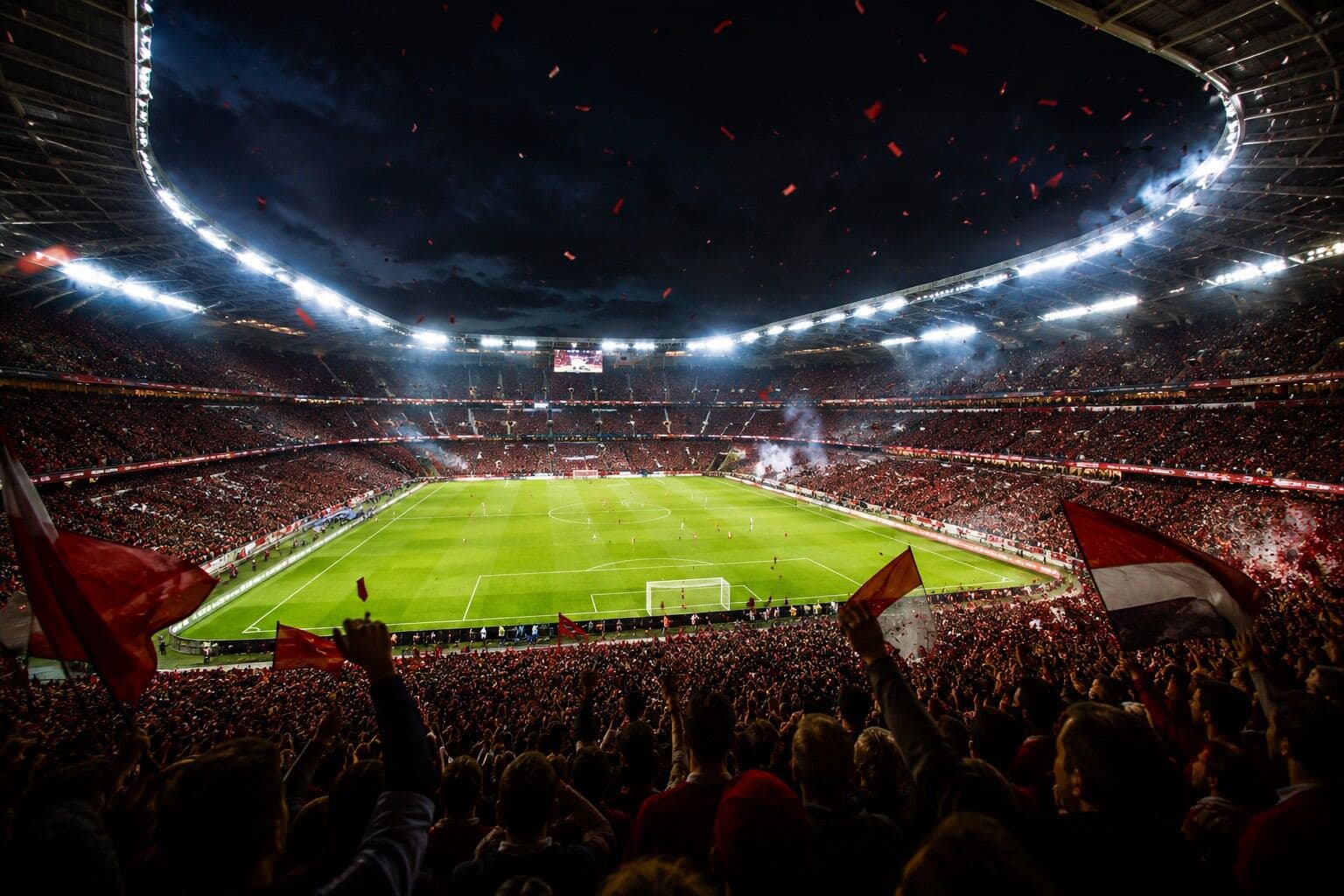
FC Augsburg

FC Augsburg At The WWK ARENA

Experience a deeply local Bundesliga club in a compact football-specific stadium.

FC Augsburg's identity is closely tied to the city and surrounding region. The club reached the Bundesliga for the first time in 2011 and has established itself in Germany's top flight without losing that local character.

The WWK ARENA holds 30,660 spectators and includes more than 10,000 standing places. Its steep stands and football-specific design keep the crowd close to the pitch.

On matchdays, Stadion-Linie 8 connects Augsburg Hauptbahnhof directly with the stadium. The journey takes around 20 minutes and gradually replaces the historic city centre with the colours and rhythms of matchday.

Inside, look out for one of Augsburg's most distinctive traditions. The Augsburger Puppenkiste is woven into the matchday, from the pre-match Kasperl prediction to the marionette presented to the visiting captain.

And if Augsburg score, listen carefully. Eine Insel mit zwei Bergen — familiar to generations from Jim Knopf and the Augsburger Puppenkiste — becomes the soundtrack to the celebration.
Getting there: Take Stadion-Linie 8 from Augsburg Hauptbahnhof directly to the WWK ARENA. The journey takes around 20 minutes.

Tip: Arrive 90–120 minutes before kick-off. The stadium is outside the historic centre, so treat the tram journey south as the point where sightseeing ends and matchday begins.

Saturday Night In Augsburg

After the final whistle, Stadion-Linie 8 takes supporters back towards central Augsburg.

Return to the old town rather than staying around the stadium. Rathausplatz, Maximilianstraße and the surrounding streets provide a much better setting for the rest of the evening.

Augsburg is noticeably calmer than Munich or Berlin after a match, but that suits the character of the weekend. Dinner and drinks in the historic centre provide a relaxed end to matchday.

Tip: There is little reason for a visitor to remain around the WWK ARENA after the match. Head back into the historic centre.

Sunday

Stories, water and one final piece of Augsburg.

Sunday reveals the cultural traditions behind some of the things you experienced inside the stadium.

Sunday Morning

Meet the Augsburger Puppenkiste.

Visit the Augsburger Puppenkiste at the historic Heilig-Geist-Spital and discover the institution behind one of FC Augsburg's most distinctive matchday traditions.

The marionette theatre opened in 1948 and later became famous across Germany through television. Characters including Jim Knopf and Lukas the Engine Driver became childhood companions for generations.

After hearing Eine Insel mit zwei Bergen inside the WWK ARENA, seeing where those stories came from creates a connection between Saturday's football and Sunday's city.

Tip: Check current museum and theatre opening times before your trip, especially if you are travelling on a Sunday.

Late Morning

Discover Augsburg's water.

Continue through the Lechviertel and follow the canals that cut through the historic centre.

Augsburg's Water Management System became a UNESCO World Heritage Site in 2019 and includes canals, water towers, fountains and historic waterworks spread across the city.

Sunday Lunch

Stay local.

Return towards the old town for lunch and use the slower Sunday pace to explore streets you may have passed too quickly on Friday.

The compact centre means there is little need to plan complicated transport between the main sights.

Final Walk

Rathausplatz one last time.

Finish the weekend around Rathausplatz, Maximilianstraße and the surrounding old town.

After a weekend moving between Roman history, Renaissance Augsburg, marionettes and Bundesliga football, the connections between the city's different identities become much clearer.

Departure

Back to the Hauptbahnhof.

Augsburg Hauptbahnhof is close to the centre and provides frequent rail connections towards Munich and other major German cities.

A Sunday afternoon or evening departure leaves enough time to experience Augsburg without rushing the final morning.

Leave Augsburg with more than a match behind you. The stadium, the old streets and even the goal music all tell different parts of the same city's story.

Practical Guide

Weekend Essentials

Getting There

By Train

Augsburg Hauptbahnhof has frequent regional and long-distance connections and is particularly easy to reach from Munich.

By Air

Munich Airport is the main international gateway. Continue by rail towards Augsburg.

Getting Around

Tram & Bus

Augsburg's local transport network covers the city, with Stadion-Linie 8 operating directly to the WWK ARENA on home matchdays.

Walking

Much of the historic centre can be explored comfortably on foot.

Stadiums

WWK ARENA

FC Augsburg's 30,660-capacity football-specific home on the southern edge of the city.

Where To Stay

Altstadt

The most atmospheric base for exploring historic Augsburg.

City Centre

A strong all-round location for sightseeing, restaurants and public transport.

Around Hauptbahnhof

Especially convenient for train travellers and the matchday connection towards the WWK ARENA.

Don't Miss

Fuggerei

The world's oldest existing social housing complex, founded in 1521.

Augsburger Puppenkiste

The famous marionette theatre behind one of FC Augsburg's most distinctive matchday traditions.

Rathausplatz

The monumental heart of historic Augsburg.

Lechviertel

Historic streets and canals revealing Augsburg's close relationship with water.

UNESCO Water Management System

A centuries-old network of canals, fountains, waterworks and engineering heritage.

WWK ARENA

A modern Bundesliga stadium where Augsburg's local football culture comes together.