
Regional Culture
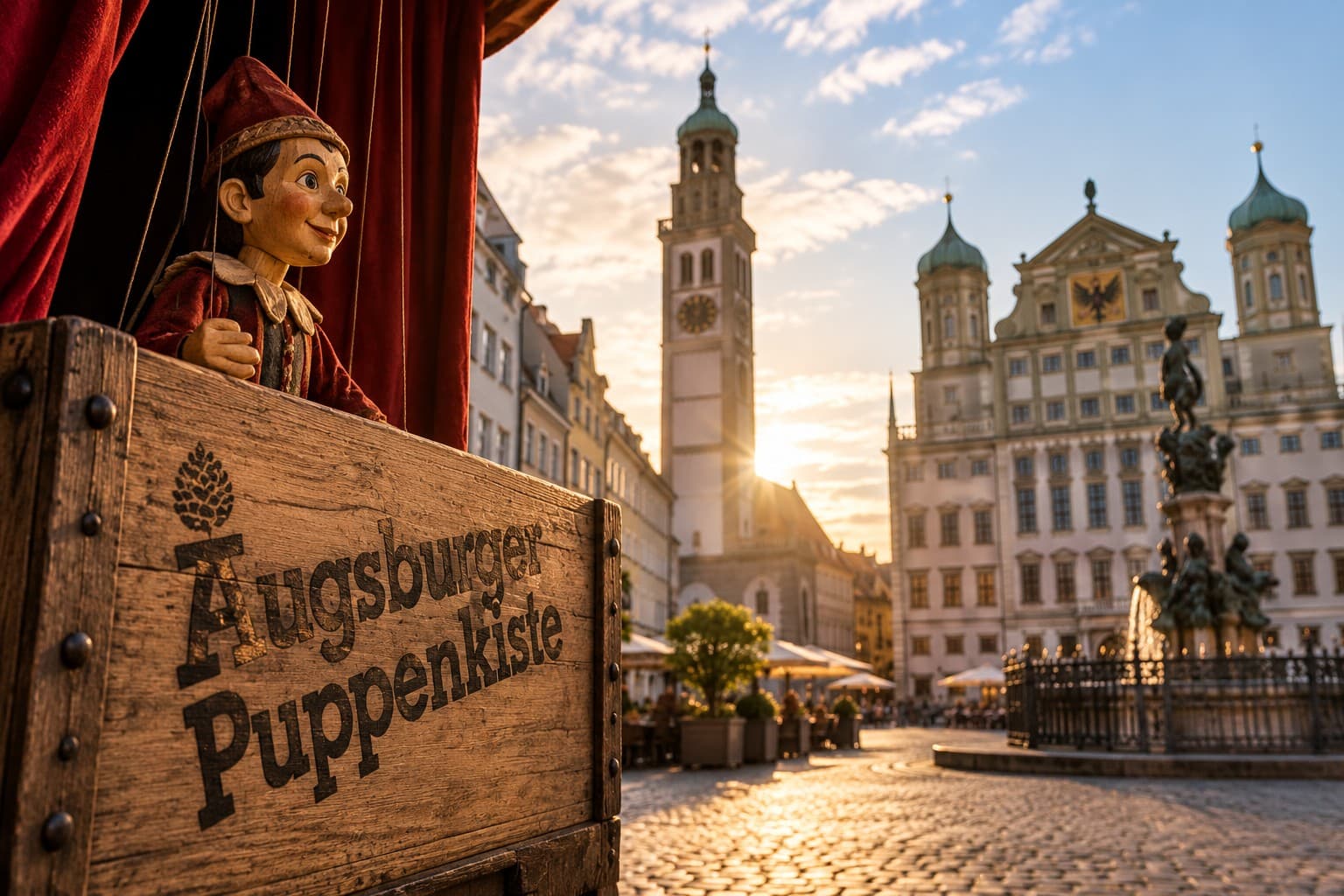
Augsburger Puppenkiste
From childhood memories to the sound of an FC Augsburg goal — how a small marionette theatre became part of the city's football identity.
Augsburg · FC Augsburg
I
A Familiar Melody
For many Germans, the Augsburger Puppenkiste belongs to childhood.
Jim Knopf, Lukas the Engine Driver, Urmel and other marionettes appeared on television screens for generations. Wooden faces, visible strings and miniature worlds became part of a shared cultural memory.
Years later, that memory can return in an unexpected place.
When FC Augsburg score at the WWK ARENA, the melody of Eine Insel mit zwei Bergen rings through the stadium.
It is the song associated with Jim Knopf and Lukas the Engine Driver — and suddenly a piece of childhood becomes part of a Bundesliga matchday.
II
A Theatre in a Box
The story began long before FC Augsburg played Bundesliga football.
During the Second World War, actor and theatre director Walter Oehmichen encountered a small puppet theatre while stationed in Calais.
He became fascinated by the ability of puppets to capture an audience and imagined a theatre small enough to travel anywhere — packed inside a box and rebuilt wherever people wanted to watch.
In 1943, together with his wife Rose and their daughters Hannelore and Ulla, he created a family marionette theatre called the Puppenschrein.
One year later, it was destroyed during an air raid.
III
A New Beginning
The destruction did not end Oehmichen's idea.
After the war, the project found a home inside Augsburg's historic Heilig-Geist-Spital.
On 26 February 1948, the Augsburger Puppenkiste opened there with a performance of Der gestiefelte Kater.
A small stage, wooden marionettes and carefully constructed miniature worlds created a theatre unlike almost anything else in the city.
And the Puppenkiste stayed. The Heilig-Geist-Spital remains its home today.
IV
Into German Living Rooms
Augsburg knew the Puppenkiste first. Television introduced it to the rest of Germany.
In January 1953, the marionettes appeared on television for the first time with Peter and the Wolf.
What followed transformed a local theatre into a cultural institution recognised far beyond Bavaria.
Generations grew up with the distinctive miniature sets, visible strings and characters of the Puppenkiste.
Jim Knopf and Lukas the Engine Driver became among the most recognisable of them.
For many viewers, those stories became something more personal than television. They became memories of childhood.
V
From Childhood to Matchday
In the 2009/10 season, two very different Augsburg institutions came together.
FC Augsburg and the Augsburger Puppenkiste began a partnership that gradually placed the marionette theatre inside the rituals of a football matchday.
Before home matches, the Kasperl gives his prediction for the game.
At the traditional pre-match exchange between the captains, the visiting team receives something more distinctive than a standard club pennant: a marionette from the Augsburger Puppenkiste.
The figure changes over time, connecting different characters and generations of Puppenkiste stories with FC Augsburg.
But the most recognisable connection comes when Augsburg score.
VI
Eine Insel mit zwei Bergen
The ball crosses the line. The WWK ARENA celebrates.
Then comes a melody many people in the stadium may have known long before they ever watched FC Augsburg.
Eine Insel mit zwei Bergen, associated with the Puppenkiste's Jim Knopf and Lukas the Engine Driver, is the club's goal music.
The contrast is part of what makes it memorable. Bundesliga football is fast, loud and intensely competitive. The melody comes from a world of wooden marionettes and childhood stories.
Yet in Augsburg, the combination feels completely natural.
VII
More Than a Goal Song
It would be easy to treat the melody as simply an unusual piece of goal music.
But the relationship says something larger about football culture in Augsburg.
The Puppenkiste is not a football institution. FC Augsburg is not a theatre. Their connection works precisely because both belong to the same place.
One carries memories of childhood and family. The other creates new memories in the stands of the WWK ARENA.
The result is a matchday tradition that could hardly be transferred to another German city without losing its meaning.
VIII
A Piece of Augsburg
Someone may first encounter the melody as a child watching marionettes on television.
Decades later, they might hear it again surrounded by thousands of supporters after an FC Augsburg goal.
Between those two moments lies much of what makes local football culture interesting.
Stadium traditions do not always begin inside stadiums. Sometimes they come from the streets, songs and institutions of the city around them.
In Augsburg, one of those traditions comes from a tiny stage, wooden marionettes and stories remembered from childhood.
Continue Your Journey
Keep Exploring German Football.
Follow this story into its club, its football world and another chapter of German football culture.
Club World
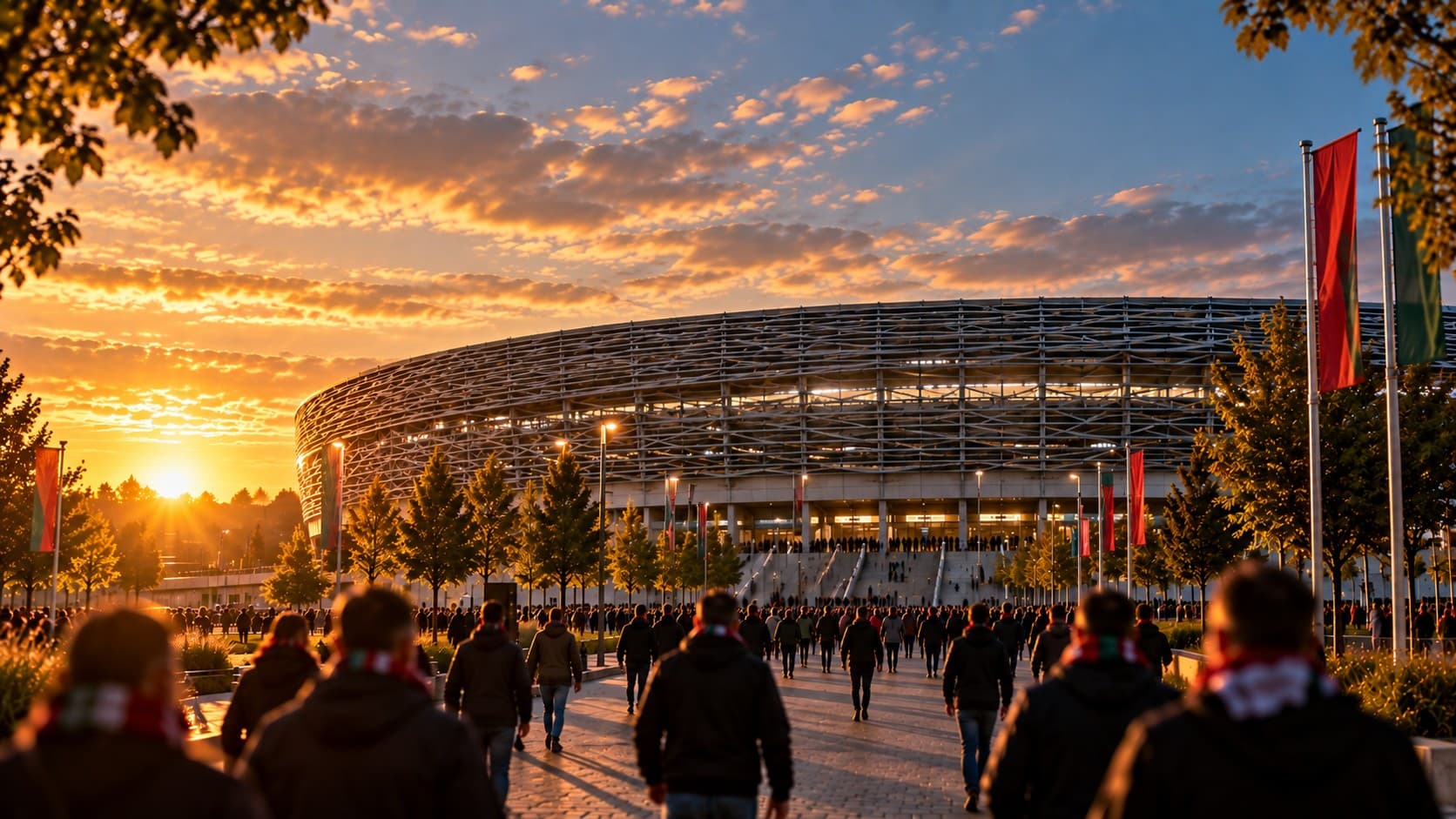
FC Augsburg World
Rooted in Augsburg
Explore Club →
City World
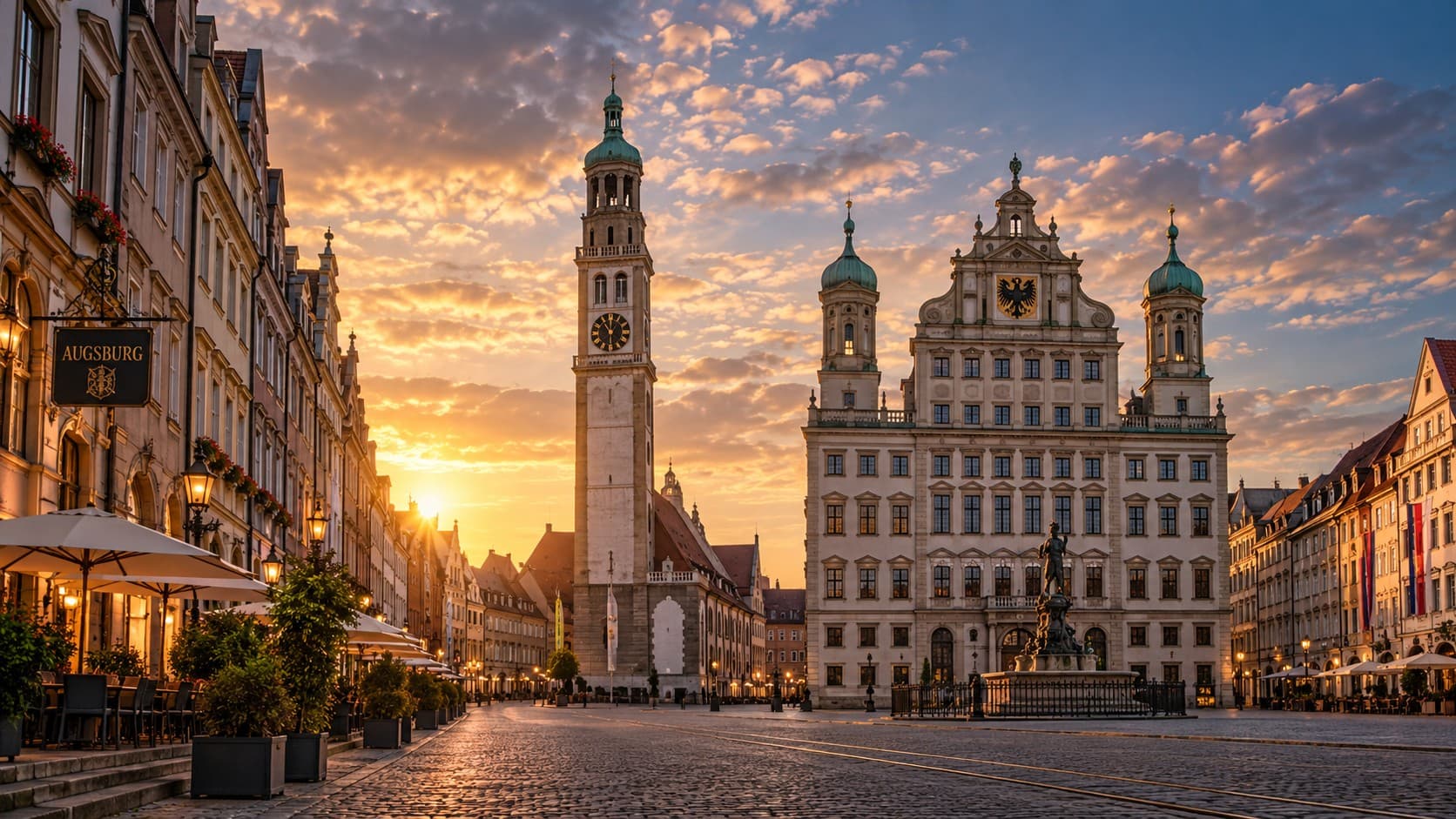
Augsburg World
Discover one of Germany's oldest cities and its distinctive place in modern Bundesliga football.
Explore World →
Another Club World
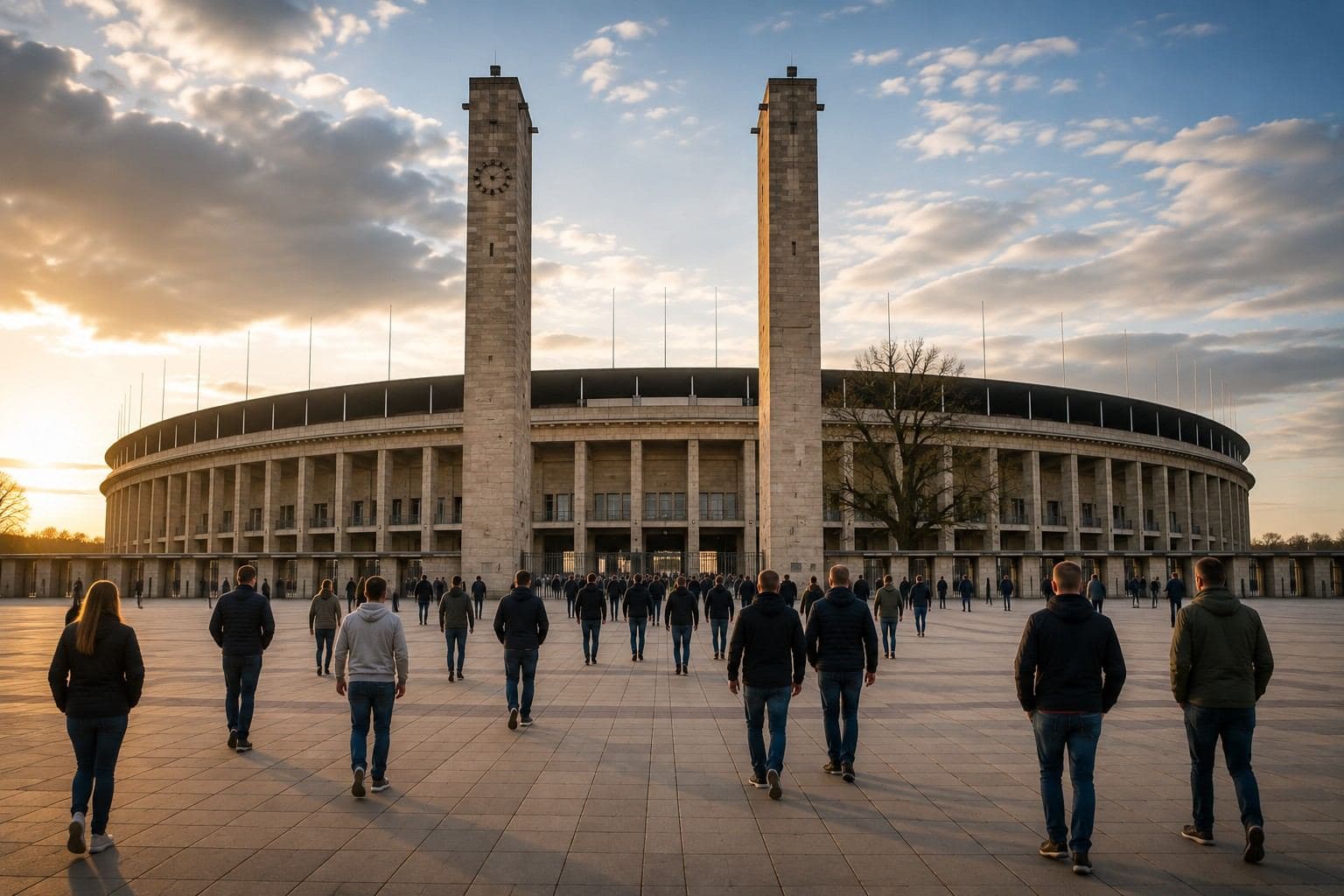
Hertha BSC World
The Dream Remains
Explore Club →
Related Culture
One City. Two Different Football Worlds.
One city, two clubs and two very different football identities shaped by Hamburg.
Read Story →