Matchday Experience
Olympiastadion Experience
Hertha matchday unfolds inside one of Europe's most monumental and historically complex sporting arenas.
Berlin · Hertha BSC
I
The Western Journey
A Hertha matchday carries blue and white through the west of Berlin.
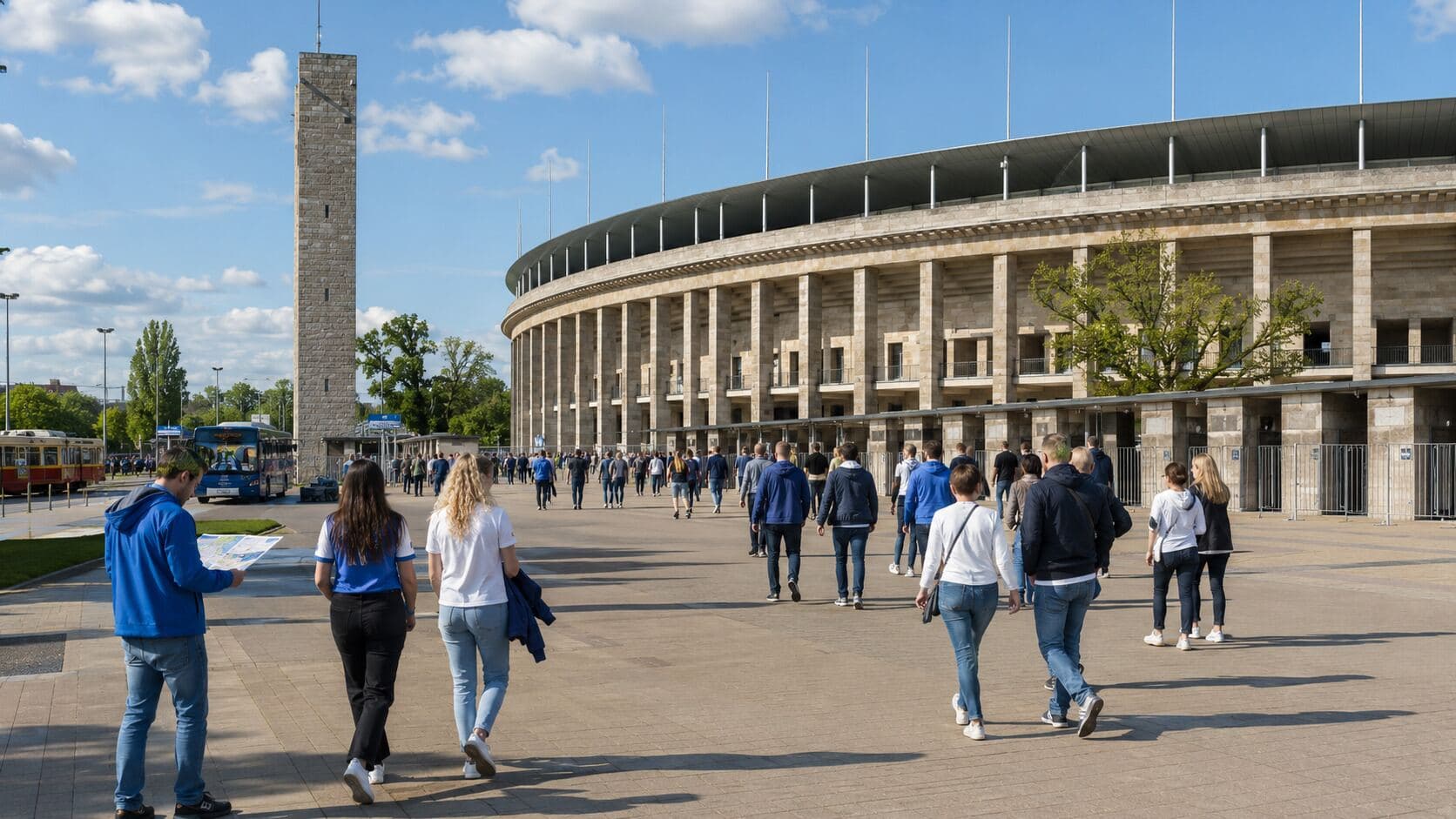
Trains leaving the centre fill with scarves, shirts and flags. Stations announce a destination that needs no further explanation: Olympiastadion.
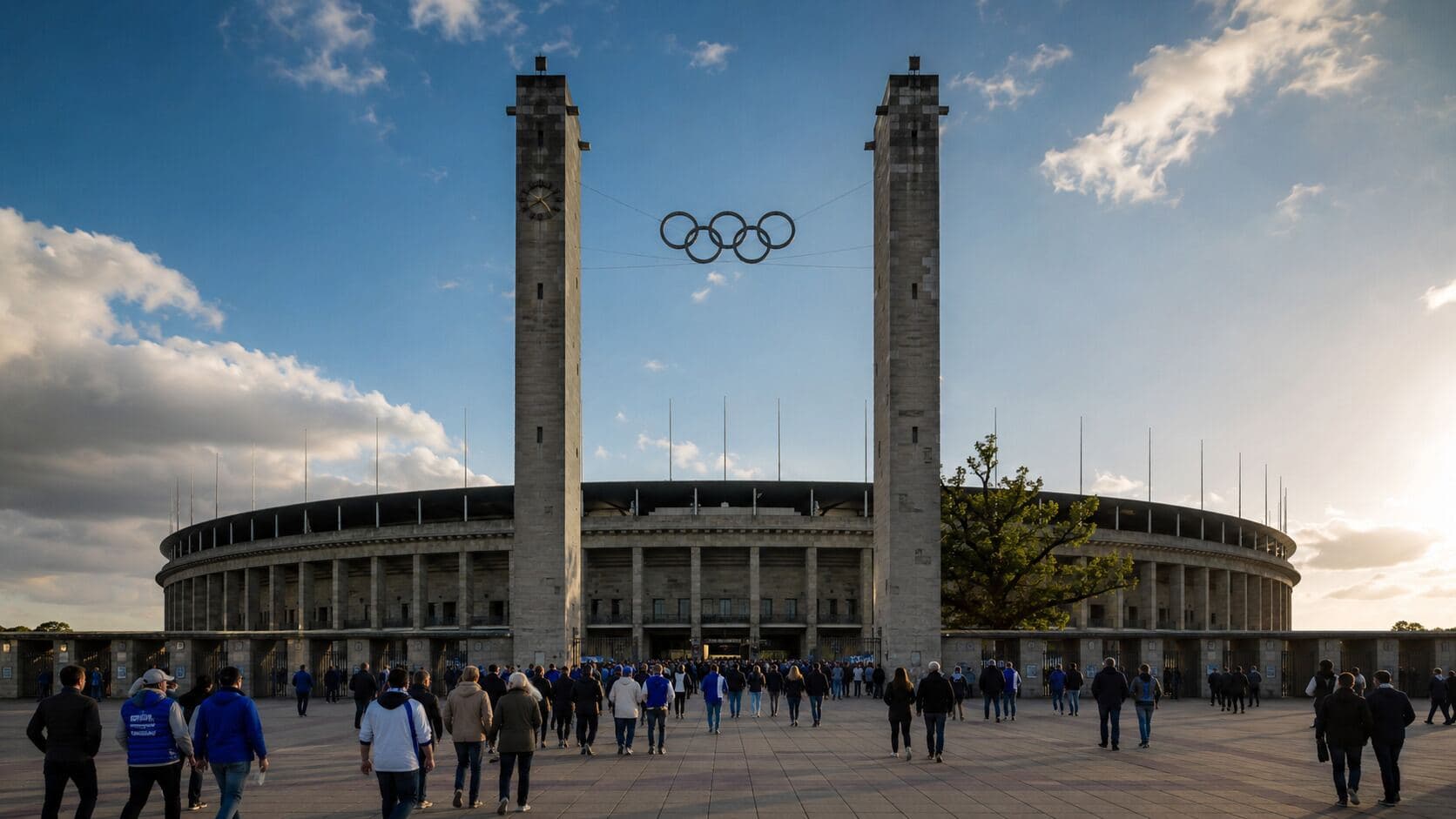
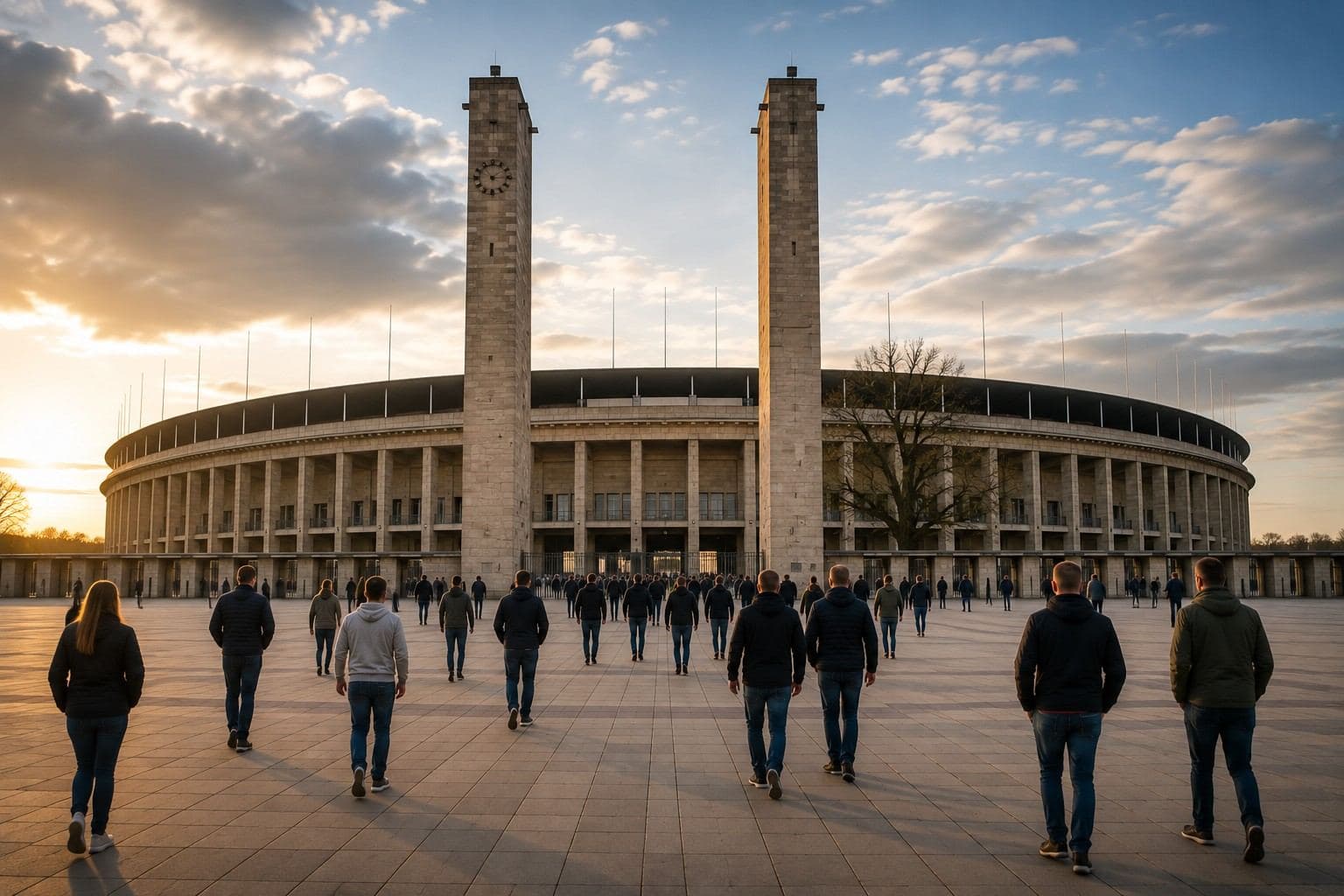
The crowd steps onto broad paths rather than narrow neighbourhood streets. Trees, stone and open space shape the approach. The stadium belongs to a much larger complex, and its scale is apparent before the pitch is anywhere in sight.
This is not a football ground compressed between houses. It is a monumental arena designed to make every arrival feel significant.
II
A Difficult Monument
It is impossible to understand the Olympiastadion without acknowledging why it was built.
Construction took place between 1934 and 1936 for the Olympic Games held under the National Socialist dictatorship. The stadium and the surrounding Reichssportfeld were used to project power, order and a carefully controlled image of Germany to the world.
The Games also produced moments that challenged the ideology surrounding them. American athlete Jesse Owens won four gold medals inside the stadium, becoming the defining sporting figure of the event.
After the war, the building remained. Its purpose changed repeatedly. It became a venue for football, athletics, major finals, concerts and international tournaments.
A modern matchday therefore takes place inside architecture that cannot be separated from German history.
III
The Stadium Opens
Entering the Olympiastadion reveals how much of the structure remains hidden from outside.
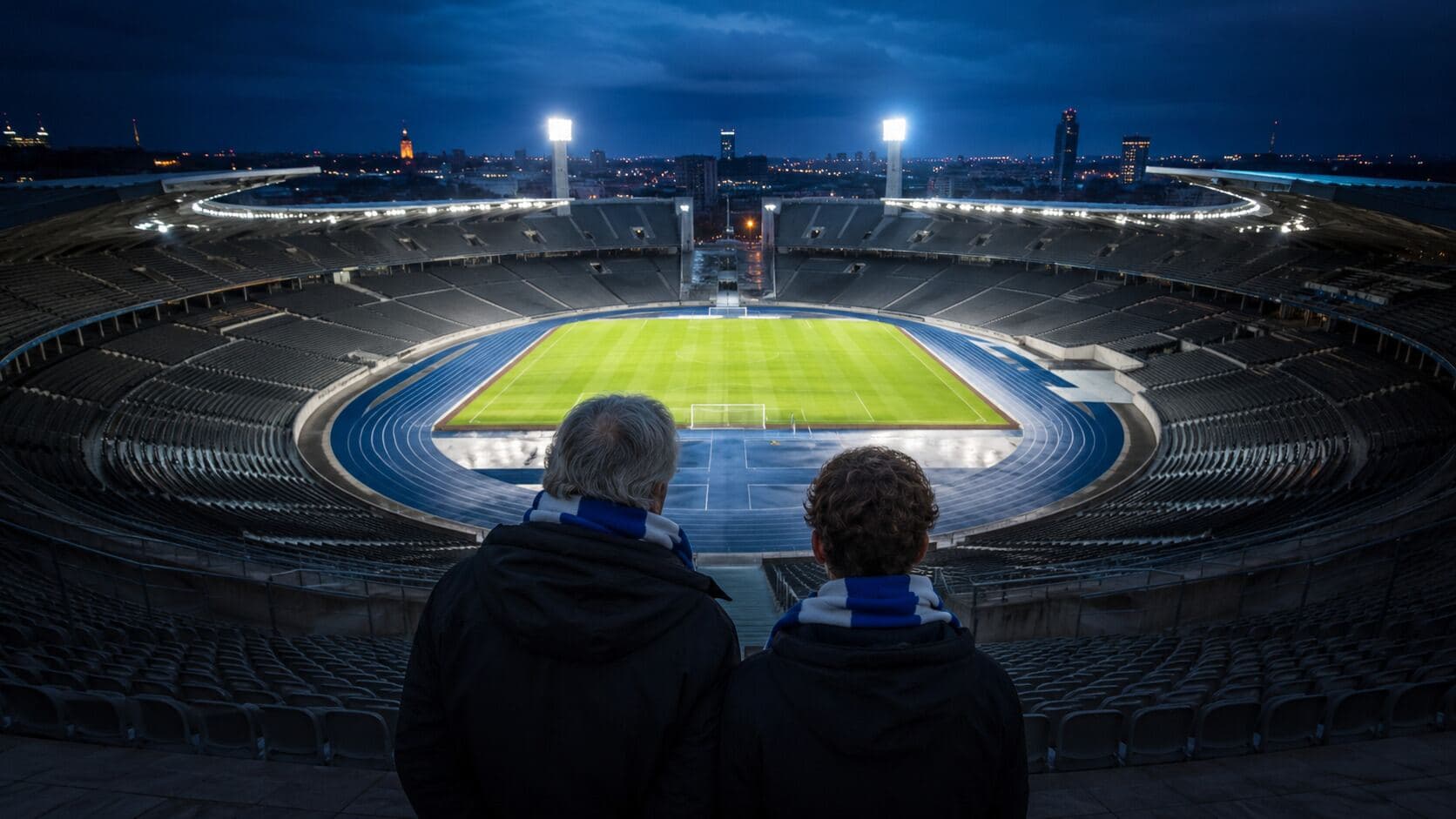
The seating descends into the ground. The blue athletics track circles the pitch. Above it, two continuous tiers stretch around an enormous oval.
For a visitor, the first view is impressive. The stadium feels open, balanced and almost impossibly wide.
For Hertha, that scale is both privilege and problem.
Large matches can bring more than 70,000 people into the arena and create one of Germany's great sporting stages. During ordinary league games, empty sections can become visible and the distance between supporters and pitch becomes harder to ignore.
IV
The Ostkurve
Hertha's answer to the size of the stadium comes from the eastern end.
The Ostkurve provides the concentrated blue and white identity of a Hertha home match. Flags rise, songs repeat and organised support attempts to carry across the open bowl towards the pitch.
The running track creates physical distance, but it can also make the movement in the stand visible. Large flags and choreographies are given a monumental background.
When the stadium is full, the sound builds around the entire oval. When it is not, the Ostkurve continues working against the empty space.
This tension has become part of Hertha's matchday identity: supporters trying to turn a national arena into their football home.
V
A Stage for Big Days
The qualities that complicate an ordinary league match make the Olympiastadion exceptional on major occasions.
When every section is occupied, the scale becomes the experience. Tens of thousands arrive through the same gates, fill both tiers and transform the stone bowl into a blue and white arena.
The stadium has hosted World Cup matches, European Championship matches and the annual DFB-Pokal final. Hertha's home games take place on a stage associated with some of German football's largest events.
This creates a contradiction. Hertha is the regular occupant of a stadium designed for occasions larger than regular club football.
On the right afternoon, however, club and arena fit together. The Olympiastadion stops feeling borrowed and becomes unmistakably Hertha's.
VI
Football in the Distance
Visiting the Olympiastadion requires a different expectation from visiting a compact football ground.
Do not expect to stand directly above the touchline. Experience the entire place: the ceremonial approach, the historic stone exterior, the sudden view into the bowl and the blue track separating the stands from the pitch.
Watch how the Ostkurve attempts to overcome that distance. Listen for the moments when its songs reach the rest of the stadium and return louder.
Hertha's matchday is shaped by the arena's contradictions. It is beautiful and difficult, historic and modern, impressive and sometimes too large.
That tension makes it unlike any other club experience in Germany.
Continue Your Journey
Keep Exploring German Football.
Follow this story into its club, its football world and another chapter of German football culture.
Club World
Hertha BSC World
The Dream Remains
Explore Club →
City World
Berlin World
Explore Germany's biggest football city.
Explore World →
Another Club World
Union Berlin World
Built Together
Explore Club →
Related Culture
The Dream Remains
Hertha carries the history, scale and expectations of Berlin — and the hope that its greatest modern chapter is still ahead.
Read Story →