Football History
A Stadium Inside a Stadium
In Leipzig, a modern football arena sits inside the remains of a stadium once built for one hundred thousand people.
Leipzig · Leipzig Stadium
I
The Descent
Most stadium approaches lead towards a building that rises above the surrounding streets. Leipzig feels different.
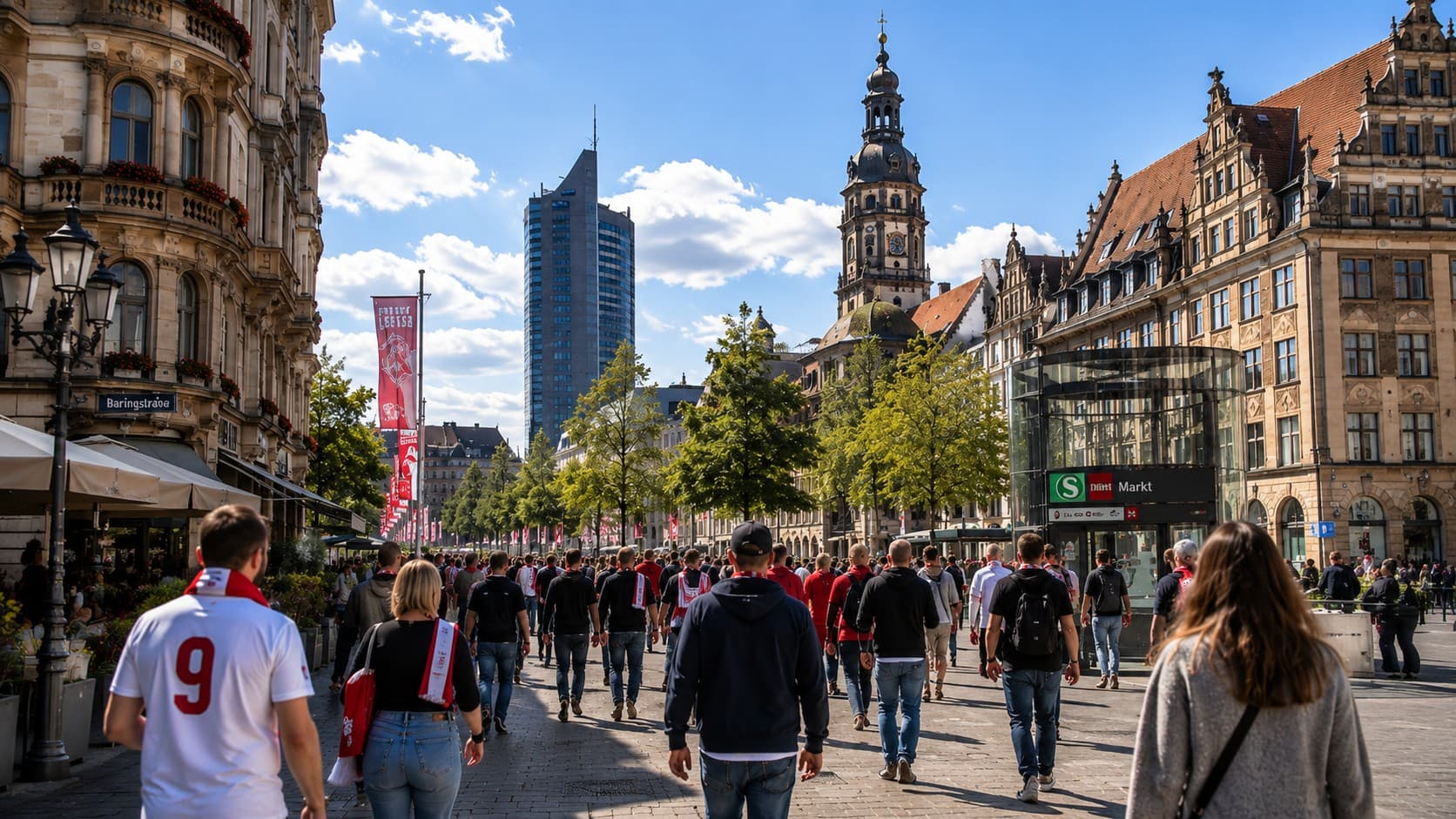
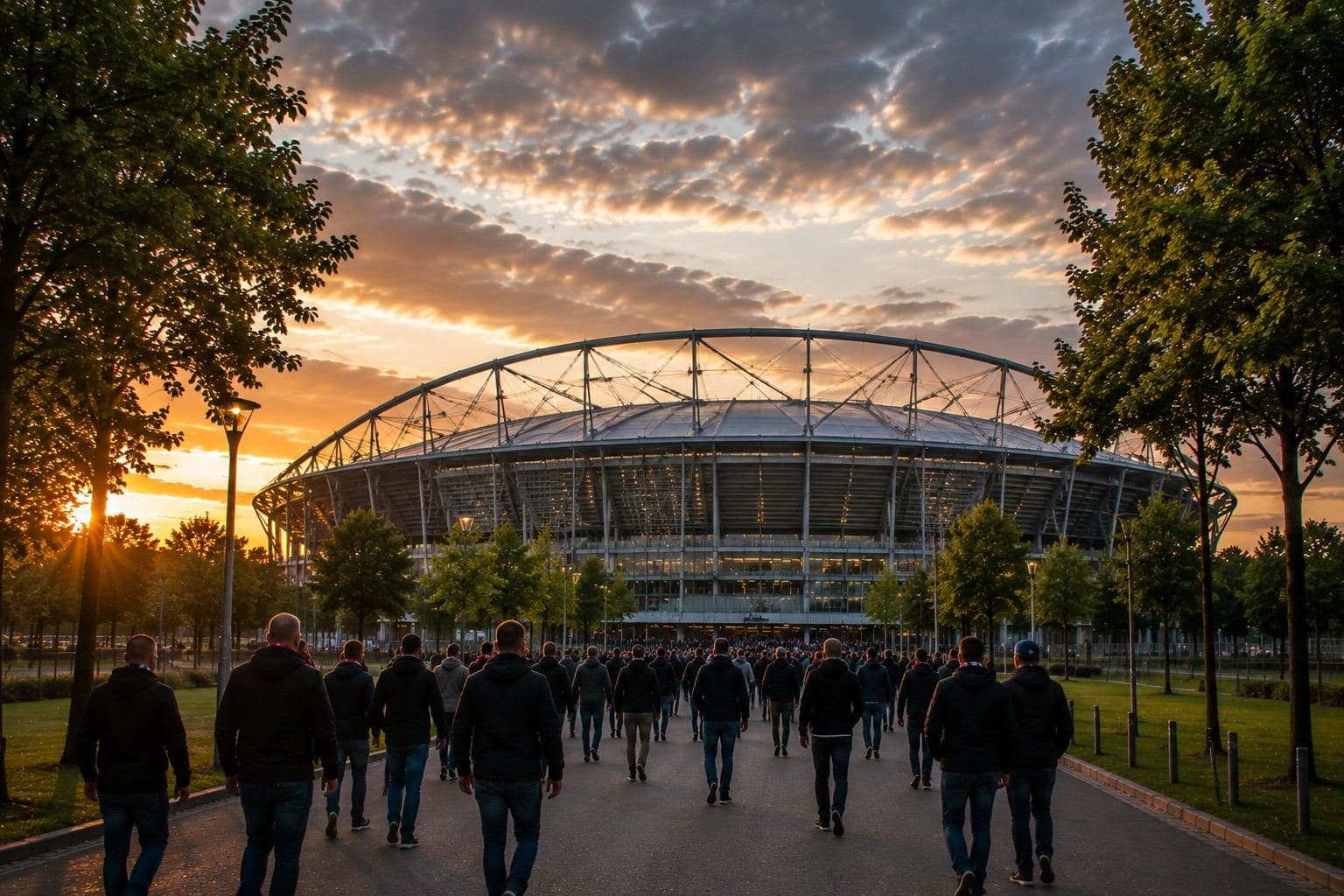
Supporters cross bridges and move through the remains of an enormous earthwork. From the outside, the shape belongs to another kind of stadium: wider, heavier and built for crowds far larger than those entering today.
Then the route begins to descend.
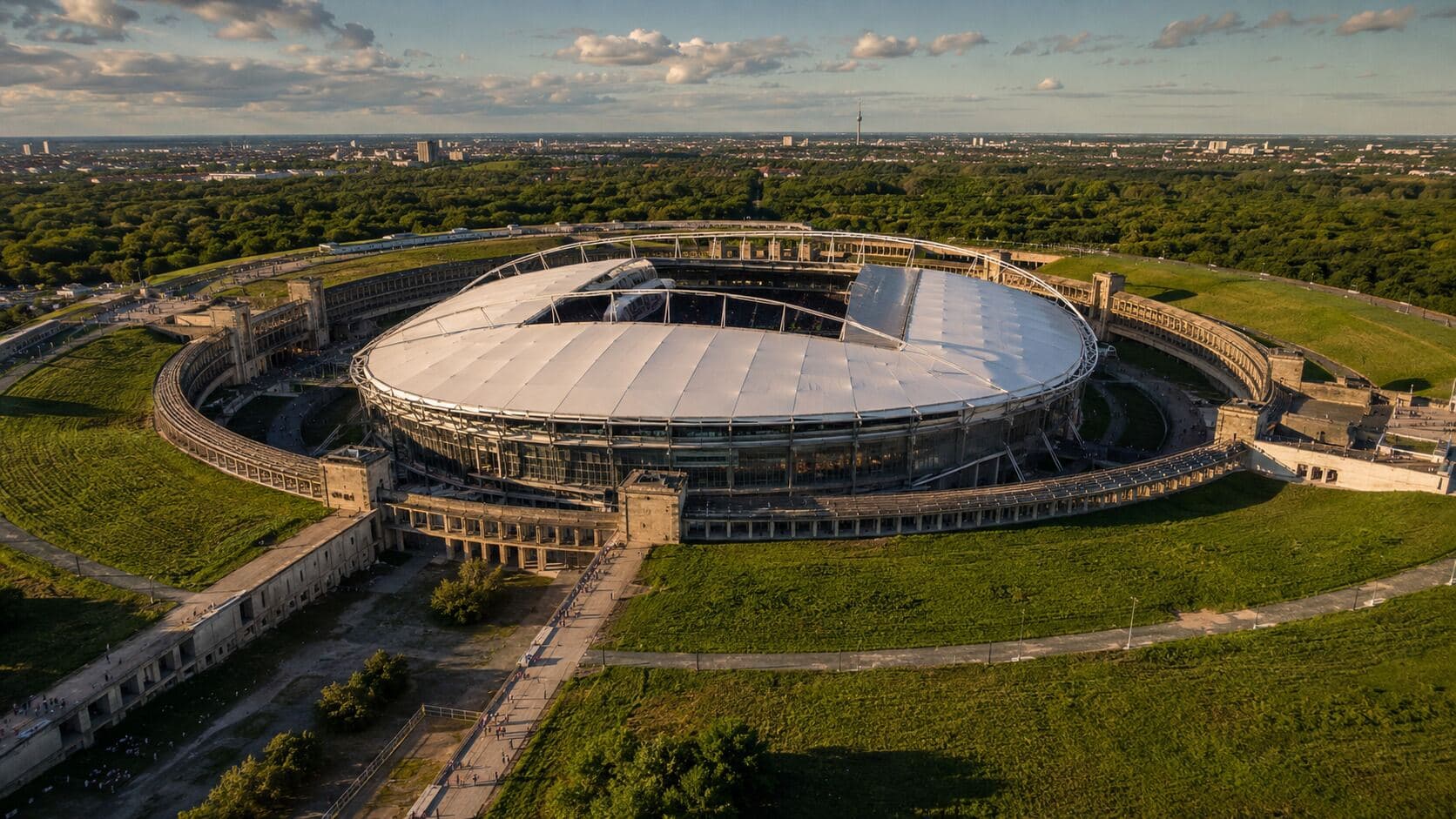
Below the old embankments sits a modern football arena. Its roof, stands and pitch occupy the space where another stadium once stood. The old structure has not disappeared completely. It surrounds the new one like a landscape from a previous era.
II
The Stadium of 100,000
The original Zentralstadion opened in 1956. Officially capable of holding 100,000 spectators, it became known as the Stadion der Hunderttausend — the Stadium of One Hundred Thousand.
Its scale reflected the ambitions of the German Democratic Republic. The stadium was not designed only for football. It hosted mass sporting events, athletics, international matches and the great Turn- und Sportfeste of East Germany.
Its construction also carried the physical history of Leipzig. Enormous quantities of rubble left by the destruction of the Second World War were used to create the embankments supporting the terraces.
A monumental stadium rose from the ruins of the city.
In September 1956, 100,000 spectators watched SC Rotation Leipzig face SC Lokomotive Leipzig. The attendance remains one of the defining numbers in the history of the ground.
III
An Empty Giant
The old Zentralstadion belonged to an age of enormous public sporting occasions. After German reunification, that world disappeared.
Leipzig's leading clubs struggled. The city briefly returned to the Bundesliga through VfB Leipzig, but the team was relegated after one season and moved away from the oversized ground.
The stadium became increasingly difficult to maintain. Sections were restricted, major occasions became rare and the vast bowl no longer matched the football being played inside it.
Leipzig still had one of Germany's most imposing sporting monuments. What it did not have was a sustainable future for it.
IV
Building Inwards
Germany's successful bid to host the 2006 World Cup created an opportunity to rethink the site.
Instead of removing every trace of the old Zentralstadion and starting again, Leipzig chose an extraordinary solution. A modern, football-specific arena would be constructed inside the old stadium bowl.
The new ground opened in 2004. Bridges connected its entrances with the historic embankments, carrying spectators across the gap between the two structures.
From above, the relationship becomes clear. The new stadium appears to rest inside a much larger oval. The old terraces are gone, but their scale can still be read in the earth surrounding the arena.
The solution preserved something more valuable than an old façade. It preserved the dimensions of the place.
V
Waiting for a Club
The new Zentralstadion was ready for major international football before it had a permanent club capable of filling it.
It hosted matches during the 2005 Confederations Cup and the 2006 World Cup. Leipzig had returned to football's international stage, but the contrast remained difficult to ignore. A modern World Cup venue stood in a city without a Bundesliga team.
That changed when RB Leipzig moved into the stadium in 2010. As the club rose through the divisions, the arena gradually gained the regular football life it had been missing.
Bundesliga matches and European nights followed. The stadium that had been built before Leipzig possessed a top-level team finally had a long-term occupant.
The relationship produced another layer of contrast. A young and controversial club now played inside a modern stadium enclosed by one of the great sporting monuments of East Germany.
VI
Two Eras, One Place
The old and new stadiums were created for completely different versions of German football.
One was a vast multi-purpose arena designed for mass gatherings in East Germany. The other is a compact modern football venue shaped by international tournaments, commercial hospitality and the demands of the contemporary game.
Yet they occupy the same ground.
Visitors cross the old bowl to reach the new stands. Beneath them lies rubble from wartime Leipzig. Around them remains the outline of the Stadium of One Hundred Thousand. In front of them is a club founded more than half a century after the original stadium opened.
Few football grounds make the passage of time so visible.
In Leipzig, football history surrounds the match before the first ball has been kicked.
Continue Your Journey
Keep Exploring German Football.
Follow this story into its club, its football world and another chapter of German football culture.
Club World
RB Leipzig World
Going Our Own Way
Explore Club →
City World
Leipzig World
One of Germany's fastest growing football cities.
Explore World →
Another Club World
Hertha BSC World
The Dream Remains
Explore Club →
Related Culture
Going Our Own Way
RB Leipzig did not inherit an established place in German football. It built a new one at extraordinary speed.
Read Story →