Regional Culture
Football Heartland
Why the Ruhrgebiet lives football more intensely than almost anywhere else in Germany.
Ruhrgebiet · North Rhine-Westphalia
I
One Region, Many Cities
The Ruhrgebiet does not have one historic centre. It is a network of cities built close together across western Germany.
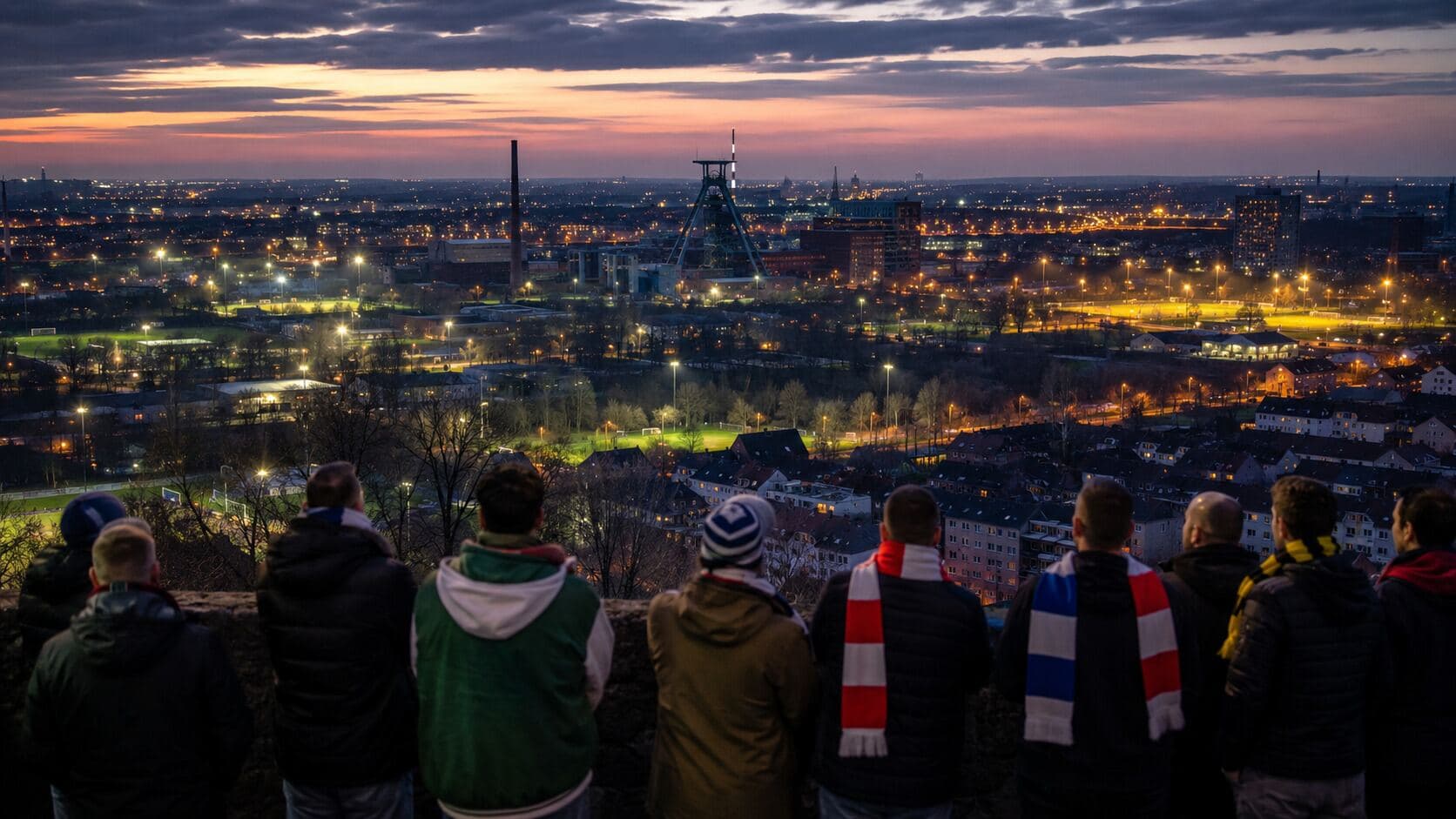
Dortmund, Bochum, Gelsenkirchen, Essen, Duisburg and many smaller communities form an urban landscape where one place often begins before the previous one has clearly ended.
Railway lines, motorways and canals connect the region. Former mines, steelworks and railway bridges remain visible between neighbourhoods and modern city centres.
Football gives this landscape another structure. Every city has its club, its colours and its own understanding of where it belongs.
II
Built by Industry
Coal and steel transformed the Ruhrgebiet during the nineteenth and twentieth centuries. Industrial expansion attracted workers from across Germany and later from many parts of Europe.
New neighbourhoods grew around mines, factories and railway lines. Football clubs emerged within the same rapidly changing communities.
The game required little. A ball, an open space and two improvised goals were enough. It could be played after work, between shifts or by children on streets and ash pitches.
Clubs offered more than competition. They provided meeting places, shared symbols and a sense of belonging for communities assembled from different backgrounds.
Not every supporter worked below ground or inside a steelworks. But industrial life shaped the language through which football in the region came to understand itself.
III
The Meaning of Kumpel
Few words connect the industrial and football identities of the Ruhrgebiet as clearly as “Kumpel”.
In mining, the word described a fellow worker. In everyday language, it came to mean a mate: someone trusted, someone who stood beside you.
Football adopted the same ideals. Effort, loyalty, directness and solidarity became part of how the region presented its clubs.
The reality was always more complicated than the mythology. Football contained money, status and conflict long before the mines closed. Supporters did not agree simply because they came from the same region.
Yet the idea of the Kumpel remains powerful. A team should work for one another. Players should understand the people in the stands. Support should continue when success disappears.
IV
A Map of Rivalries
The density of the region places major football clubs unusually close together.
Borussia Dortmund and Schalke 04 define the largest rivalry. The Revierderby divides families, workplaces and neighbourhoods while attracting attention far beyond the Ruhrgebiet.
But football in the region is larger than one derby. VfL Bochum, Rot-Weiss Essen, MSV Duisburg, Rot-Weiß Oberhausen and other clubs carry histories that remain important regardless of the division in which they play.
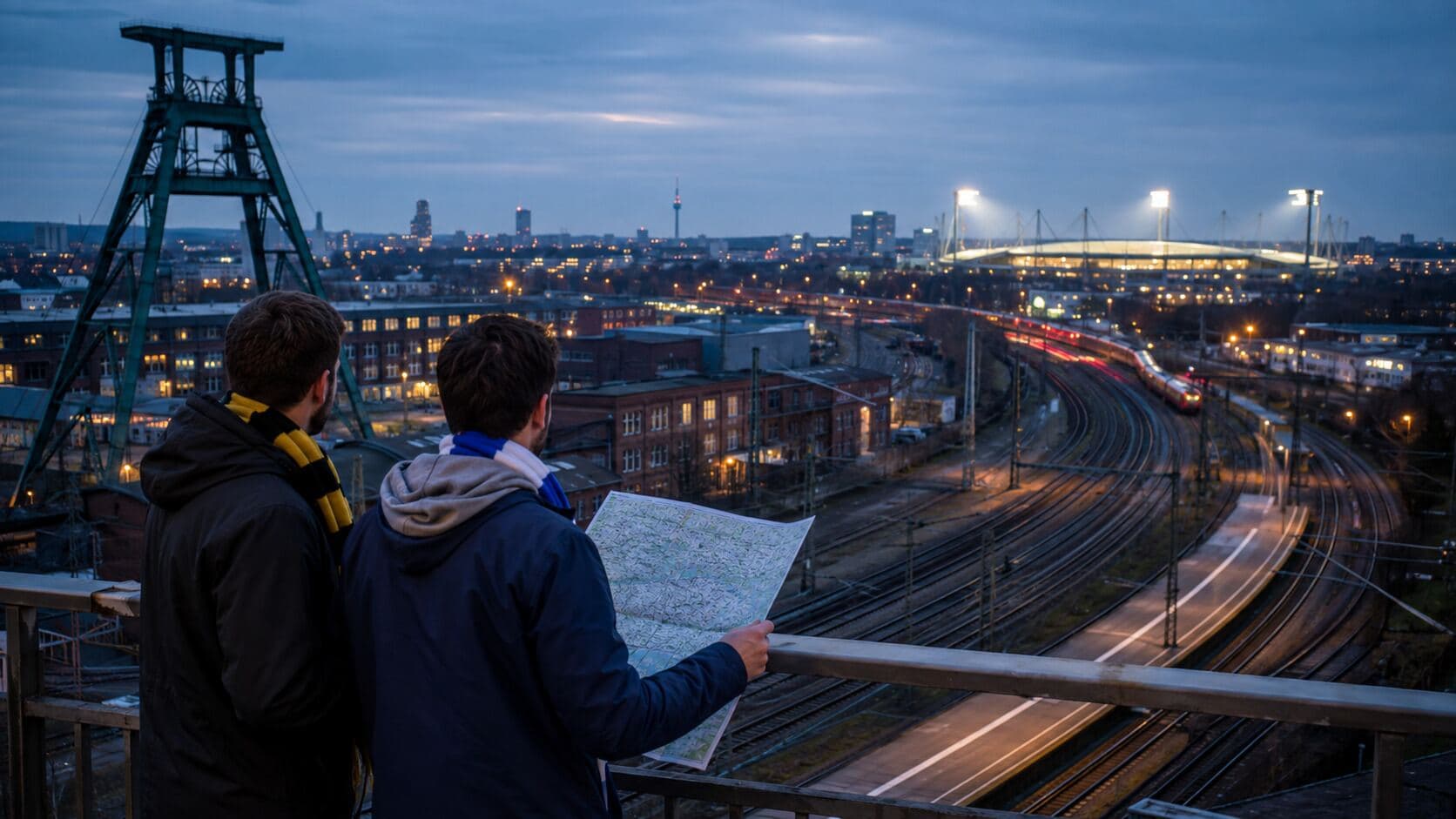
These identities overlap geographically without becoming interchangeable. A short train journey can move a visitor from one football world into another.
League tables change the size of the stage. They do not erase the local boundaries.
V
After the Mines
The Ruhrgebiet has changed profoundly. Mines closed, steel production declined and industrial sites lost the purposes for which they had been built.
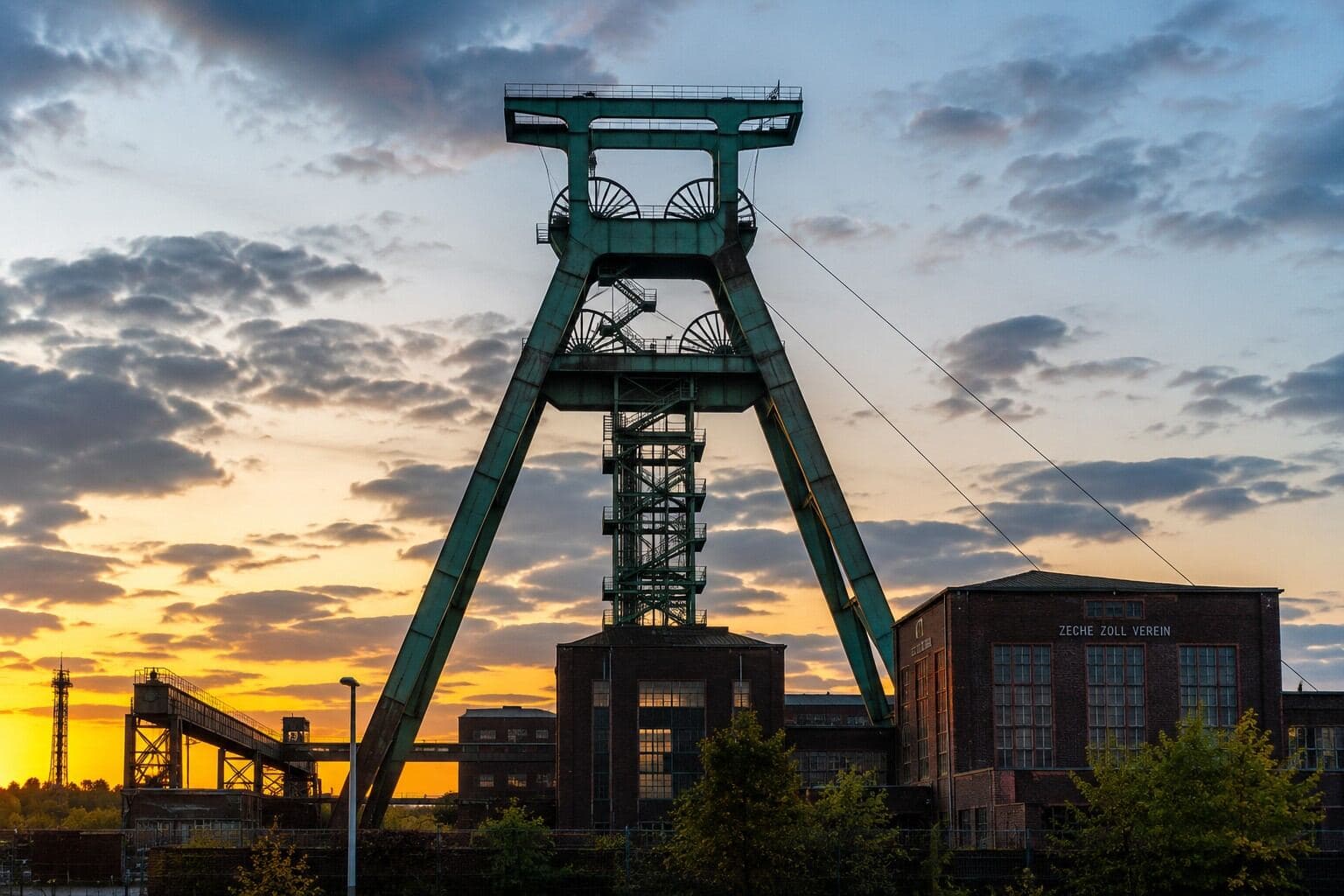
Many were not erased. Collieries became museums and cultural venues. Railway routes became cycle paths. Industrial structures were preserved as landmarks of a shared past.
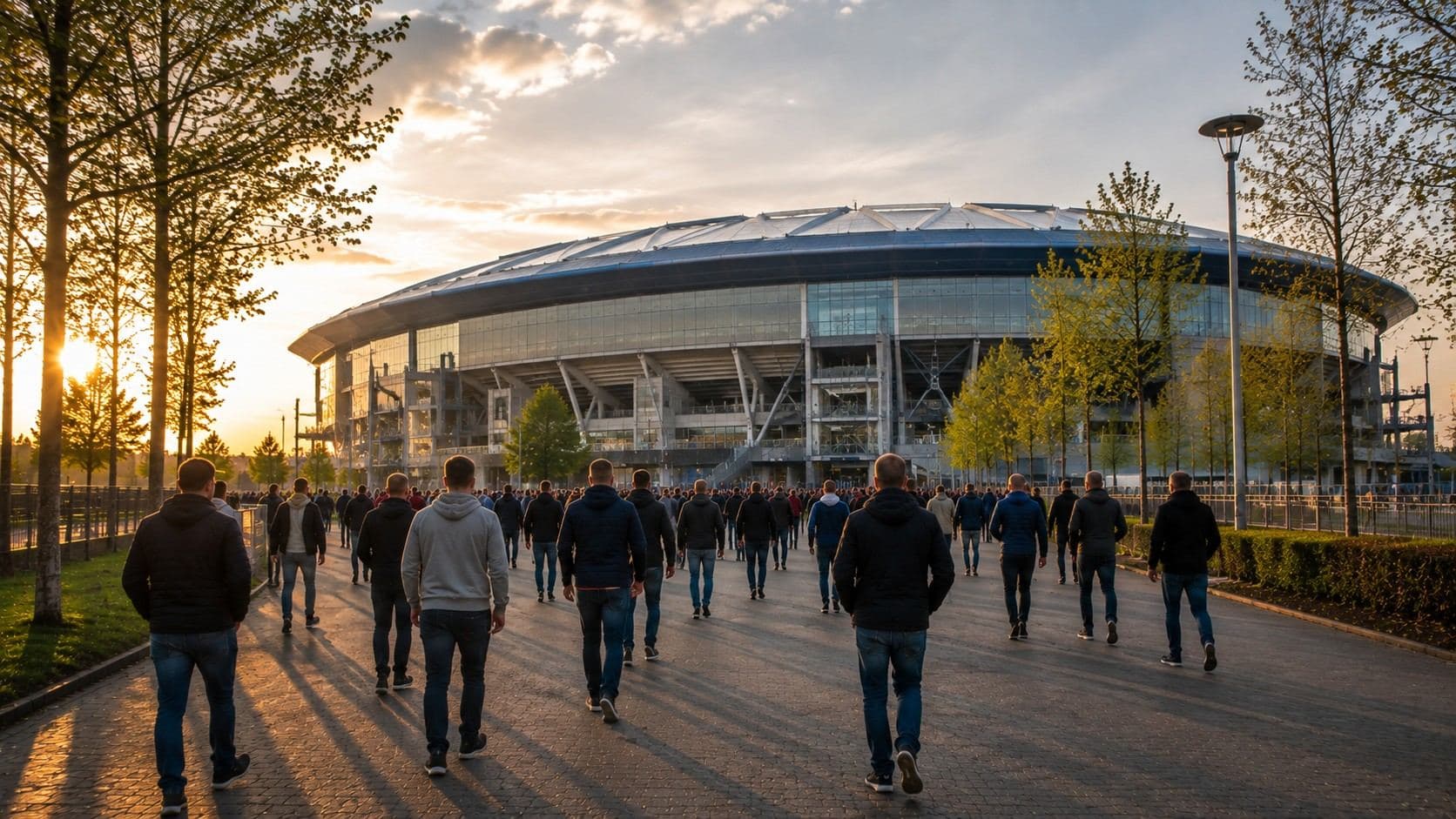
Football grounds performed a similar act of continuity. Stadiums were rebuilt and modernised, but the weekly gathering survived the economic transformation around them.
Supporting a club became one way to maintain a connection with the neighbourhoods, workplaces and family stories that created the modern region.
The football culture of the Ruhrgebiet is therefore not a frozen memory of coal mining. It is a living response to what happened when that world changed.
VI
Where Football Becomes History
It is fitting that the German Football Museum stands in Dortmund, directly opposite the city's main railway station.
The museum tells a national story: World Cups, international players, women's football, club competitions and the development of the game across Germany.
But its location gives that national history a regional setting. Visitors leave the museum into a city shaped by Borussia Dortmund. A short journey west leads towards Bochum, Essen and Gelsenkirchen.
Football history is not confined to the displays inside the building. It continues in stadiums, kiosks, pubs, fan clubs and on ash pitches throughout the region.
Coal and steel built the region. Football gave its cities another language in which to belong.
Continue Your Journey
Keep Exploring German Football.
Follow this story into its club, its football world and another chapter of German football culture.
Club World
Borussia Dortmund World
Powered by Dedication
Explore Club →
Region World
Ruhrgebiet World
The highest density of football culture in Germany.
Explore World →
Another Club World
Schalke World
Always Blue
Explore Club →
Related Culture
The Yellow Wall
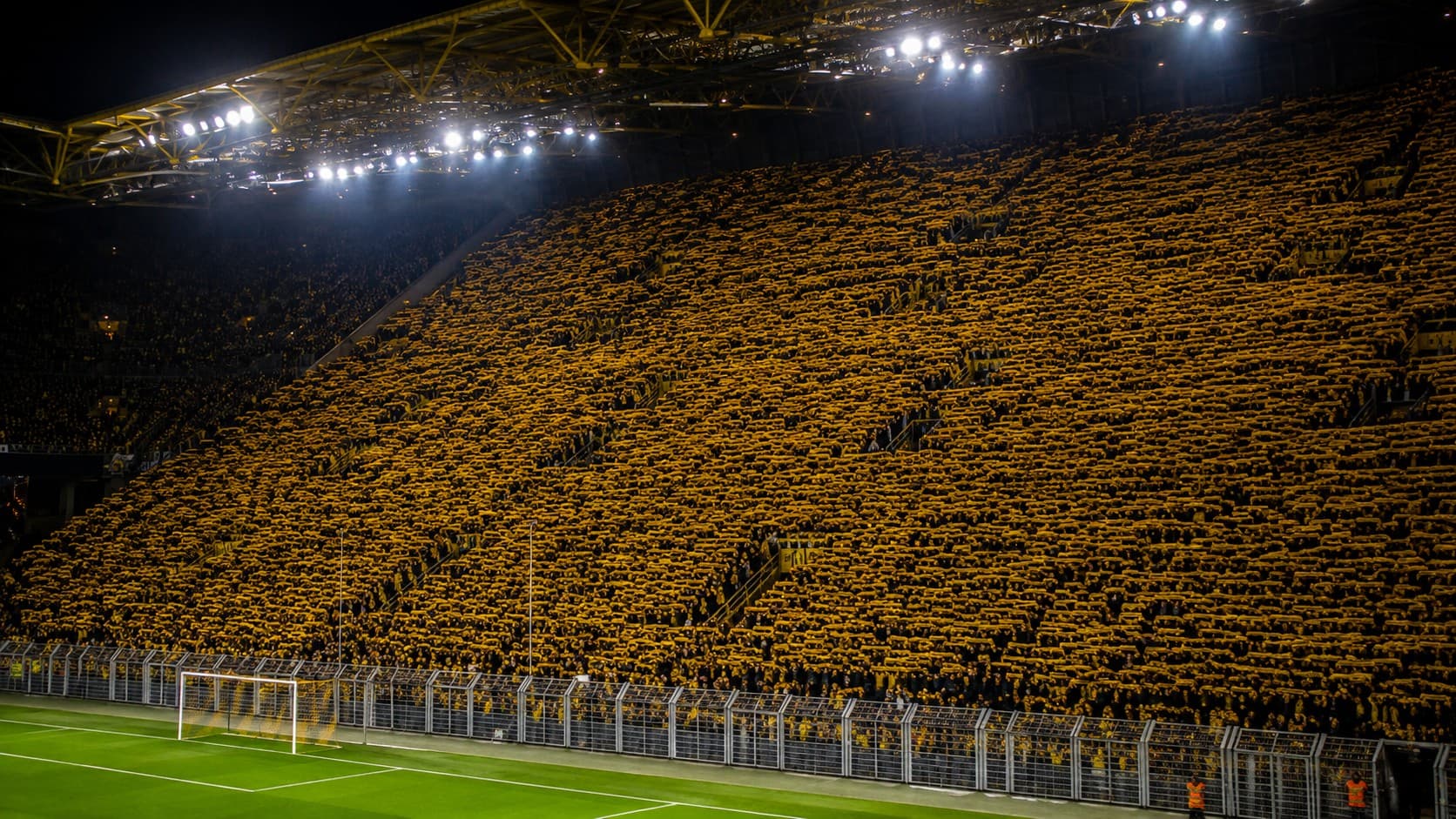
Thousands of supporters, one enormous terrace and one of the defining images of German football culture.
Read Story →