
General Football Culture
Songs From the Stands
How borrowed melodies, local words and thousands of voices become the soundtrack of German football.
Germany
I
Before the Players Appear
The most important song of a German matchday may begin before either team enters the pitch.
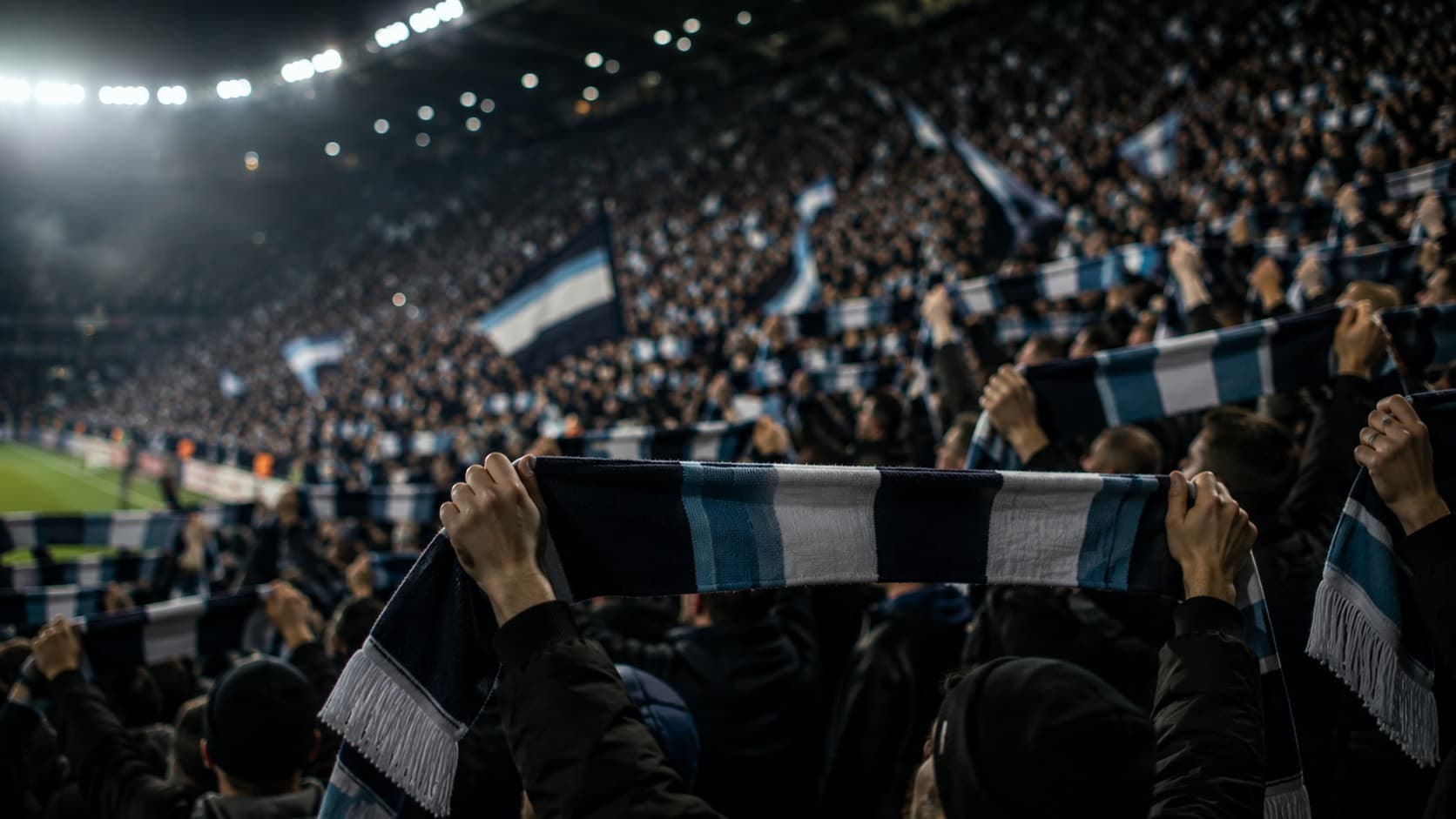
The stadium lights change. Scarves rise. A familiar recording starts through the loudspeakers.
Then the crowd takes over.
Every club has its own relationship with this moment. Some sing an official anthem. Others use a song created by local supporters or a piece of music adopted from somewhere else.
The origin matters less with every passing season. Once generations of supporters attach their own memories to a song, it begins to belong to the stadium.
II
Different Songs for Different Moments
Not every song inside a stadium performs the same function.
Pre-match hymns create a sense of ceremony. They slow the moment down and connect the current match with previous generations.
Short chants work differently. They can respond immediately to an attack, celebrate a player or move rapidly between different sections of the ground.
Longer terrace songs establish rhythm. Drums and clapping allow them to continue through quieter periods of the match.
There are songs for winning, conceding, travelling, promotion and relegation. Some praise the club. Others describe the city or make fun of an opponent.
Together, they provide the emotional vocabulary of the matchday.
III
Borrowed Melodies
Football songs rarely begin with completely new music.
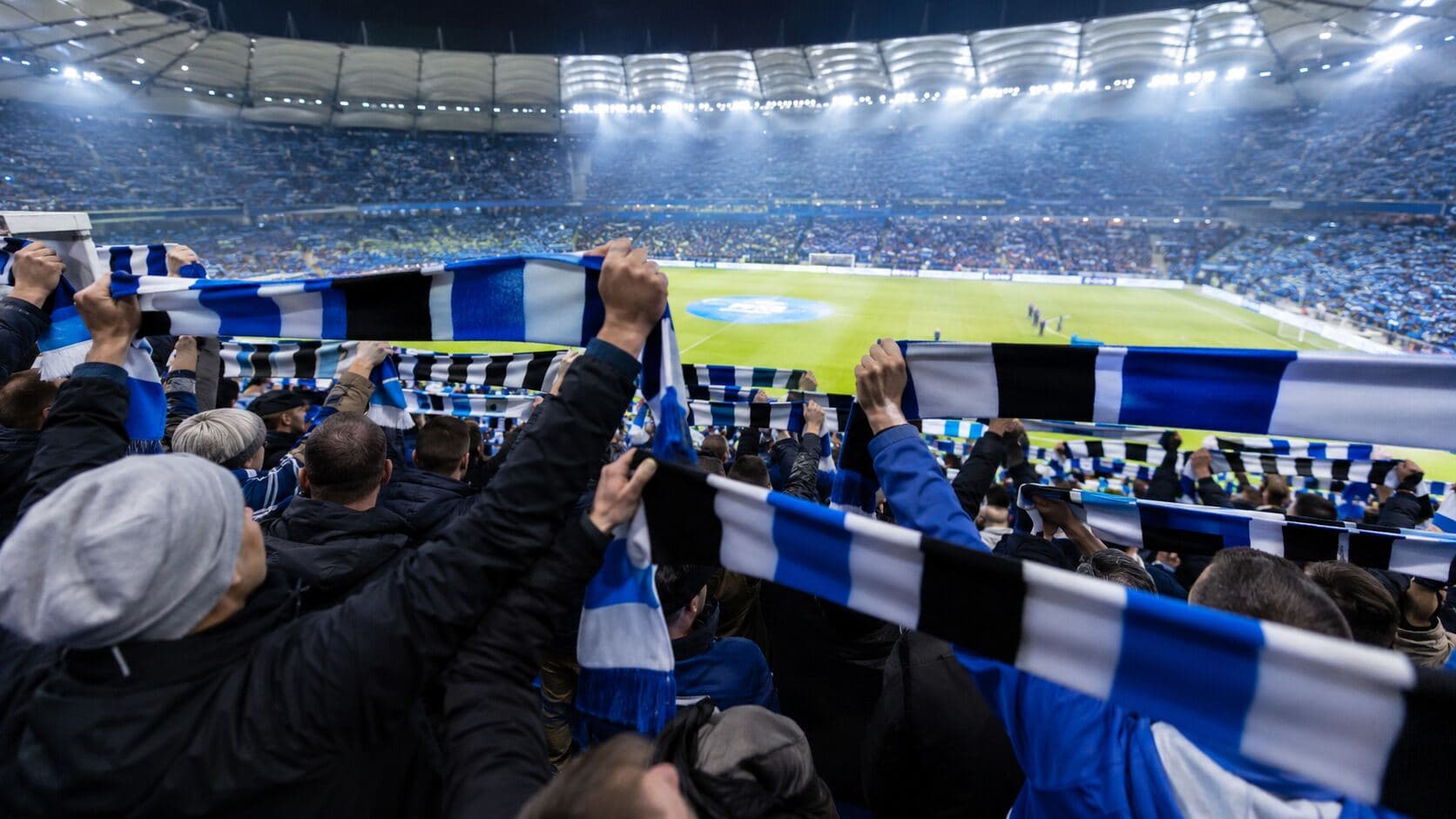
Supporters borrow melodies from pop songs, folk music, television, church music and chants heard in other countries. New words transform something familiar into something local.
This makes songs easy to learn. A melody already carried in the memory can spread through a terrace after only a few repetitions.
The same tune may therefore appear in several countries and dozens of stadiums. Each fan base adjusts the words, rhythm and meaning until it feels like its own.
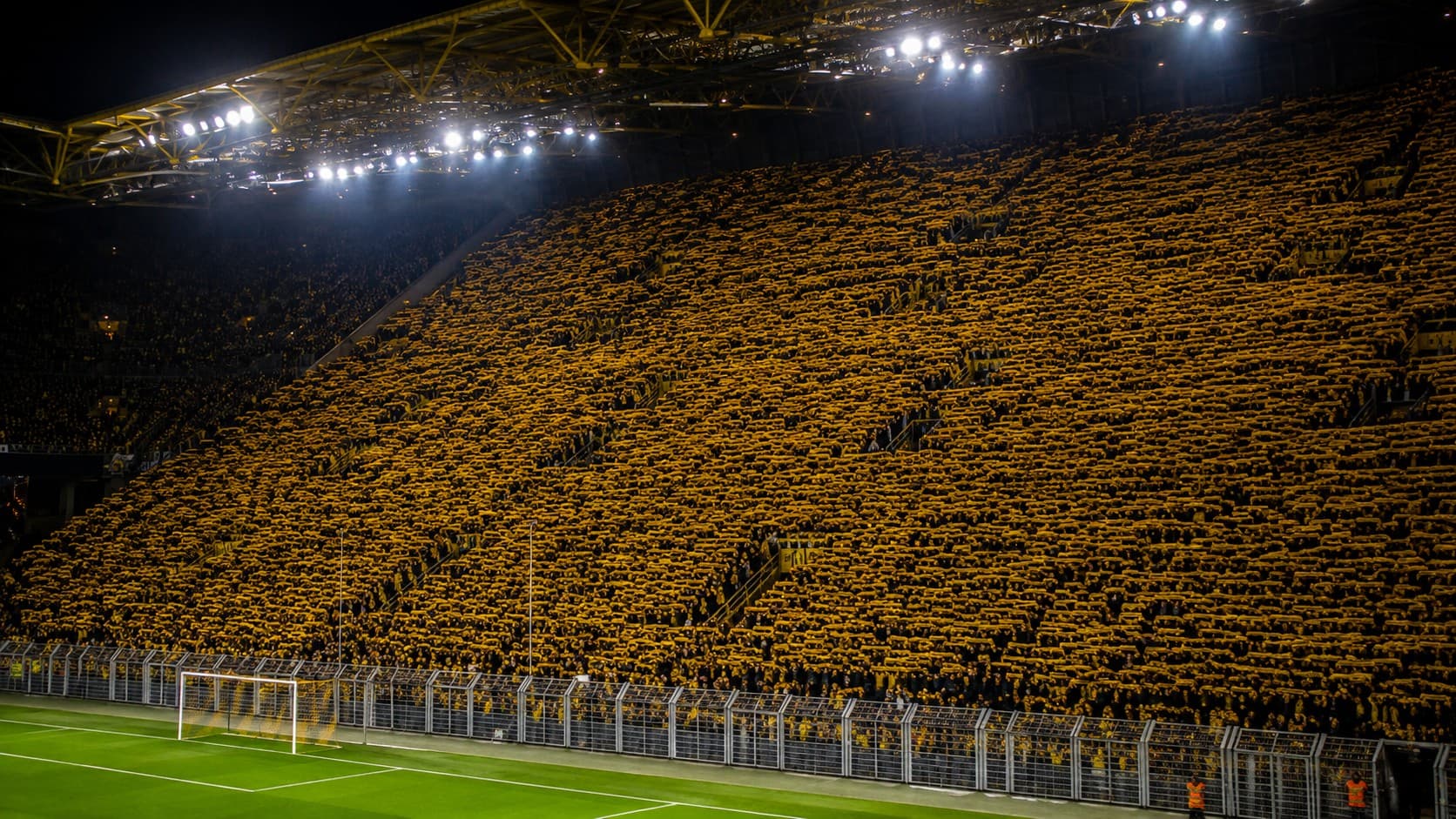
Dortmund's use of “You'll Never Walk Alone” is a famous example. The song arrived from elsewhere, but years of repetition gave it a distinctive place in the Westfalenstadion.
IV
The Sound of Place
Songs reveal where a club comes from.
Local dialects appear in lyrics. City names are repeated. Mining, harbours, neighbourhoods, rivers and regional identities become part of what the crowd sings about.
Visitors may understand the general emotion without understanding every word. Even German speakers can struggle when thousands of people sing quickly in a strong local dialect.
That difficulty is part of the meaning. The song is not designed as a universal product. It grew within a particular place.
Learning it becomes a form of entry. A new supporter begins by recognising the melody, then joins the chorus and eventually knows when the song will begin before anyone else starts singing.
V
One Voice Away From Home
Songs become especially important in the away end.
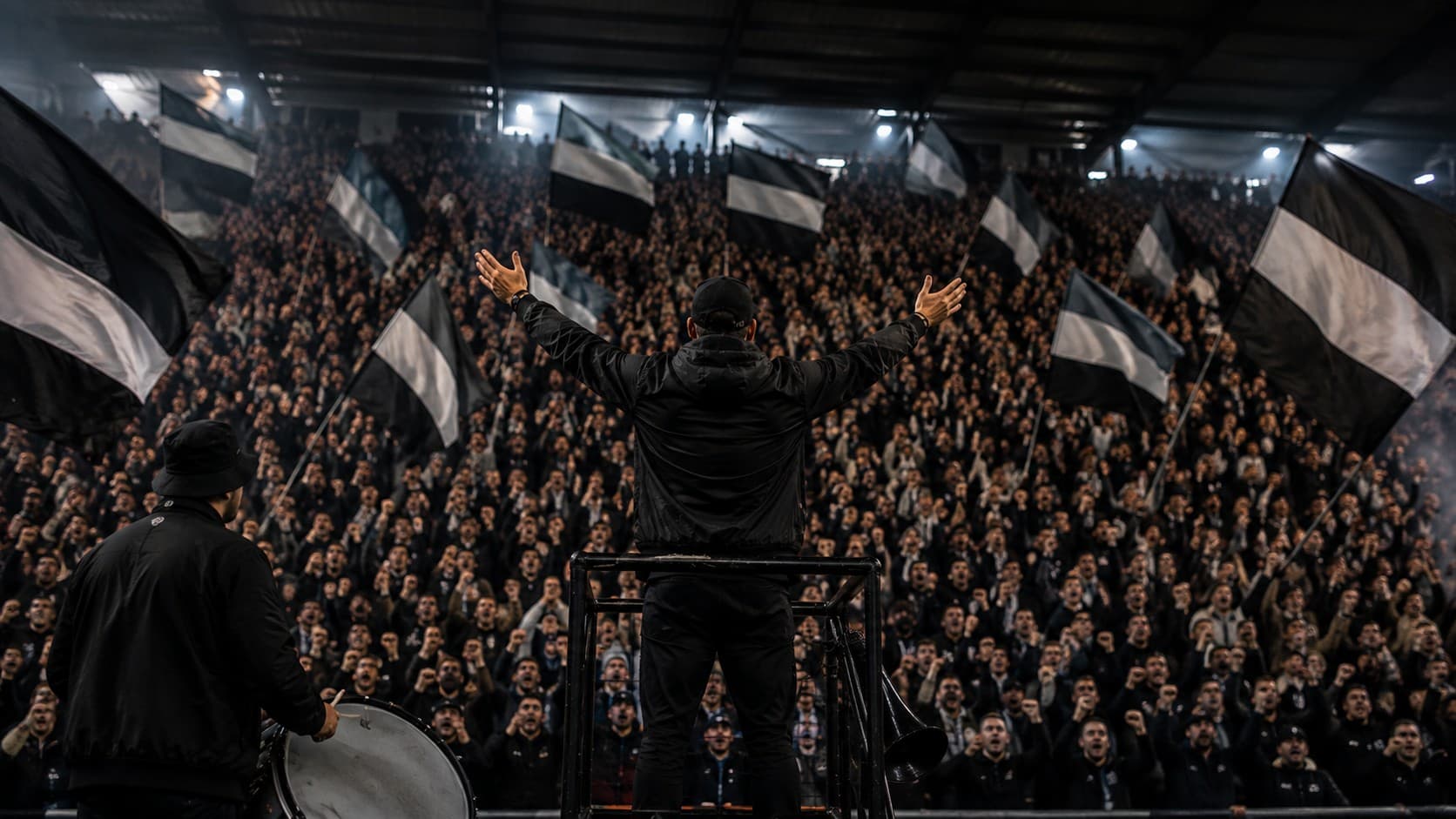
Travelling supporters occupy only a small part of another club's stadium. They cannot compete visually with tens of thousands of home fans across every stand.
A coordinated voice gives them presence.
The strongest away support is not always the largest. A smaller group that sings together can sound more powerful than a much larger crowd divided into separate reactions.
Songs also make the journey portable. The same words sung at home can be carried onto a train, through another city and into the corner of an unfamiliar ground.
For ninety minutes, the away end creates a small acoustic version of home.
VI
When the Stadium Falls Silent
The power of singing becomes clearest when it stops.
Supporters sometimes remain silent during the opening minutes of a match to protest against ticket prices, kick-off times, sanctions or decisions made by football authorities.
A full stadium without its usual songs can feel strangely empty. The sound of players, coaches and the ball suddenly becomes audible.
Silence demonstrates that atmosphere is not an automatic feature of a large crowd. It is something supporters choose to produce.
The same is true of every anthem and chant. Music can be played through speakers, but collective meaning cannot be manufactured that way.
It appears when people decide that the song expresses something about their club, their city or themselves.
Players and seasons change. The chorus waits for the next match.
Continue Your Journey
Keep Exploring German Football.
Follow this story into its club, its football world and another chapter of German football culture.
Club World
HSV World
Northern Loyalty
Explore Club →
City World
Hamburg World
Experience one city, two completely different football worlds.
Explore World →
Another Club World
St. Pauli World
More Than a Football Club
Explore Club →
Related Culture
Northern Loyalty
Through good times and bad. A story about generations, belonging and loyalty in Hamburg.
Read Story →